How long does jet lag last?

How long does jet lag last?
Without any help, jet lag lasts about one day for every time zone you cross – and longer when you fly in the direction against your circadian clock. Morning types find it easier to travel east whereas evening types find it easier to travel west, but if you go the ‘wrong’ way for your circadian clock, it will take even longer to adapt. For example, a flight from New York to London (5 time zones east) will leave you feeling off for about five days if you are a morning person, but maybe a week or more if you are an evening type. With the right timing of light, darkness and melatonin, however, you can cut that recovery dramatically, and shift the clock 3–4 times faster.
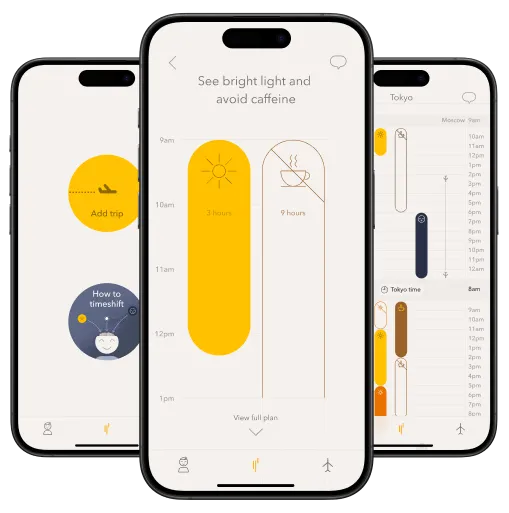
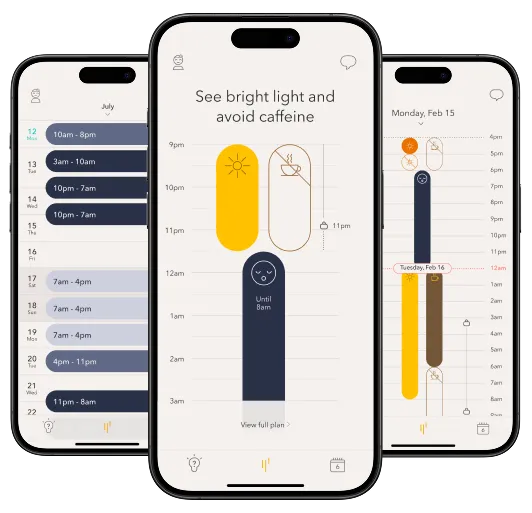
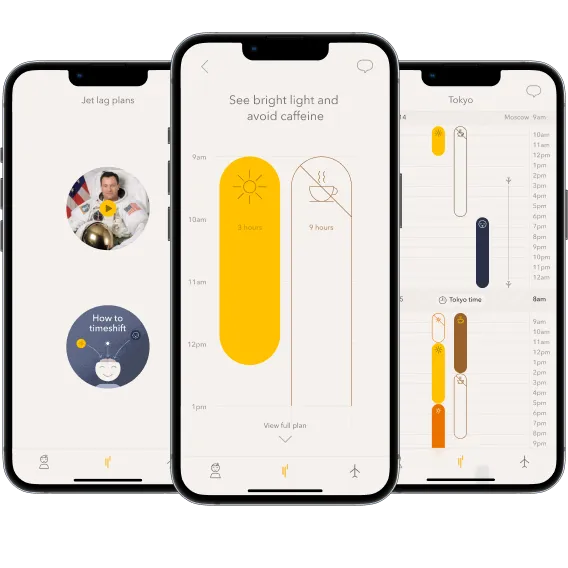
Timeshifter's jet lag app is the most downloaded and highest-rated jet lag app in the world. Get personalized jet lag plans based on your sleep pattern, chronotype, itinerary, and personal preferences.
Learn more
Why jet lag lasts as long as it does
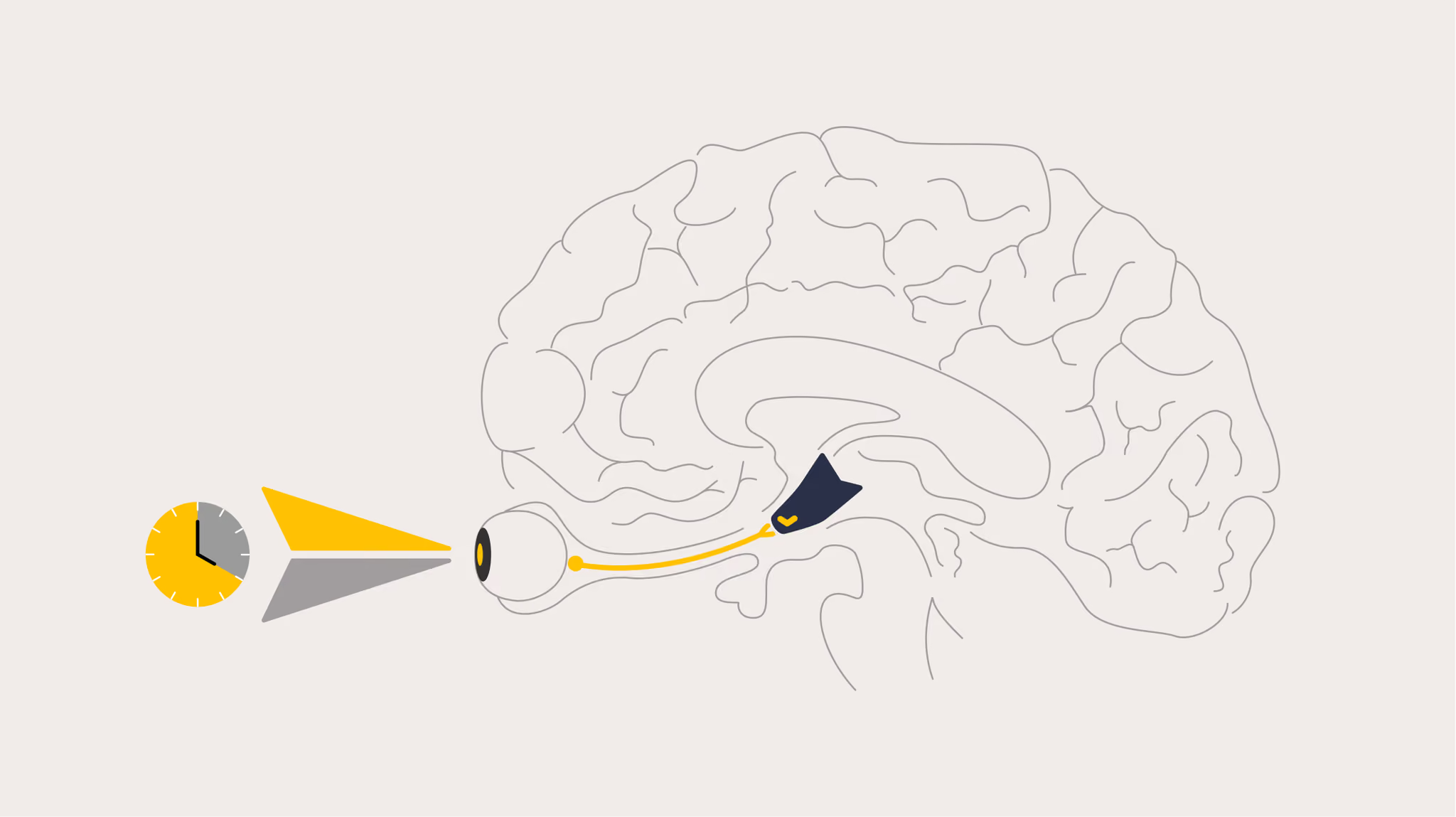
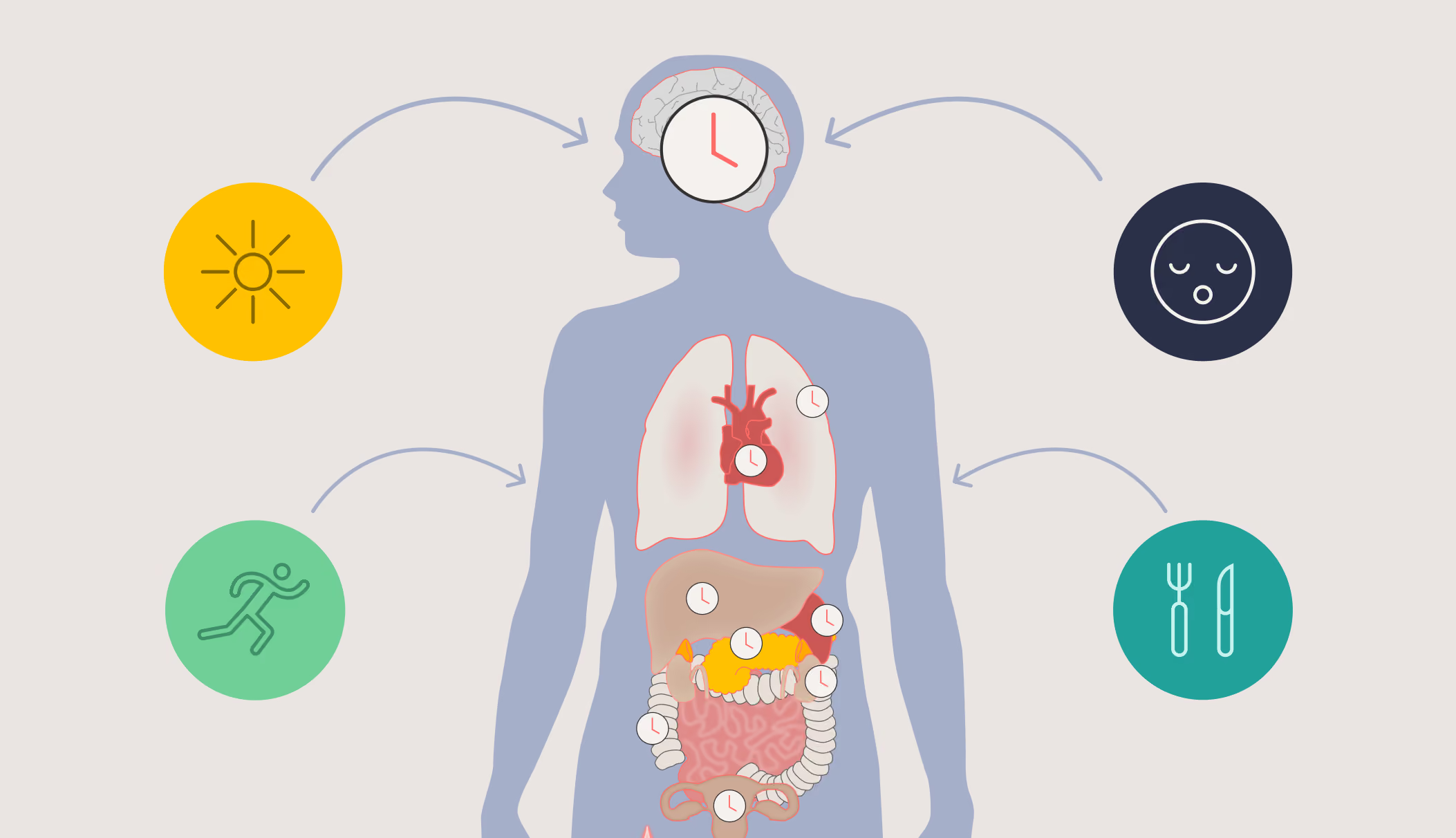
Jet lag is a circadian timing problem, not a sleep or tiredness problem. Your circadian clock in the brain sets the timing of multiple systems including your sleep, alertness, hormones and metabolism. Jet lag is caused when you change the light-dark cycle more quickly than the circadian clock can keep up with. When you land in a new time zone, the local clock time has jumped by hours but your circadian clock has not, and it cannot immediately synchronize to the new light-dark cycle. It is still stuck on the old time zone. Left to itself, the circadian clock will only move by up to an hour per day toward the new time zone, forcing you to sleep, eat and be awake at the wrong biological time. Until it catches up, your brain expects night in the middle of the day and day in the middle of the night.
It takes so long to adapt because the timing of light and dark in the new time zone shifts the clock in the wrong direction, slowing adaptation. It is only when the timing of exposure to light and light avoidance is properly timed to shift the clock in the right direction can you reset the clock more quickly. If timed correctly, light can reset the clock by about 3 hours per day, making it much quicker to adapt to the new time zone and alleviate jet lag.
How long jet lag lasts, by trip
These are typical recovery times without any intervention. The harder direction is the one that works against your circadian clock – for about 75% of people that is flying east, and for the other 25% (usually morning types) it is flying west. Your own recovery also depends on your age and what you do with light after you land.
On the longest trips, close to 12 time zones, the direction matters less. Your clock can end up shifting either way – and if it shifts the wrong way, recovery takes even longer.
What makes jet lag last longer
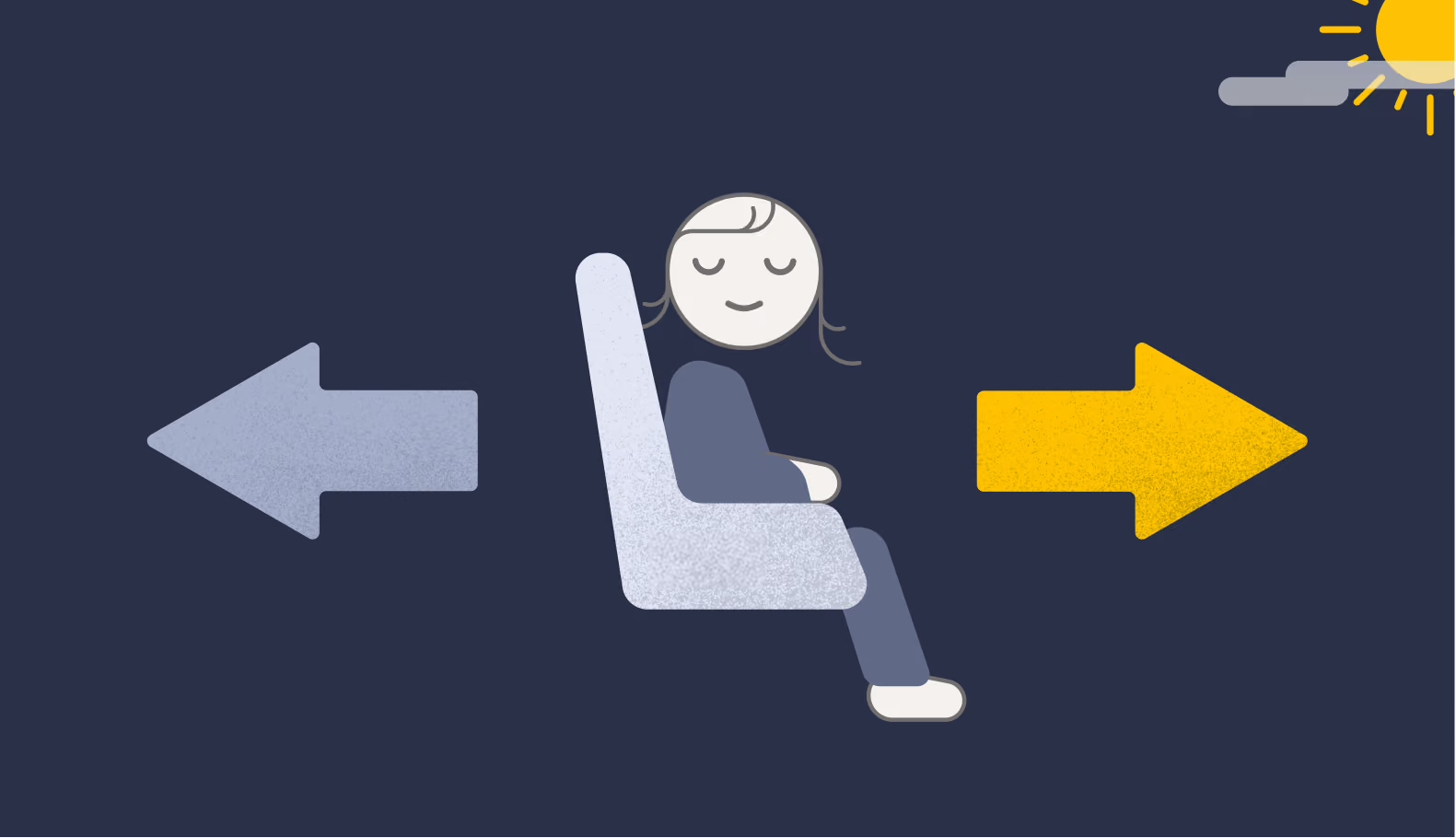
- Flying against your circadian clock. About 75% of people have an internal clock that runs slightly longer than 24 hours. For them, delaying the clock (flying west) feels natural and advancing it (flying east) is harder. The other 25% have a clock shorter than 24 hours – usually morning types – and often find flying east easier. Is jet lag worse going east or west?
- More time zones. Recovery grows roughly in step with the number of time zones. One or two zones may cost you a day of mild symptoms. Eight or more can cost you more than a week.
- Your chronotype. Chronotypes range from extreme morning to extreme evening types, so how easily you adapt in each direction is personal. Morning types tend to find eastward travel easier; evening types usually find westward travel easier. Learn about your chronotype.
- Light at the wrong time. Light is the strongest signal your clock gets. Seen at the right time, it speeds up adaptation. Seen at the wrong time, it pushes your clock the wrong way – and the popular advice to "get out in the sun" when you land can do exactly that.
- Arriving short on sleep. Sleep loss before and during the flight does not cause jet lag, but it makes every symptom feel worse.
Is it jet lag or travel fatigue?
Long flights are tiring on their own: Little sleep, dry cabin air, cramped seats, long days. That travel fatigue usually clears after a night or two of good sleep, and it can happen on a flight that crosses no time zones at all.
Jet lag only happens when you cross time zones. It does not go away with one good night, because it is not caused by lack of sleep. It lasts until your circadian clock has shifted to local time.
How to make jet lag go away faster
You cannot change how far you fly, but you can change how fast your clock moves. Correctly timed light exposure and light avoidance can shift your circadian clock several hours a day instead of about one, helping you adapt 3–4 times faster.
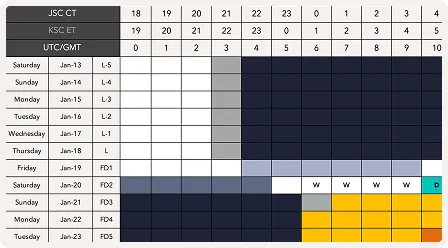
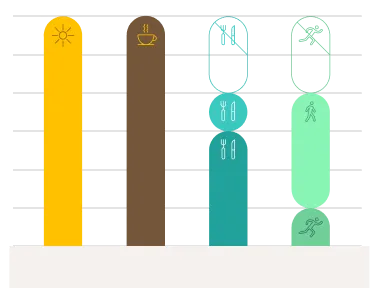
- See and avoid light at the right times. This is the single most effective tool. The right times depend on your direction of travel, your flight times, your chronotype and your normal sleep – and they change day by day.
- Start before you leave. Shifting your sleep and light exposure a little in the days before departure means you land partly adapted.
- Use melatonin correctly, if you use it. The right type, dose and timing can speed up the shift. At the wrong time, it can slow it down. See the right type, dose and timing.
- Time caffeine and naps. They do not shift your clock, but well-timed caffeine and short naps help you stay alert while it catches up.
Hydration, special diets, compression socks and sleeping pills may make the trip more comfortable. None of them moves your circadian clock, so none of them shortens jet lag.
Short trips: Should you adapt at all?
If you are away for only two or three days, fully adapting may not be worth it. You would shift your clock to the new time zone just in time to fly home and shift it back again.
For short trips, it is often better to stay close to home and plan important meetings or events for the hours when your body is naturally alert. The Timeshifter app handles this with Quick Turnarounds™, built for trips too short to adapt to.
Frequently asked questions
- How long does jet lag last after a 3-hour time difference? Usually about three days in the direction that suits your circadian clock and four to five days in the other direction. For most people, New York to Los Angeles (west) is the easier way. Many people notice it most in the first one or two days.
- Can jet lag last 2 weeks? Yes. After crossing 12 or more time zones, such as New York to Tokyo, full recovery can take about two weeks without any intervention.
- Why does jet lag feel worse on the way home? Sometimes it is the direction. If the flight home goes the way your circadian clock finds harder – for most people, east – recovery takes longer. Coming home also usually means going straight back to work, with no time to ease in.
- Does sleeping on the plane shorten jet lag? Only if the timing is right. Sleep on the plane can help you arrive less tired, but sleeping at the wrong time – and seeing light at the wrong time when you wake – can hold your clock back.