Help your passengers arrive at their best
The Arrival Advantage is a free report for airlines: The science of jet lag, why most common advice don't work and can even make it worse, and how airlines can help passengers adjust quickly to new time zones. Based on the latest research by leading circadian scientists, including Dr. Steven W. Lockley, a Harvard Medical School faculty member for over 20 years.
No one travels for the flight. They travel for what’s waiting when they land.
Jet lag is concentrated on exactly the journeys airlines value most: long-haul international routes, and the premium and frequent flyers who fly them. Most long-haul business travelers report recurrent symptoms – yet few have access to guidance that addresses the cause.
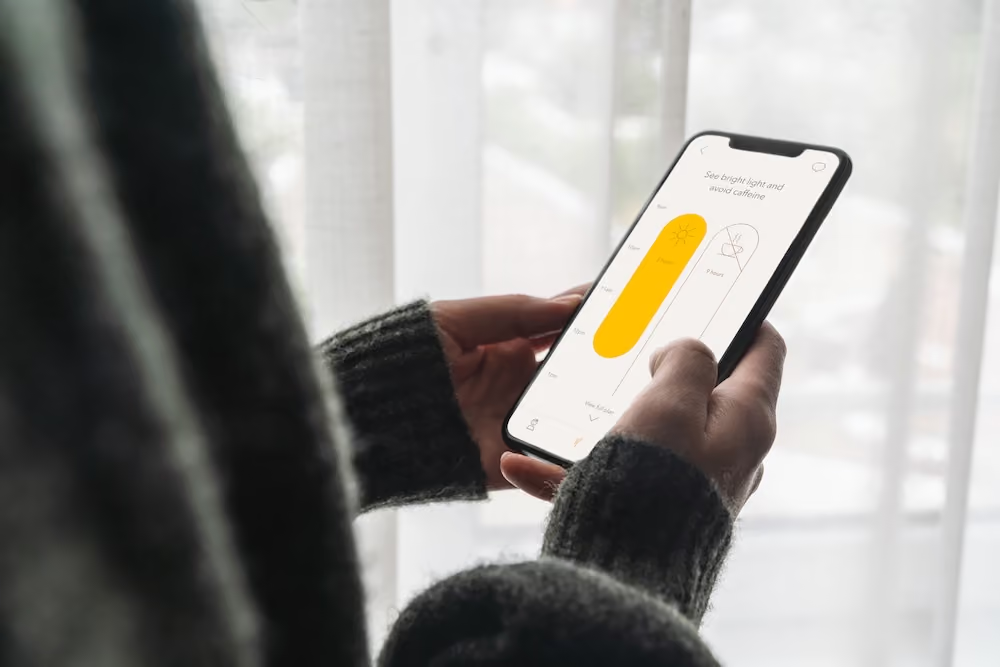
The passengers most affected by jet lag are often the ones who spend the most to avoid it. A lie-flat seat buys comfort. It does not reset the circadian clock. Jet lag is not a sleep problem but a circadian one, and it has one science-based solution: individually timed light exposure and light avoidance.
Most jet lag advice makes it worse

Today’s “solutions”
won’t help
Cabin lighting timed to galley logistics, and well-meant advice such as “sleep as much as you can on the plane” or “get on local time immediately”, won’t help passengers adjust faster – and will often shift their circadian clock in the wrong direction.

Solving jet lag
with circadian science
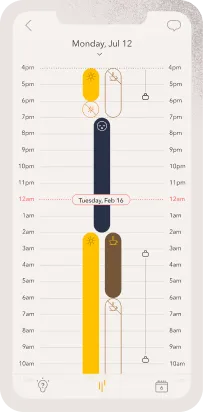
Light is the key time cue for the circadian clock. Seen or avoided at the right biological time – personalized to each passenger’s chronotype, sleep pattern, and itinerary – it speeds adaptation. Seen at the wrong time, it makes jet lag worse.
Why timing is everything
In this short video, Dr. Steven W. Lockley – Harvard Medical School faculty for over 20 years, advisor to NASA and Formula 1 – explains the science of jet lag and why the timing of light makes all the difference.
The new standard – and the levers airlines can pull now
Start with a personalized plan for every long-haul passenger – no changes to aircraft, IFE systems, or lounges required – and add more as results come in.

A plan for every passenger
Personalized to each passenger’s chronotype, sleep pattern, and itinerary, and triggered automatically when a booking crosses three or more time zones – gifted to top tiers, earned or redeemed with miles, or offered as an ancillary at booking.

The right light in the lounge
Most lounges are already brightly lit. A small low-intensity lighting section lets passengers whose plan calls for avoiding light follow it before boarding – at the price of standard bulbs.

Cabin lighting and IFE
Tunable LED cabin lighting can suit the majority circadian profile on each route, while the seatback screen brings each passenger’s own plan into the flight – often through a software update.
Crew and ground staff
Crew fatigue is still managed largely through hour limits that don’t account for each crew member’s circadian clock. Personalized circadian planning gives crews and ground staff a practical, science-based tool.
Why jet lag is a circadian problem, not a sleep problem
The remedies and amenities that can make jet lag worse
Why generic and AI-generated jet lag advice fails
The new standard and the levers airlines can pull now
Proof from 129,852 post-travel surveys: 96.4% avoided severe jet lag
Building blocks to start right away and scale over time
Built for every team that shapes the journey
Written for the airline teams who shape the passenger experience – and the crews who deliver it.

Loyalty programs reward points, lounge access, and travel credits – but nothing for how members feel on arrival. A personalized plan fills that gap: gifted to top tiers, earned or redeemed with miles, or offered as an ancillary at booking.

How to schedule existing tunable cabin lighting to help most passengers, and bring each passenger’s own plan onto the seatback screen.

Why most lounge “jet lag” amenities miss the mark, and how a small low-intensity lighting section gets it right at the price of standard bulbs.
Any airline gets travelers from A to B. The Arrival Advantage belongs to airlines that make sure they arrive at their best.
Get the report
Start with the report. For airlines that want to go further, we can put together a program tailored to your network, cabins, and loyalty program: an opportunity list showing where your routes, cabins, and loyalty tiers offer the biggest arrival advantage, workshops led by Timeshifter’s circadian scientists, and lighting specifications for cabins and lounges.
Jet lag and airlines FAQ
Why is jet lag a circadian problem, not a sleep problem?
Jet lag is caused by misalignment between the body’s circadian clock and the local time zone. Without intervention, the clock shifts only about an hour, or one time zone, a day. Insomnia and daytime sleepiness are symptoms, which is why so many products wrongly treat jet lag as a sleep problem. Only resetting the clock – mainly through correctly timed light exposure and light avoidance – addresses the cause.
Does a lie-flat seat or sleeping on the plane prevent jet lag?
No. A lie-flat seat buys comfort, but it does not reset the circadian clock. As far as the clock is concerned, sleep equals darkness, so sleeping at the wrong biological time can shift the clock in the wrong direction and prolong jet lag. Sleep and wake timing need to be part of a personalized light-dark plan.
Can cabin lighting reduce jet lag?
Tunable LED cabin lighting scheduled for the majority circadian profile on a route can already help many passengers. Because two passengers on the same flight can need opposite light at the same time, passengers following a personalized plan can resolve any conflict themselves – with an eye mask or sunglasses, or with seat lighting and a brighter screen.
What can airlines do without changing aircraft or lounges?
Airlines can start right away by offering passengers a personalized plan through booking confirmations, pre-trip emails, the airline app, or loyalty communications – as a complimentary benefit for top tiers, an offer to earn or redeem miles, or an ancillary at booking. United Airlines, Lufthansa, SWISS, Austrian Airlines, and Brussels Airlines already do this, and oneworld includes a complimentary plan with every Round the World booking.
What evidence supports Timeshifter’s approach?
In 129,852 post-travel surveys, 96.4% of travelers who followed Timeshifter’s guidance did not experience severe or very severe jet lag. Those who did not follow it on the same trips saw a 6.2-fold increase in severe or very severe jet lag. The data are observational and self-reported. Timeshifter is the world’s most-downloaded jet lag app, with a 4.7/5 rating from more than 6,000 reviews, and has been featured in the CDC Yellow Book since 2024.
Talk to our team about what the report means for your airline.