Jet lag app comparison

Most jet lag solutions don’t reduce jet lag, because they don’t reset your circadian clock. Web jet lag calculators use only your time zones, and supplements, sleep apps and AI advice don’t time light at all. A circadian app such as Timeshifter times light, sleep, melatonin and caffeine to your chronotype and your flight.
Travelers comparing jet lag apps and solutions are often presented with generic advice, jet lag calculators, or AI-based "solutions" that promise quick fixes. But most of these approaches don't actually reduce jet lag because they fail to address the circadian misalignment that causes it. Understanding the differences between these methods – and why most of them don't work – is essential for any traveler looking for a solution that actually delivers results.
Disclosure: Timeshifter makes one of the apps compared in this article.
Types of jet lag solutions
Many different approaches are marketed as solutions for jet lag. In practice, most of them do not reduce jet lag as they do not address the circadian misalignment that causes jet lag. They are based on myths, incomplete understanding, or oversimplified assumptions about how the circadian system adapts to time zone changes. Only one approach – Timeshifter – is built to reliably reduce jet lag by addressing the underlying circadian misalignment.
Old, pervasive jet lag myths
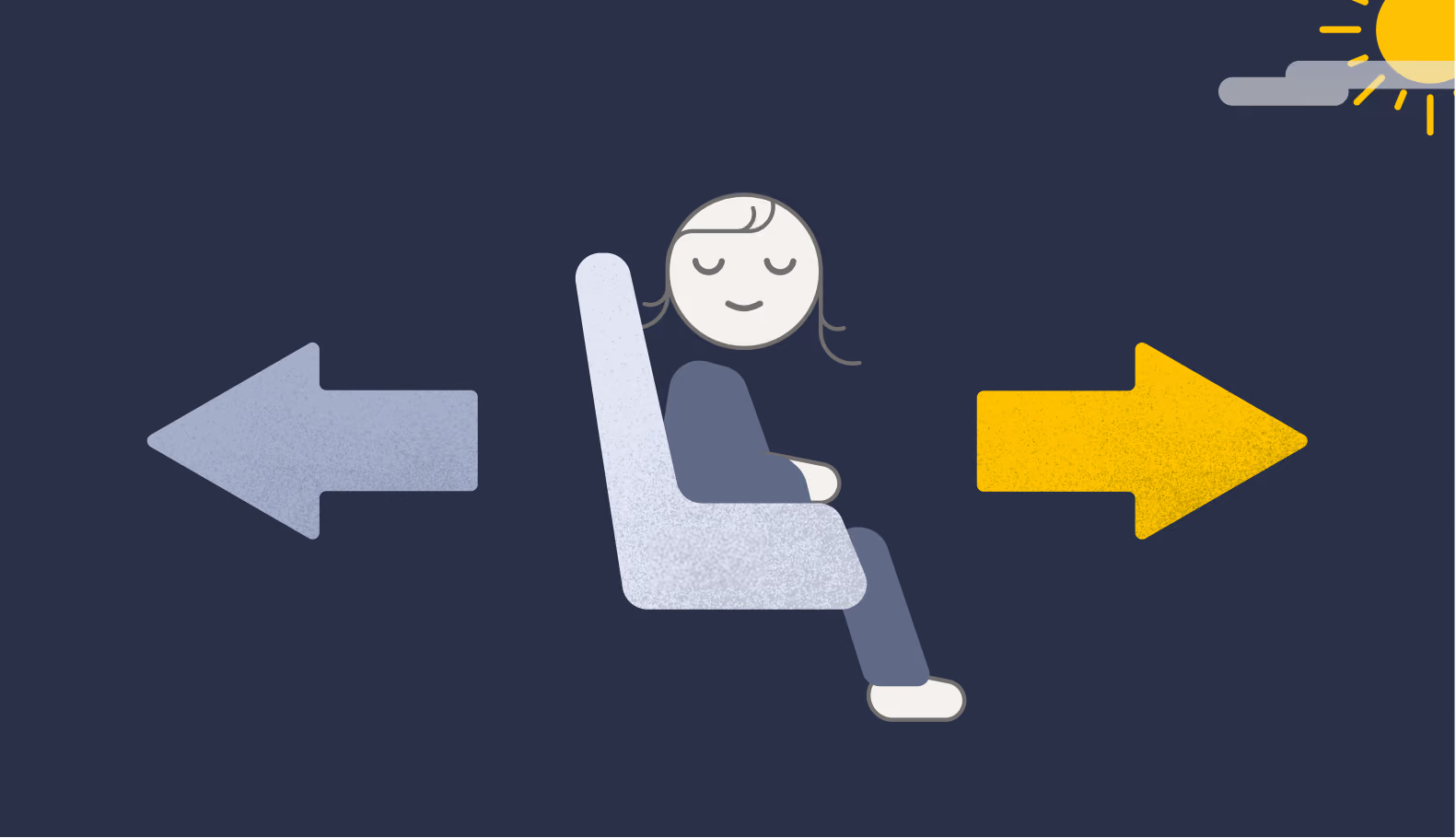
Widely repeated advice such as “sleep on the plane,” “push through until local bedtime,” or “get sunlight at your destination” is not based on circadian science, and in many cases can make jet lag worse. These recommendations ignore the sensitivity that the circadian system has to light timing, and often result in travelers seeing light at the wrong time, making jet lag worse. Other factors are also not taken into account such as chronotype, sleep pattern, travel time, and travel direction.
Advice from non-experts
Jet lag is frequently discussed by sleep experts, wellness figures, and high-profile individuals who are credible in other domains but do not specialize in circadian science. Circadian biology is a distinct scientific field, and advice based on general sleep knowledge consistently fails to produce reliable results, fueling many of the persistent myths about jet lag because it overlooks critical biological timing mechanisms.
Supplements
Some companies promote supplements for jet lag – magnesium, vitamins, fish oils, tryptophan, tart cherry. With the exception of melatonin, none has been shown to reset the human circadian clock or reduce jet lag, and none comes with timing based on your circadian phase. See jet lag remedies compared.
Sleep and wellness apps
Sleep and wellness apps are often mistaken for jet lag solutions, but they are built for relaxation, mindfulness, or sleep tracking – not circadian shifting. Sleep does not reflect the circadian clock and addressing sleep does not address jet lag. While these apps may help users fall asleep or unwind, they do not provide circadian timing advice for light exposure, melatonin, or caffeine, nor do they adapt recommendations based on travel direction or time zone changes. As a result, they are unable to address the circadian disruption that causes jet lag and are better suited for general sleep support than travel-related circadian adjustment.
Jet lag calculators
Web-based jet lag calculators typically generate static schedules based only on departure and arrival time zones. As they are not full dynamic apps, they don’t provide push notifications to remind travelers when to follow time-critical advice, nor can they update recommendations when flights are delayed, canceled, or rebooked. These calculators rarely account for chronotype, sleep duration, in-flight behavior, or the timing of light avoidance – one of the most critical factors in circadian adjustment. They also do not support complex itineraries such as return trips, multi-leg journeys, or short layovers. As a result, their guidance is generic, difficult to follow in real-world travel conditions, and ineffective for meaningful jet lag reduction.
A calculator’s sleep schedule can even push your clock the wrong way. When you sleep decides when you see light, and calculators don’t time light to your body clock.
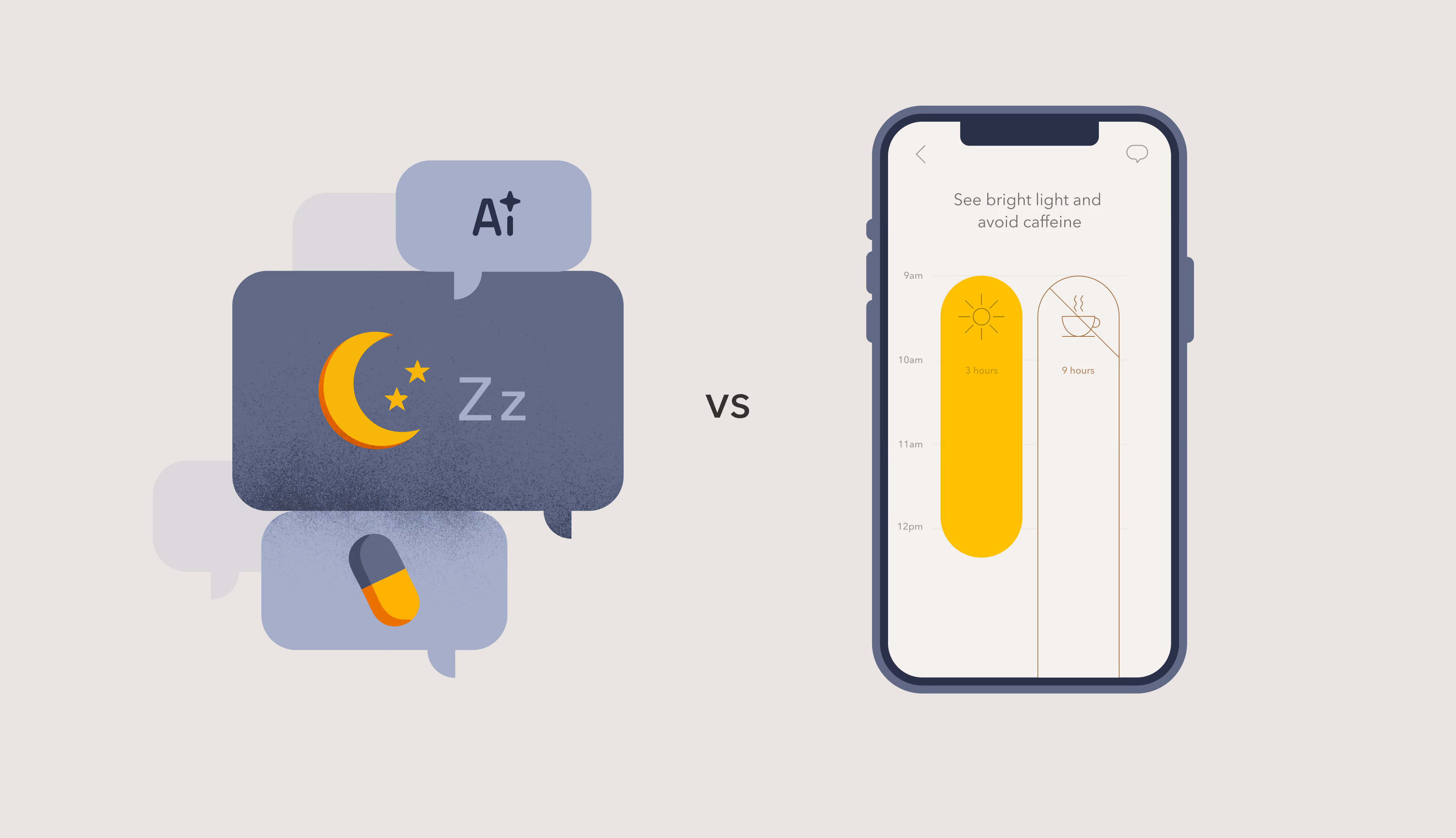
Jet lag calculator vs jet lag app
AI-generated jet lag advice
AI-generated jet lag advice can sound convincing at first glance, but in practice it is inconsistent and wrong. So-called AI-based “solutions” give the wrong advice, and often make jet lag worse, as they are trained on the widespread misinformation found online – if the training data is flawed, the output will be too. They lack an understanding of cross-disciplinary circadian interactions, can produce different recommendations from identical inputs, and optimize responses to user prompts rather than scientific validity. As a result, users can steer the advice toward what sounds appealing or convenient, with no guardrails to prevent recommendations that conflict with what is biologically required to reset the circadian clock.
Timeshifter: A circadian-science-based approach to jet lag
Timeshifter is built on decades of circadian science and validated with proprietary data from real-world use by more than 1.8 million users. Its recommendations are designed to work in real life, accounting for travel direction, flight timing, light exposure, light avoidance, sleep biology, and practical constraints. Timeshifter does not guess — it applies validated circadian principles to deliver guidance that reliably reduces jet lag.
Why Timeshifter’s jet lag app works
There’s a reason why Timeshifter's jet lag app is the most-downloaded and highest-rated jet lag app in the world. Timeshifter was developed with world-renowned scientists, based on the latest research in sleep and circadian neuroscience. With Timeshifter, you can create personalized jet lag plans based on your sleep pattern, chronotype, itinerary, and personal preferences for caffeine and melatonin use. Most jet lag apps do not work because they rely on generic rules rather than validated circadian timing. This is why personalized, science-based guidance is critical.
Timeshifter incorporates a real-world Practicality Filter™, ensuring that the advice is realistic and easy to follow; there is also a unique Quick Turnaround® feature for business travelers who want to be at their best during short business trips that are not long enough to allow full adjustment. An intuitive notification system provides the simple yet powerful advice, even while in-flight.
This is why many travelers consider Timeshifter the best jet lag app for frequent, long-haul, and complex travel.
Compare Timeshifter advice with other jet lag apps
If you compare a Timeshifter jet lag plan with the guidance provided by other jet lag apps, the differences become clear quickly. Many apps rely on simplified or incorrect rules, use the wrong timing assumptions, or make generic recommendations that are not grounded in circadian science. As a result, their advice is often unrealistic to follow during real-world travel, fails to address the underlying cause of jet lag and often makes jet lag worse.
Timeshifter’s recommendations are built on validated circadian principles and refined using real-world data from more than 1.8 million users. This allows Timeshifter to deliver personalized guidance that is biologically accurate, practical to follow, and designed to reduce jet lag consistently — rather than relying on one-size-fits-all schedules or unverified advice.
Real-world results: Jet lag app reviews and survey evidence
Based on 129,852 post-flight surveys, 96.4% of the travelers who followed Timeshifter's advice did not struggle with severe or very severe jet lag. When not following the advice, there was a 6.2x increase in severe or very severe jet lag, and a 14.1x increase in very severe jet lag.
In addition to these outcome-based results, reviews on the App Store and Google Play show an average rating of 4.7 out of 5, with more than 6,000 reviews. Together, these data reflect both real-world effectiveness and high traveler satisfaction.
Jet lag science: How Timeshifter works
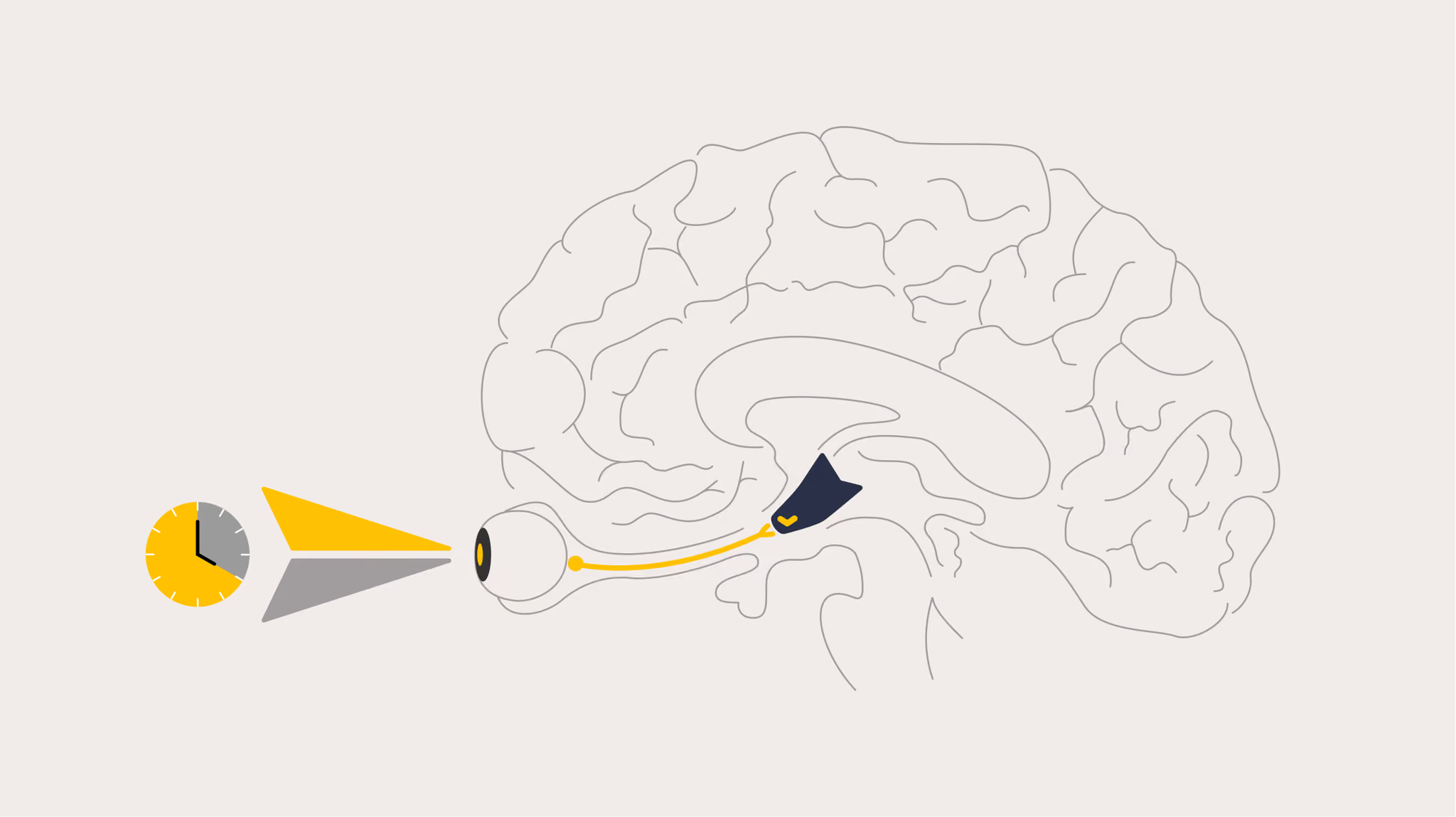
Timeshifter uniquely combines the only elements that have been shown to reset the central circadian clock in the brain (light exposure and melatonin), with other advice that supports compliance with this advice, and also addresses some jet lag symptoms directly (melatonin, low-dose caffeine, naps).
Light has two main effects — it is a chronobiotic — it will reset the circadian clock — and a stimulant, helping to increase alertness. Light avoidance has the opposite effect — avoiding light can shift the clock in the opposite direction and help increase sleepiness, promoting sleep when required. For both, the circadian phase shifting and alerting effects of light, the size of the response depends primarily on light illuminance and spectrum but also other factors such as timing, duration, and pattern.
Melatonin also has two main effects — it is also a chronobiotic and will reset the circadian clock — and a soporific, helping to promote sleep, particularly if trying to sleep at the ‘wrong’ biological time when traveling, or during the day following night work. As a chronobiotic, melatonin will shift the timing of the circadian clock either earlier or later depending on the timing of administration.
Common jet lag myths that don’t work
- Misleading advice on conquering jet lag – often promoted by non-experts or companies lacking real circadian science expertise – not only fails to help travelers but can make jet lag symptoms worse and may even cause harm.
- Jet lag CANNOT be fixed with generic sleep advice, exercise, hydration, dietary supplements, special diets, or fasting. None of these approaches will reset a traveler’s central circadian clock quickly to new time zones.
- Light is the key time cue to “reset” our circadian clocks, so the correct timing of light exposure and avoidance, based on the traveler’s chronotype, normal sleep pattern and itinerary, is the only way to adjust to new time zones quickly. If the traveler’s timing is wrong, it will make their jet lag worse.
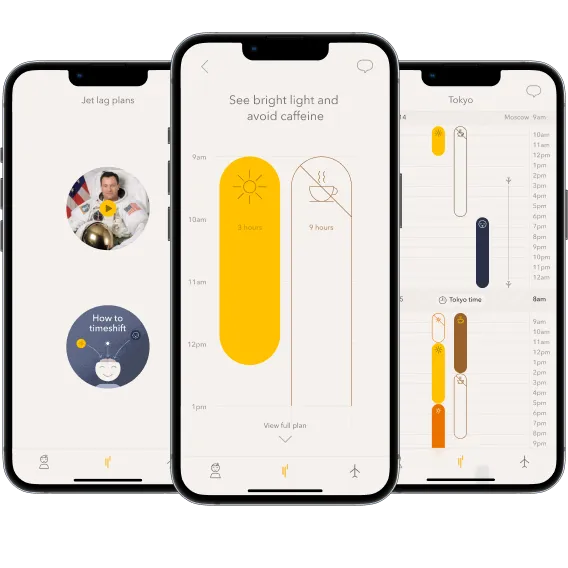
The most downloaded and highest-rated jet lag app in the world.
Jet lag apps and calculators FAQ
Is there a free jet lag calculator?
Yes. The Timeshifter app builds your first jet lag plan free. Web calculators are free too, but they only use time zones, so their advice is generic.
What is the best jet lag calculator?
One that uses more than time zones: your chronotype, sleep pattern and flight times, and that times light avoidance. The Timeshifter app does this and updates when your flight changes.
What is the best jet lag app?
Timeshifter is the most-downloaded and highest-rated jet lag app, rated 4.7 out of 5 from 6,171 ratings. In 129,852 post-flight surveys, 96.4% of travelers who followed its advice did not have severe or very severe jet lag.
Do jet lag calculators work?
Not well. They build schedules from time zones alone, rarely time light avoidance, can’t remind you when to act and can’t update when your flight changes.
References
- Lewy AJ, Ahmed S, Jackson JM, Sack RL. Melatonin shifts human circadian rhythms according to a phase-response curve. Chronobiol Int. 1992;9(5):380–392.
- Khalsa SBS, Jewett ME, Cajochen C, Czeisler CA. A phase response curve to single bright light pulses in human subjects. J Physiol. 2003;549(Pt 3):945–952.
- Herxheimer A, Petrie KJ. Melatonin for the prevention and treatment of jet lag. Cochrane Database Syst Rev. 2002;(2):CD001520.
- Wyatt JK, Dijk DJ, Ritz-de Cecco A, Ronda JM, Czeisler CA. Sleep-facilitating effect of exogenous melatonin in healthy young men and women is circadian-phase dependent. Sleep. 2006;29(5):609–618.
- Timeshifter post-travel survey: 129,852 completed post-flight responses (Timeshifter data).