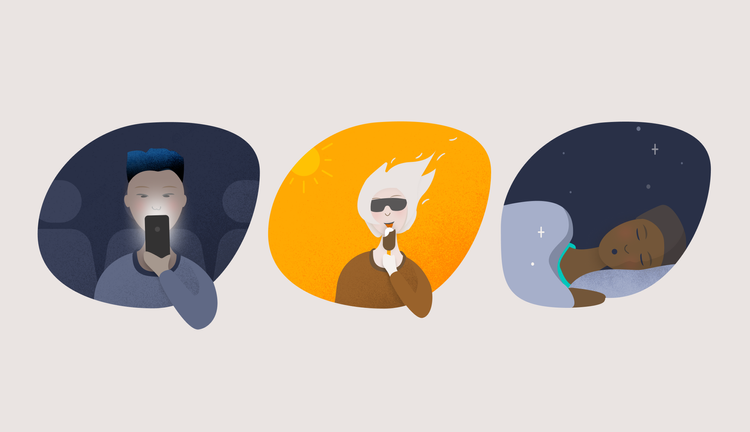
Understanding the advice is key to success
Get insights and Q&As on every recommendation in Timeshifter, and learn to timeshift more effectively.
What product are you using?
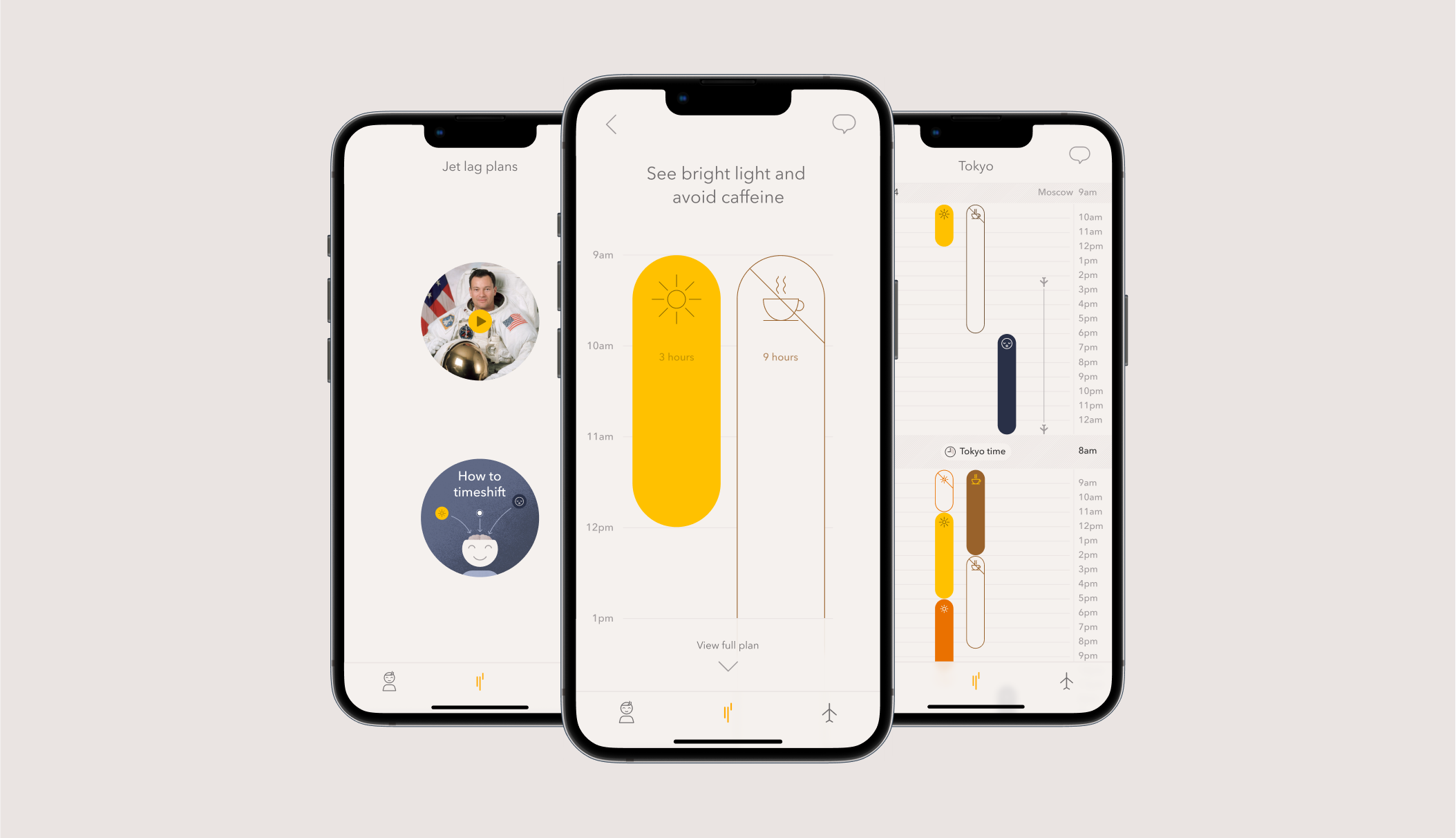
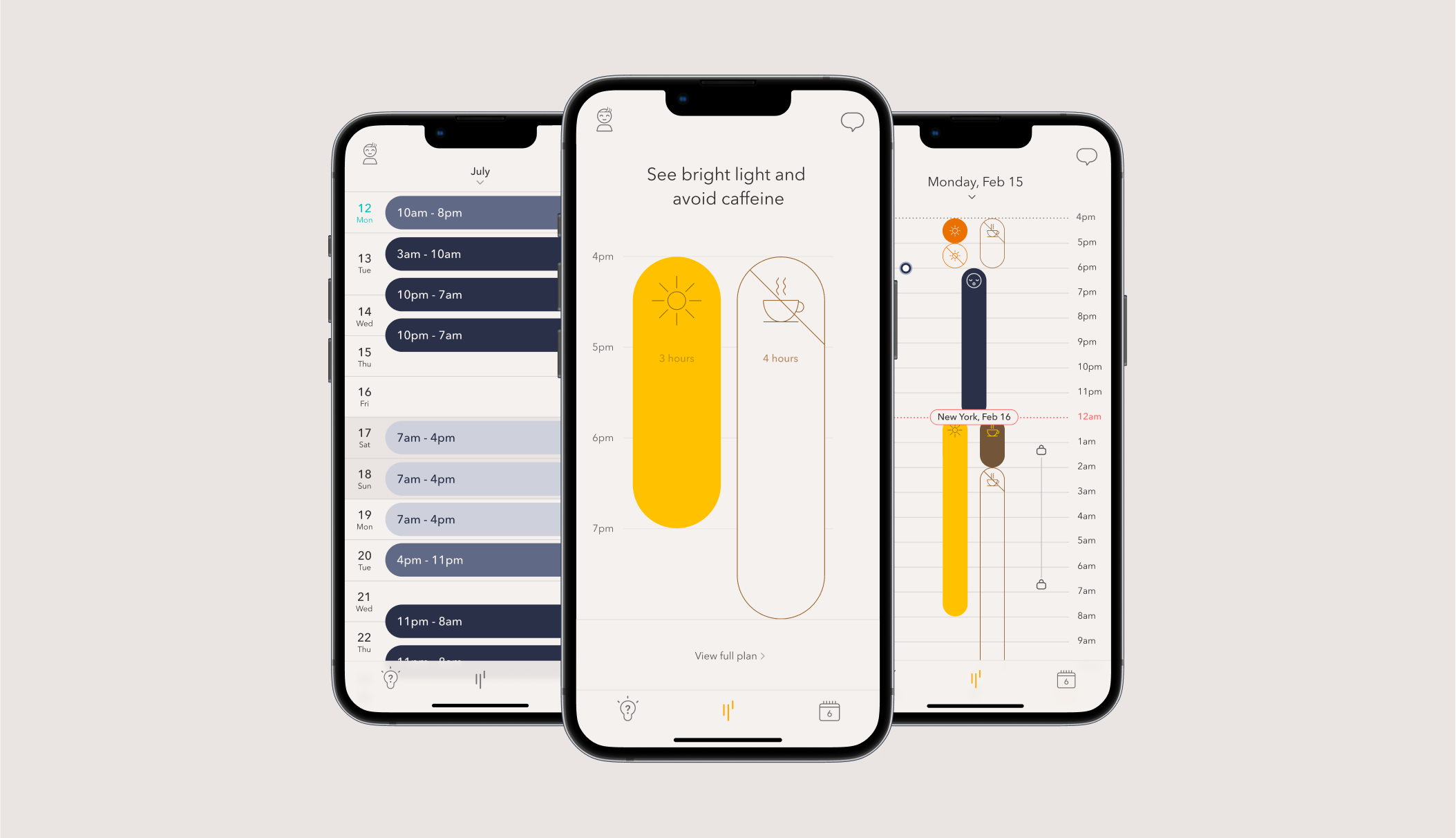
See bright light
Expose yourself to as much bright light as possible. Avoid wearing sunglasses. If indoors, turn on all available lights. If using electronic devices, set the brightness to maximum. Avoid looking directly into bright lights to protect your eyes.
Why do I need to see bright light?
Your brain has a 24-hour circadian clock. When you cross time zones quickly, your circadian clock can’t keep up, causing jet lag. Since light is both a direct stimulant and your circadian clock's key time cue, the right timing of light exposure is critical for quickly adjusting your circadian clock to the new time zone and staying alert.
What if I’m not exposed to bright light?
If you miss light exposure when recommended, it shifts your circadian clock in the wrong direction, making jet lag worse. Try to follow the light recommendations as much as possible. Any light exposure is better than none.
What are the effects of light exposure?
Light exposure acts as a direct stimulant and also entrains, or synchronizes, the 24-hour circadian clock in your brain with your environment. This central circadian clock then regulates other circadian clocks in your body, influencing key functions like sleep, alertness, mood, performance, hormone rhythms, immune function, reproduction, digestion, and metabolism.
See some light
Expose yourself to light, even if it’s not very bright. Avoid dim lighting or darkness, and don’t wear sunglasses. Avoid looking directly at bright lights to protect your eyes.
Why do I need to see light?
Your brain has a 24-hour circadian clock. When you cross time zones quickly, your circadian clock can’t keep up, causing jet lag. Since light is both a direct stimulant and your circadian clock's key time cue, the right timing of light exposure is critical for quickly adjusting your circadian clock to the new time zone and staying alert.
What if I’m not exposed to light?
If you miss light exposure when recommended, it shifts your circadian clock in the wrong direction, making jet lag worse. Try to follow the light recommendations as much as possible. Any light exposure is better than none.
What are the effects of light exposure?
Light exposure acts as a direct stimulant and also entrains, or synchronizes, the 24-hour circadian clock in your brain with your environment. This central circadian clock then regulates other circadian clocks in your body, influencing key functions like sleep, alertness, mood, performance, hormone rhythms, immune function, reproduction, digestion, and metabolism.
Avoid light
Minimize light exposure as much as possible. If you can’t avoid being exposed to sunlight or bright indoor lights, wear dark sunglasses. Avoid using electronic devices.
Why do I need to avoid light?
Your brain has a 24-hour circadian clock. When you cross time zones quickly, your circadian clock can’t keep up, causing jet lag. Since light is your circadian clock's key time cue, the right timing of light avoidance is critical for quickly adjusting your circadian clock to the new time zone.
What kind of light should I avoid?
Sunlight is the strongest source, so do your best to avoid natural light when prompted. Blue-enriched light from some indoor lighting and electronic screens can also interfere with your circadian clock. Wearing sunglasses helps reduce light exposure, especially if they are dark and wrap around the eyes.
What if I’m not avoiding light?
If you miss light avoidance when recommended, it will make you alert when you need to be sleepy and shifts your circadian clock in the wrong direction, making jet lag worse. Try to follow the light recommendations as much as possible.
What are the most effective sunglasses for avoiding light?
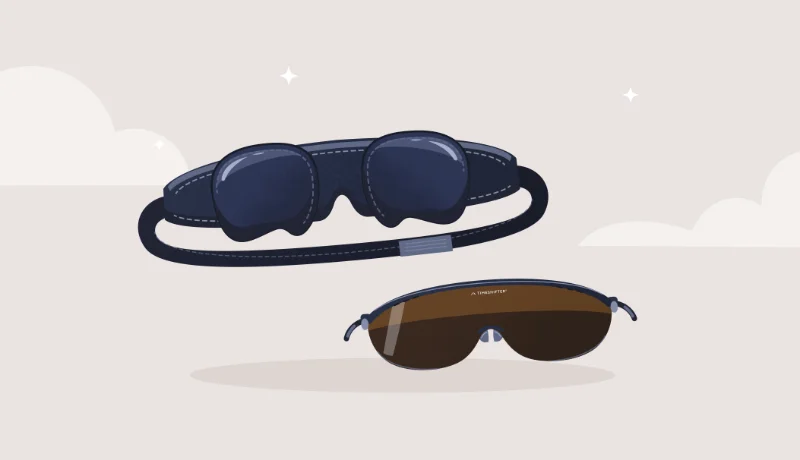
All visible light can affect the circadian rhythm so use sunglasses that are as dark as possible to block the most light. ‘Wrap-around’ styles will help reduce light exposure further. “Blue-blocking” glasses can also be used but these will likely not be as effective as sunglasses, especially at lower light levels.
.svg)
Sleep (or avoid light)
It’s time to sleep. Make sure your room is cool, quiet, and dark. A sleep mask and earplugs may help. Turn off your phone and set an alarm to wake up.
Why is sleep so important?
Sleep allows your brain and body to rest and recover, boosting your daytime performance. When crossing time zones, sleep—or staying in darkness—helps your circadian clock adjust more quickly to the new time zone.
What if I sleep earlier or later than the plan suggests?
No worries! Just try to return to the recommended sleep schedule in the coming days.
What controls my sleep duration and quality?
Sleep duration and quality are influenced by two main processes: your circadian time (Process C), which dictates your sleep timing, and sleep pressure (Process S), which depends on how long you’ve been awake and any existing sleep debt.

Nap
It’s time to take a nap. Even a short rest can help. Keep your room cool, quiet, and dark. Consider a sleep mask and earplugs. Turn off your phone and set an alarm.
You recommended a nap on the day I leave. Do I have to take it?
Yes, we recommend a short nap before your flight to help you stay up later, as some trips may require you to adjust to a later schedule. While it might be challenging to fit a nap into your pre-departure routine, even a short rest before leaving can help.
How long should I nap for?
The plan will suggest the ideal nap length. If you can’t nap for the full duration, rest as long as you can—any sleep is better than none. Pre-flight naps can be up to an hour, while post-flight naps should be timed according to the plan.
I can’t schedule a nap at the specified time. What should I do?
If the nap on the day of the flight is short, feel free to adjust the timing to fit your schedule. For longer naps, try to nap as close to the recommended time as possible, as it’s part of the overall plan. Any amount of rest will still be helpful.
What if I skip the nap?
Skipping the nap won’t majorly affect your adaptation plan, but you may feel sleepier and find it harder to stay awake when advised. If needed, use caffeine as outlined in the plan (if caffeine advice is enabled) to help manage drowsiness.
Why is a nap recommended?
Naps reduce sleep pressure, helping you stay awake later and perform better. They also reduce light exposure, which can aid in shifting your circadian clock faster. If you have an early flight, pre-flight naps are a good way to get some rest, even if you miss a full night’s sleep.

Nap if you're tired
If you’re tired, a short nap can be helpful. If not, there’s no need to nap. Keep your room cool, quiet, and dark. Use a sleep mask and earplugs if needed. Turn off your phone and set an alarm.
What will happen if I don’t take this optional nap?
These naps are intended to reduce sleepiness, especially if you didn’t get enough sleep on the plane or before travel. If you’re not feeling tired and skip the nap, it won’t impact you much. However, if you are tired and skip it, you may feel more exhausted later in the day.

Take melatonin
Take the recommended type and dose of melatonin. Always consult your doctor before using it.
What is melatonin?
Melatonin is a natural hormone that our bodies make only at night, which is why it’s often called the “hormone of darkness.” It’s controlled by our body’s 24-hour clock and helps signal to our brain that it’s time for sleep. We usually start making melatonin about 2–3 hours before bedtime.
Why can't I produce my own melatonin?
When you cross time zones, your melatonin rhythm temporarily falls out of sync with your sleep rhythm, as the change happens too quickly for your circadian clock to adjust. In this case, using melatonin supplements can help you shift your circadian clock to the new time zone more quickly.
How do melatonin pills reduce jet lag?
Taking melatonin pills, which contain a synthetic version of the hormone, helps in two ways: First, it shifts your circadian clock, helping you adjust to new time zones more quickly. Second, it signals your brain to sleep at a new time, making it easier to sleep during the transition.
Do I have to use melatonin?
No, taking melatonin isn’t necessary to reduce jet lag. Jet lag plans without melatonin are still effective, though it may take a bit longer to adjust, and you might find it harder to fall asleep without it.
What are the side effects of melatonin?
While there are no formal long-term safety studies, up to 5% of people in research have reported side effects such as morning headaches, nausea, and vivid dreams. Melatonin can also make you drowsy, so avoid driving or tasks requiring alertness for eight hours after taking it. There is currently no data on melatonin’s interactions with other medications.
Use caffeine
Use small amounts of caffeine regularly, like a cup of tea, coffee, or soda every couple of hours. Avoid large amounts, as too much can interfere with sleep later.
Do I have to use caffeine?
No, you don’t have to use caffeine. If you’re already a caffeine user, our advice helps you use it in the most effective way. If you’re not, there’s no need to start now!
What if I don’t use caffeine?
Without caffeine, you may find it harder to stay awake at certain times. However, it won’t impact the benefits of the plan.
What does “use caffeine little and often” mean?
“Little and often” means consuming about 20–25 mg of caffeine every hour or 40–50 mg every two hours. Larger amounts won’t make you more alert and may disrupt sleep or cause side effects. Avoid large espressos and energy drinks, as they contain too much caffeine.
Why is it best to use caffeine “little and often”?
Using caffeine in small, frequent amounts helps keep you alert without building up too much caffeine in your system, which can disrupt sleep later. This approach lets you gain the benefits of caffeine while minimizing its negative effects on sleep.
What contains caffeine?
Caffeine is found in tea, coffee, caffeinated sodas, chocolate, and some pain medications. Brewed coffee and energy drinks contain especially high levels of caffeine. It’s helpful to check the caffeine content of your drink to manage your intake effectively.
Avoid caffeine
Stay away from caffeine. Check labels on drinks and snacks, as even some chocolates contain caffeine.
What contains caffeine?
Caffeine is found in tea, coffee, caffeinated sodas, chocolate, and some pain medications. Brewed coffee and energy drinks contain especially high levels of caffeine. It’s helpful to check the caffeine content of your drink to manage your intake effectively.
What if I'm not avoiding caffeine?
If you’re not avoiding caffeine, you may find it harder to fall asleep at the right time and experience less deep sleep, which can leave you feeling more tired upon waking.
How does caffeine promote alertness?
Caffeine blocks adenosine, a chemical that builds up in your body while you’re awake and increases sleepiness. By blocking adenosine, caffeine helps you feel more alert.
Why should I avoid caffeine close to bedtime?
Caffeine stays in your system for hours. It has a half-life of 3–5 hours, meaning if you consume 100 mg in the morning, you’ll still have 12.5 mg in your body 12 hours later. Having caffeine in your system at bedtime can negatively impact your sleep.

Peak fatigue
Be extra cautious when doing tasks that need focus or alertness, as you may be more tired than usual.
Why do I feel more tired at certain times of the day?
Your circadian system creates natural periods of sleepiness, making it harder to stay awake, focus, or be productive at specific times.
Why am I tired right after waking up?
This grogginess, called sleep inertia, occurs because it takes several hours to reach full alertness. The intensity of sleep inertia depends on factors like sleep quality, the sleep stage you woke from, and your circadian rhythm.
Why do I feel more tired the longer I’m awake?
The longer you’re awake, the more sleepiness builds up. If you don’t get enough sleep regularly, this chronic sleep deficiency can increase fatigue and make you feel sleepy earlier in the day.
See bright light
Expose yourself to as much bright light as possible. Avoid wearing sunglasses. If indoors, turn on all available lights. If using electronic devices, set the brightness to maximum. Avoid looking directly into bright lights to protect your eyes.
Why do I need to see bright light?
Your brain has a 24-hour circadian clock. When you work changing shifts, your circadian clock can’t keep up, causing a range of negative effects. Since light is both a direct stimulant and your circadian clock's key time cue, the right timing of light exposure is critical for reducing the negative effects of shift work and staying alert.
What if I’m not exposed to bright light?
If you miss light exposure when recommended, it shifts your circadian clock in the wrong direction, increasing the negative effects of shift work. Try to follow the light recommendations as much as possible. Any light exposure is better than none.
I work in a dark environment - what can I do?
Try to get exposed to light during your breaks if possible. Intermittent light exposure can work nearly as well as continuous exposure.
What are the effects of light exposure?
Light exposure acts as a direct stimulant and also entrains, or synchronizes, the 24-hour circadian clock in your brain with your environment. This central circadian clock then regulates other circadian clocks in your body, influencing key functions like sleep, alertness, mood, performance, hormone rhythms, immune function, reproduction, digestion, and metabolism.
See some light
Expose yourself to light, even if it’s not very bright. Avoid dim lighting or darkness, and don’t wear sunglasses. Avoid looking directly at bright lights to protect your eyes.
Why do I need to see light?
Your brain has a 24-hour circadian clock. When you work changing shifts, your circadian clock can’t keep up, causing a range of negative effects. Since light is both a direct stimulant and your circadian clock's key time cue, the right timing of light exposure is critical for reducing the negative effects of shift work and staying alert.
What if I’m not exposed to light?
If you miss light exposure when recommended, it shifts your circadian clock in the wrong direction, increasing the negative effects of shift work. Try to follow the light recommendations as much as possible. Any light exposure is better than none.
I work in a dark environment - what can I do?
Try to get exposed to light during your breaks if possible. Intermittent light exposure can work nearly as well as continuous exposure.
What are the effects of light exposure?
Light exposure acts as a direct stimulant and also entrains, or synchronizes, the 24-hour circadian clock in your brain with your environment. This central circadian clock then regulates other circadian clocks in your body, influencing key functions like sleep, alertness, mood, performance, hormone rhythms, immune function, reproduction, digestion, and metabolism.
Avoid light
Minimize light exposure as much as possible. If you can’t avoid being exposed to sunlight or bright indoor lights, wear dark sunglasses. Avoid using electronic devices.
Why do I need to avoid light?
Your brain has a 24-hour circadian clock. When you work changing shifts, your circadian clock can’t keep up, causing a range of negative effects. Since light is your circadian clock's key time cue, the right timing of light avoidance is critical for reducing the negative effects of shift work.
What kind of light should I avoid?
Sunlight is the strongest source, so do your best to avoid natural light when prompted. Blue-enriched light from some indoor lighting and electronic screens can also interfere with your circadian clock. Wearing sunglasses helps reduce light exposure, especially if they are dark and wrap around the eyes.
What if I’m not avoiding light?
If you miss light avoidance when recommended, it will make you alert when you need to be sleepy and shifts your circadian clock in the wrong direction, increasing the negative effects of shift work. Try to follow the light recommendations as much as possible.
What are the most effective sunglasses for avoiding light?
All visible light can affect the circadian rhythm so use sunglasses that are as dark as possible to block the most light. ‘Wrap-around’ styles will help reduce light exposure further. “Blue-blocking” glasses can also be used but these will likely not be as effective as sunglasses, especially at lower light levels.
Sleep (or avoid light)
It’s time to sleep. Make sure your room is cool, quiet, and dark. A sleep mask and earplugs may help. Turn off your phone and set an alarm to wake up.
Why is sleep so important?
Sleep allows your brain and body to rest and recover, boosting your daytime performance. When working shifts, sleep—or staying in darkness—helps your circadian clock be better aligned with your work schedule and reduce the negative effects of shift work.
What if I sleep earlier or later than the plan suggests?
No worries! Just try to return to the recommended sleep schedule in the coming days.
What controls my sleep duration and quality?
Sleep duration and quality are influenced by two main processes: your circadian time (Process C), which dictates your sleep timing, and sleep pressure (Process S), which depends on how long you’ve been awake and any existing sleep debt.
Nap
It’s time to take a nap. Even a short rest can help. Keep your room cool, quiet, and dark. Consider a sleep mask and earplugs. Turn off your phone and set an alarm.
How long should I nap for?
The plan will suggest the ideal nap length. If you can’t nap for the full duration, rest as long as you can—any sleep is better than none.
I can’t schedule a nap at the specified time. What should I do?
Try to nap as close to the recommended time as possible, as it’s part of the overall plan. Any amount of rest will still be helpful.
What if I skip the nap?
Skipping the nap won’t majorly affect your adaptation plan, but you may feel sleepier and find it harder to stay awake when advised. If needed, use caffeine as outlined in the plan (if caffeine advice is enabled) to help manage drowsiness.
Why is a nap recommended?
Naps reduce sleep pressure, helping you stay awake later and perform better. They also reduce light exposure, which can aid in shifting your circadian clock faster.
Nap if you're tired
If you’re tired, a short nap can be helpful. If not, there’s no need to nap. Keep your room cool, quiet, and dark. Use a sleep mask and earplugs if needed. Turn off your phone and set an alarm.
What will happen if I don’t take this optional nap?
These naps are intended to reduce sleepiness. If you’re not feeling tired and skip the nap, it won’t impact you much. However, if you are tired and skip it, you may feel more exhausted later in the day.
Take melatonin
Take the recommended type and dose of melatonin. Always consult your doctor before using it.
What is melatonin?
Melatonin is a natural hormone that our bodies make only at night, which is why it’s often called the “hormone of darkness.” It’s controlled by our body’s 24-hour clock and helps signal to our brain that it’s time for sleep. We usually start making melatonin about 2–3 hours before bedtime.
Why can't I produce my own melatonin?
When working shifts, your melatonin rhythm sometimes temporarily falls out of sync with your sleep rhythm, as the change happens too quickly for your circadian clock to adjust. This mismatch is one of the reasons why shift workers find it hard to sleep during the day or to stay alert during the night.
How do melatonin pills reduce the negative effects of shift work?
Taking melatonin pills, which contain a synthetic version of the hormone, helps in two ways: First, it shifts your circadian clock, helping you reduce the negative effects of shift work more quickly. Second, it signals your brain to sleep at a new time, making it easier to sleep during the transition.
Do I have to use melatonin?
No, taking melatonin isn’t necessary. Plans without melatonin are still effective, though it may take a bit longer to adjust, and you might find it harder to fall asleep without it.
What are the side effects of melatonin?
While there are no formal long-term safety studies, up to 5% of people in research have reported side effects such as morning headaches, nausea, and vivid dreams. Melatonin can also make you drowsy, so avoid driving or tasks requiring alertness for eight hours after taking it. There is currently no data on melatonin’s interactions with other medications.
Use caffeine
Use small amounts of caffeine regularly, like a cup of tea, coffee, or soda every couple of hours. Avoid large amounts, as too much can interfere with sleep later.
Do I have to use caffeine?
No, you don’t have to use caffeine. If you’re already a caffeine user, our advice helps you use it in the most effective way. If you’re not, there’s no need to start now!
What if I don’t use caffeine?
Without caffeine, you may find it harder to stay awake at certain times. However, it won’t impact the benefits of the plan.
What does “use caffeine little and often” mean?
“Little and often” means consuming about 20–25 mg of caffeine every hour or 40–50 mg every two hours. Larger amounts won’t make you more alert and may disrupt sleep or cause side effects. Avoid large espressos and energy drinks, as they contain too much caffeine.
Why is it best to use caffeine “little and often”?
Using caffeine in small, frequent amounts helps keep you alert without building up too much caffeine in your system, which can disrupt sleep later. This approach lets you gain the benefits of caffeine while minimizing its negative effects on sleep.
What contains caffeine?
Caffeine is found in tea, coffee, caffeinated sodas, chocolate, and some pain medications. Brewed coffee and energy drinks contain especially high levels of caffeine. It’s helpful to check the caffeine content of your drink to manage your intake effectively.
Avoid caffeine
Stay away from caffeine. Check labels on drinks and snacks, as even some chocolates contain caffeine.
What contains caffeine?
Caffeine is found in tea, coffee, caffeinated sodas, chocolate, and some pain medications. Brewed coffee and energy drinks contain especially high levels of caffeine. It’s helpful to check the caffeine content of your drink to manage your intake effectively.
What if I'm not avoiding caffeine?
If you’re not avoiding caffeine, you may find it harder to fall asleep at the right time and experience less deep sleep, which can leave you feeling more tired upon waking.
How does caffeine promote alertness?
Caffeine blocks adenosine, a chemical that builds up in your body while you’re awake and increases sleepiness. By blocking adenosine, caffeine helps you feel more alert.
Why should I avoid caffeine close to bedtime?
Caffeine stays in your system for hours. It has a half-life of 3–5 hours, meaning if you consume 100 mg in the morning, you’ll still have 12.5 mg in your body 12 hours later. Having caffeine in your system at bedtime can negatively impact your sleep.
See bright light
Expose yourself to as much bright light as possible. Avoid wearing sunglasses. If indoors, turn on all available lights. If using electronic devices, set the brightness to maximum. Avoid looking directly into bright lights to protect your eyes.
Why do I need to see bright light?
Your brain has a 24-hour circadian clock that regulates your sleep-wake cycle. Since light is both a direct stimulant and your circadian clock's key time cue, the right timing of light exposure is critical for optimizing your performance during the day.
What if I’m not exposed to bright light?
If you miss light exposure when recommended, it will make you sleepy when you need to be alert and affect the circadian stability your circadian system craves, compromising your health and performance.
What are the effects of light exposure?
Light exposure acts as a direct stimulant and also entrains, or synchronizes, the 24-hour circadian clock in your brain with your environment. This central circadian clock then regulates other circadian clocks in your body, influencing key functions like sleep, alertness, mood, performance, hormone rhythms, immune function, reproduction, digestion, and metabolism.
Avoid light
Minimize light exposure as much as possible. If you can’t avoid being exposed to sunlight or bright indoor lights, wear dark sunglasses. Avoid using electronic devices.
Why do I need to avoid light?
Your brain has a 24-hour circadian clock that regulates your sleep-wake cycle. Since light is both a direct stimulant and your circadian clock's key time cue, the right timing of light avoidance is critical for optimizing your sleep quantity and quality.
What kind of light should I avoid?
Sunlight is the strongest source, so do your best to avoid natural light when prompted. Blue-enriched light from some indoor lighting and electronic screens can also interfere with your circadian clock. Wearing sunglasses helps reduce light exposure, especially if they are dark and wrap around the eyes.
What if I’m not avoiding light?
If you miss light avoidance when recommended, it will make you alert when you need to be sleepy and affect the circadian stability your circadian system craves, compromising your health and performance.
What are the most effective sunglasses for avoiding light?
All visible light can affect the circadian rhythm so use sunglasses that are as dark as possible to block the most light. ‘Wrap-around’ styles will help reduce light exposure further. “Blue-blocking” glasses can also be used but these will likely not be as effective as sunglasses, especially at lower light levels.
Sleep (or avoid light)
It’s time to sleep. Make sure your room is cool, quiet, and dark. A sleep mask and earplugs may help. Turn off your phone and set an alarm to wake up.
Why is sleep so important?
Sleep allows your brain and body to rest and recover, boosting your daytime performance.
What if I sleep earlier or later than the plan suggests?
No worries! Just try to return to the recommended sleep schedule in the coming days.
What controls my sleep duration and quality?
Sleep duration and quality are influenced by two main processes: your circadian time (Process C), which dictates your sleep timing, and sleep pressure (Process S), which depends on how long you’ve been awake and any existing sleep debt.
Nap
It’s time to take a nap. Even a short rest can help. Keep your room cool, quiet, and dark. Consider a sleep mask and earplugs. Turn off your phone and set an alarm.
How long should I nap for?
The plan will suggest the ideal nap length. If you can’t nap for the full duration, rest as long as you can—any sleep is better than none.
I can’t schedule a nap at the specified time. What should I do?
Try to nap as close to the recommended time as possible, as it’s part of the overall plan. Any amount of rest will still be helpful.
What if I skip the nap?
Skipping the nap won’t majorly affect your adaptation plan, but you may feel sleepier and find it harder to stay awake when advised. If needed, use caffeine as outlined in the plan (if caffeine advice is enabled) to help manage drowsiness.
Why is a nap recommended?
Naps reduce sleep pressure, helping you stay awake later and perform better. They also reduce light exposure, which can aid in shifting your circadian clock faster.
Nap if you're tired
If you’re tired, a short nap can be helpful. If not, there’s no need to nap. Keep your room cool, quiet, and dark. Use a sleep mask and earplugs if needed. Turn off your phone and set an alarm.
What will happen if I don’t take this optional nap?
These naps are intended to reduce sleepiness. If you’re not feeling tired and skip the nap, it won’t impact you much. However, if you are tired and skip it, you may feel more exhausted later in the day.
Take melatonin
Take the recommended type and dose of melatonin. Always consult your doctor before using it.
What is melatonin?
Melatonin is a natural hormone that our bodies make only at night, which is why it’s often called the “hormone of darkness.” It’s controlled by our body’s 24-hour clock and helps signal to our brain that it’s time for sleep. We usually start making melatonin about 2–3 hours before bedtime.
Do I have to use melatonin?
No, taking melatonin isn’t necessary. Plans without melatonin are still effective, though it may take a bit longer to adjust, and you might find it harder to fall asleep without it.
What are the side effects of melatonin?
While there are no formal long-term safety studies, up to 5% of people in research have reported side effects such as morning headaches, nausea, and vivid dreams. Melatonin can also make you drowsy, so avoid driving or tasks requiring alertness for eight hours after taking it. There is currently no data on melatonin’s interactions with other medications.
Use caffeine
Use small amounts of caffeine regularly, like a cup of tea, coffee, or soda every couple of hours. Avoid large amounts, as too much can interfere with sleep later.
Do I have to use caffeine?
No, you don’t have to use caffeine. If you’re already a caffeine user, our advice helps you use it in the most effective way. If you’re not, there’s no need to start now!
What if I don’t use caffeine?
Without caffeine, you may find it harder to stay awake at certain times. However, it won’t impact the benefits of the plan.
What does “use caffeine little and often” mean?
“Little and often” means consuming about 20–25 mg of caffeine every hour or 40–50 mg every two hours. Larger amounts won’t make you more alert and may disrupt sleep or cause side effects. Avoid large espressos and energy drinks, as they contain too much caffeine.
Why is it best to use caffeine “little and often”?
Using caffeine in small, frequent amounts helps keep you alert without building up too much caffeine in your system, which can disrupt sleep later. This approach lets you gain the benefits of caffeine while minimizing its negative effects on sleep.
What contains caffeine?
Caffeine is found in tea, coffee, caffeinated sodas, chocolate, and some pain medications. Brewed coffee and energy drinks contain especially high levels of caffeine. It’s helpful to check the caffeine content of your drink to manage your intake effectively.
Avoid caffeine
Stay away from caffeine. Check labels on drinks and snacks, as even some chocolates contain caffeine.
What contains caffeine?
Caffeine is found in tea, coffee, caffeinated sodas, chocolate, and some pain medications. Brewed coffee and energy drinks contain especially high levels of caffeine. It’s helpful to check the caffeine content of your drink to manage your intake effectively.
What if I'm not avoiding caffeine?
If you’re not avoiding caffeine, you may find it harder to fall asleep at the right time and experience less deep sleep, which can leave you feeling more tired upon waking.
How does caffeine promote alertness?
Caffeine blocks adenosine, a chemical that builds up in your body while you’re awake and increases sleepiness. By blocking adenosine, caffeine helps you feel more alert.
Why should I avoid caffeine close to bedtime?
Caffeine stays in your system for hours. It has a half-life of 3–5 hours, meaning if you consume 100 mg in the morning, you’ll still have 12.5 mg in your body 12 hours later. Having caffeine in your system at bedtime can negatively impact your sleep.
Eat normally
Try to eat most of your calories during this time. Keep your meals balanced and nutritious.
Why does meal timing affect my metabolism?
Meal timing has a significant impact on your metabolism. Our bodies are naturally designed to process food more efficiently during daylight hours, as humans are diurnal and typically active during the day.
Eat lean and light
Stick to smaller meals that are low in fat and carbohydrates. Minimize calorie intake.
Why does meal timing affect my metabolism?
Meal timing has a significant impact on your metabolism. Our bodies are naturally designed to process food more efficiently during daylight hours, as humans are diurnal and typically active during the day.
Avoid eating
Try not to eat or drink anything with calories.
Why is eating at night unhealthy?
Eating at night results in higher levels of glucose, insulin, and fats in the blood compared to eating the same food during the day, making nighttime eating less efficient and potentially harmful for metabolism.
Why is eating right after waking up unhealthy?
Eating immediately after waking up, similar to eating in the evening, can reduce metabolic efficiency. Eating later in the day aligns better with your circadian rhythm, optimizing digestion and supporting better metabolism.
Exercise normally
This is a good time for high-intensity workouts.
How do circadian rhythms affect exercise?
Circadian rhythms regulate key physical processes for exercise — like body temperature, muscle strength, heart rate, and lung function. These rhythms help you perform at your best during the day and support recovery at night.
Exercise with low intensity
Stick to low-intensity activities that don’t put too much strain on your body, such as stretching or walking.
How do circadian rhythms affect exercise?
Circadian rhythms regulate key physical processes for exercise — like body temperature, muscle strength, heart rate, and lung function. These rhythms help you perform at your best during the day and support recovery at night.
Avoid exercise
Avoid exercise. Your body isn’t ready for physical activity, and exercising now may increase your risk of injury.
Why is exercising right after waking up not recommended?
Strenuous exercise isn’t recommended immediately after waking because your body and brain aren’t fully prepared. Allowing your body time to wake up can improve performance and lower the risk of injury.
Why is exercising close to bedtime not recommended?
Exercising close to bedtime can disrupt sleep. The stimulating effects of exercise, along with exposure to light, can make it harder to fall asleep and reduce the quality of your rest.
Peak fatigue
Be extra cautious when doing tasks that need focus or alertness, as you may be more tired than usual.
Why do I feel more tired at certain times of the day?
Your circadian system creates natural periods of sleepiness, making it harder to stay awake, focus, or be productive at specific times.
Why am I tired right after waking up?
This grogginess, called sleep inertia, occurs because it takes several hours to reach full alertness. The intensity of sleep inertia depends on factors like sleep quality, the sleep stage you woke from, and your circadian rhythm.
Why do I feel more tired the longer I’m awake?
The longer you’re awake, the more sleepiness builds up. If you don’t get enough sleep regularly, this chronic sleep deficiency can increase fatigue and make you feel sleepy earlier in the day.