Caffeine and jet lag
Caffeine can help you stay alert when your circadian clock is out of sync with local time, but it doesn't reset your clock the way that light and melatonin do. Caffeine masks fatigue rather than fixing the underlying misalignment. Used at the wrong time, it can also make your jet lag worse by disrupting sleep, and therefore light exposure, at your destination.

When you're tired while traveling, a cup of caffeinated tea or coffee, or a caffeinated soda (equivalent to about 40–50mg of caffeine) every two hours should help you stay awake. More than that will not make you more alert but may reduce your ability to sleep later. All caffeine use affects sleep but stopping caffeine at least 9 hours before bedtime will reduce the negative impact on your sleep quality.
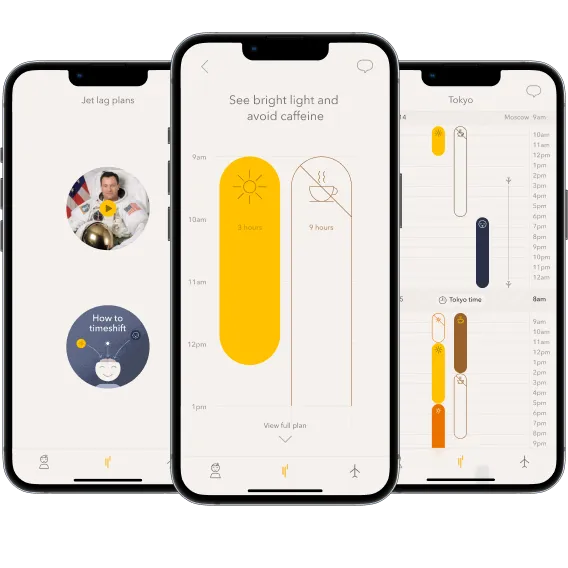
For those travelers who want to use caffeine, Timeshifter provides advice on when and how to use it, and when to avoid it, to support the light-dark and sleep schedule that will reset your clock quickly.
What contains caffeine?
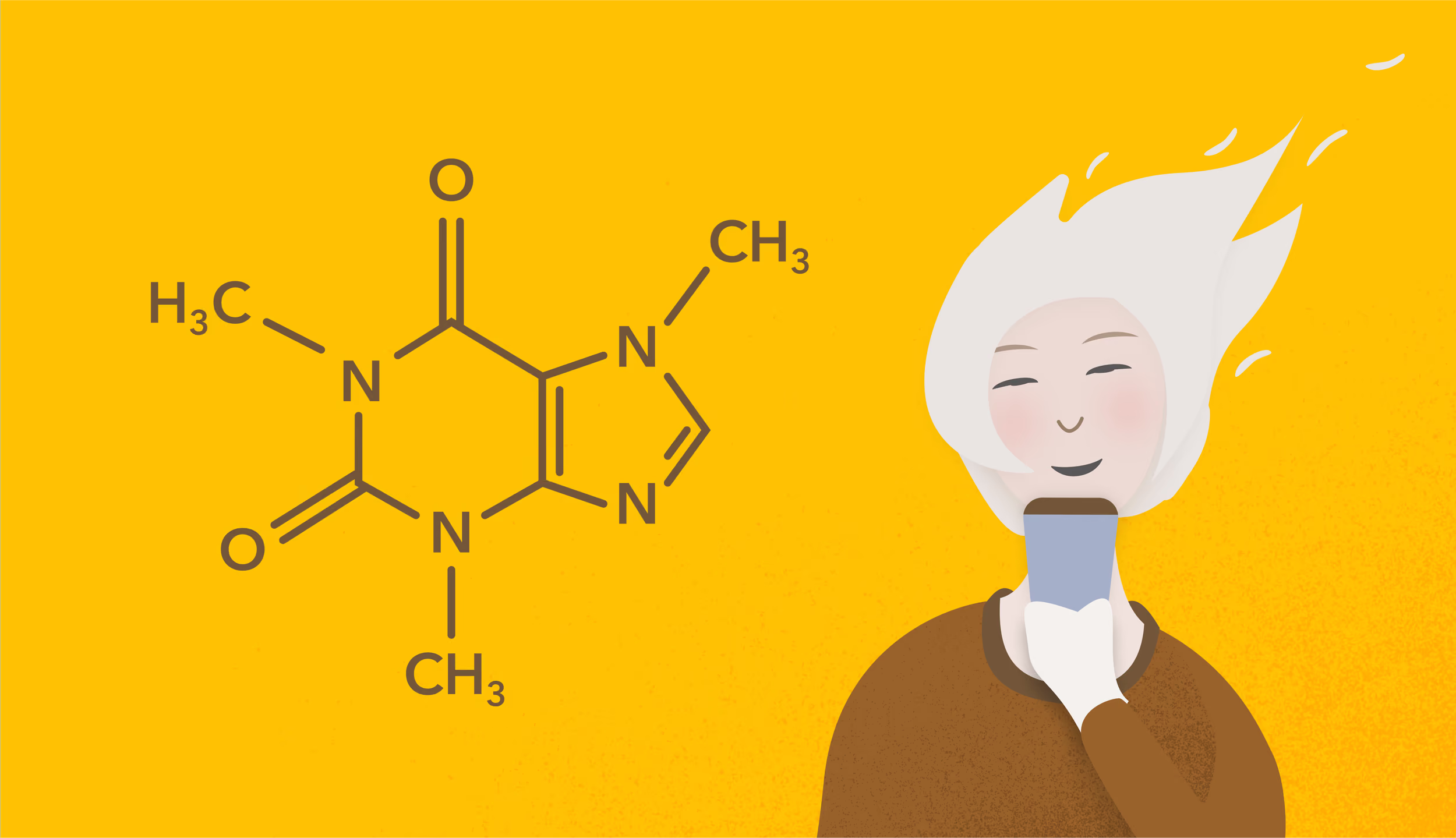
Caffeine is present in tea, coffee, caffeinated sodas, chocolate, and in some pain medications. Brewed ‘drip’ coffee and energy drinks tend to have very high amounts of caffeine so only half a cup of these is needed every two hours. Work out the caffeine content of your typical drink so you can plan how much to have. ‘Energy’ drinks tend to have too much caffeine to help follow the ‘little and often’ advice.
How does caffeine work?
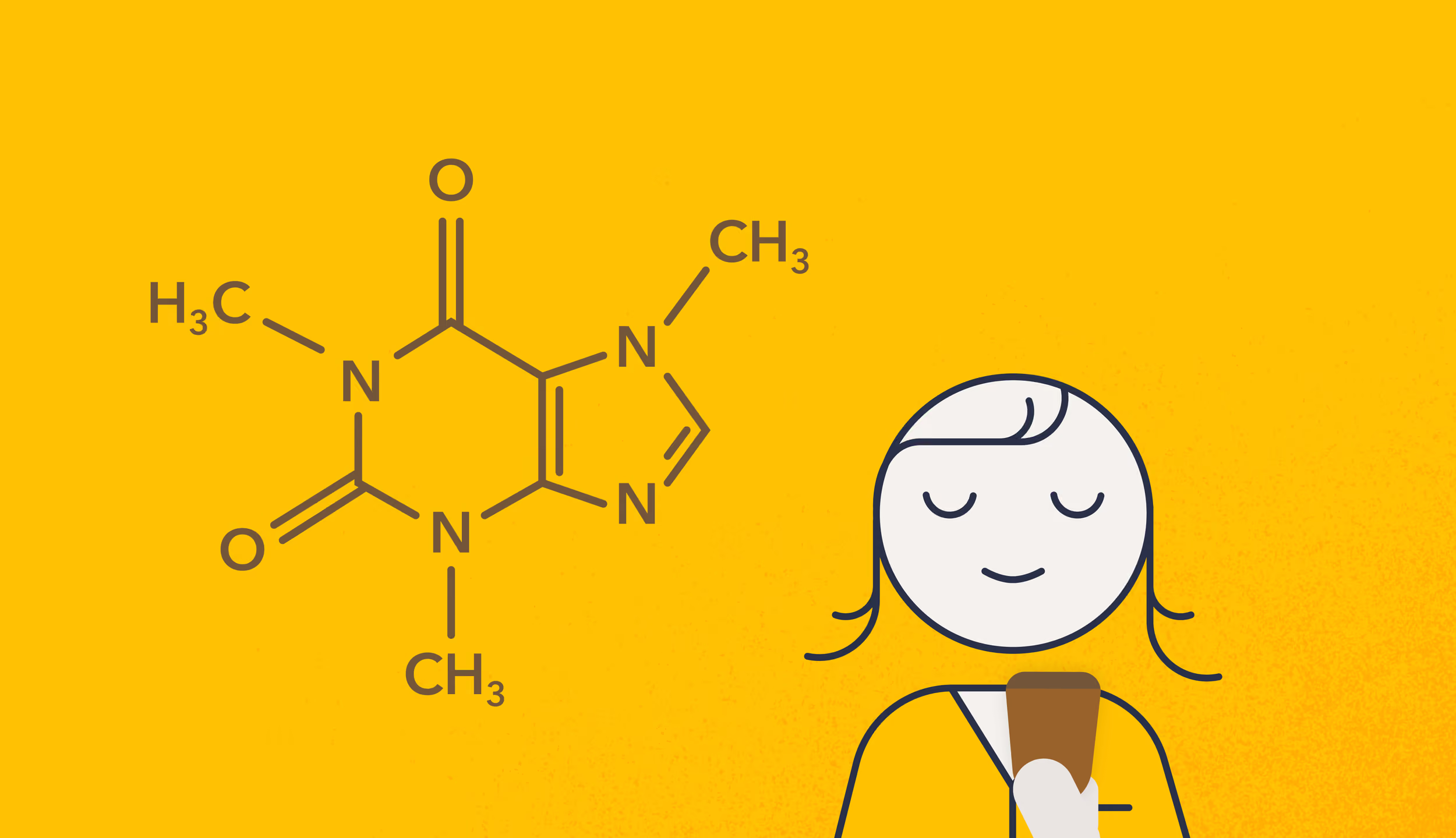
When you're awake, your cells use energy. A by-product is the buildup of adenosine, a chemical involved in sleep regulation that makes you feel sleepy. Caffeine is an adenosine-receptor antagonist – it blocks adenosine from reaching its receptors, which is why you feel more alert when you drink it. That's why caffeine is one of the most effective stimulants available.
How long does caffeine stay in your system?
Caffeine has a long half-life of three to five hours. So if you have 100mg of caffeine at 10 a.m., you'll still have 50mg in your system at 3 p.m., 25mg at 8 p.m., and roughly 12.5mg at 10 p.m. – enough to disrupt your sleep that night. This is why timing matters far more than most people realize.
The correct dose and timing
Using caffeine “little and often”, and then stopping it as long as possible before bed, will optimize the benefits of caffeine and minimize the negative effects on sleep. Caffeine is too powerful for children, and their small size increases the relative dose compared to adults and so caffeine should not be given to children.
App with caffeine advice for jet lag
Enjoying caffeine at the right time can help increase your energy level while traveling, but caffeine at the wrong time can negatively impact your sleep quality and may reduce your ability to sleep. See how caffeine compares with other jet lag remedies. The Timeshifter jet lag app will tell you when you could benefit from using caffeine during your trips to get the maximum benefits, and when to avoid caffeine to avoid disrupting your sleep.
The most downloaded and highest-rated jet lag app in the world.
References
- Drake C, Roehrs T, Shambroom J, Roth T. Caffeine effects on sleep taken 0, 3, or 6 hours before going to bed. Journal of Clinical Sleep Medicine, 2013; 9(11): 1195–1200.
- Fredholm BB, Bättig K, Holmén J, Nehlig A, Zvartau EE. Actions of caffeine in the brain with special reference to factors that contribute to its widespread use. Pharmacological Reviews, 1999; 51(1): 83–133.
- Landolt HP, Werth E, Borbély AA, Dijk DJ. Caffeine intake (200 mg) in the morning affects human sleep and EEG power spectra at night. Brain Research, 1995; 675(1–2): 67–74.
- St Hilaire MA, Lockley SW. Caffeine does not entrain the circadian clock but improves daytime alertness in blind patients with non-24-hour rhythms. Sleep Medicine, 2015; 16(6): 800–804.
- Wyatt JK, Cajochen C, Ritz-De Cecco A, Czeisler CA, Dijk DJ. Low-dose repeated caffeine administration for circadian-phase-dependent performance degradation during extended wakefulness. Sleep, 2004; 27(3): 374–381.