What is jet lag?
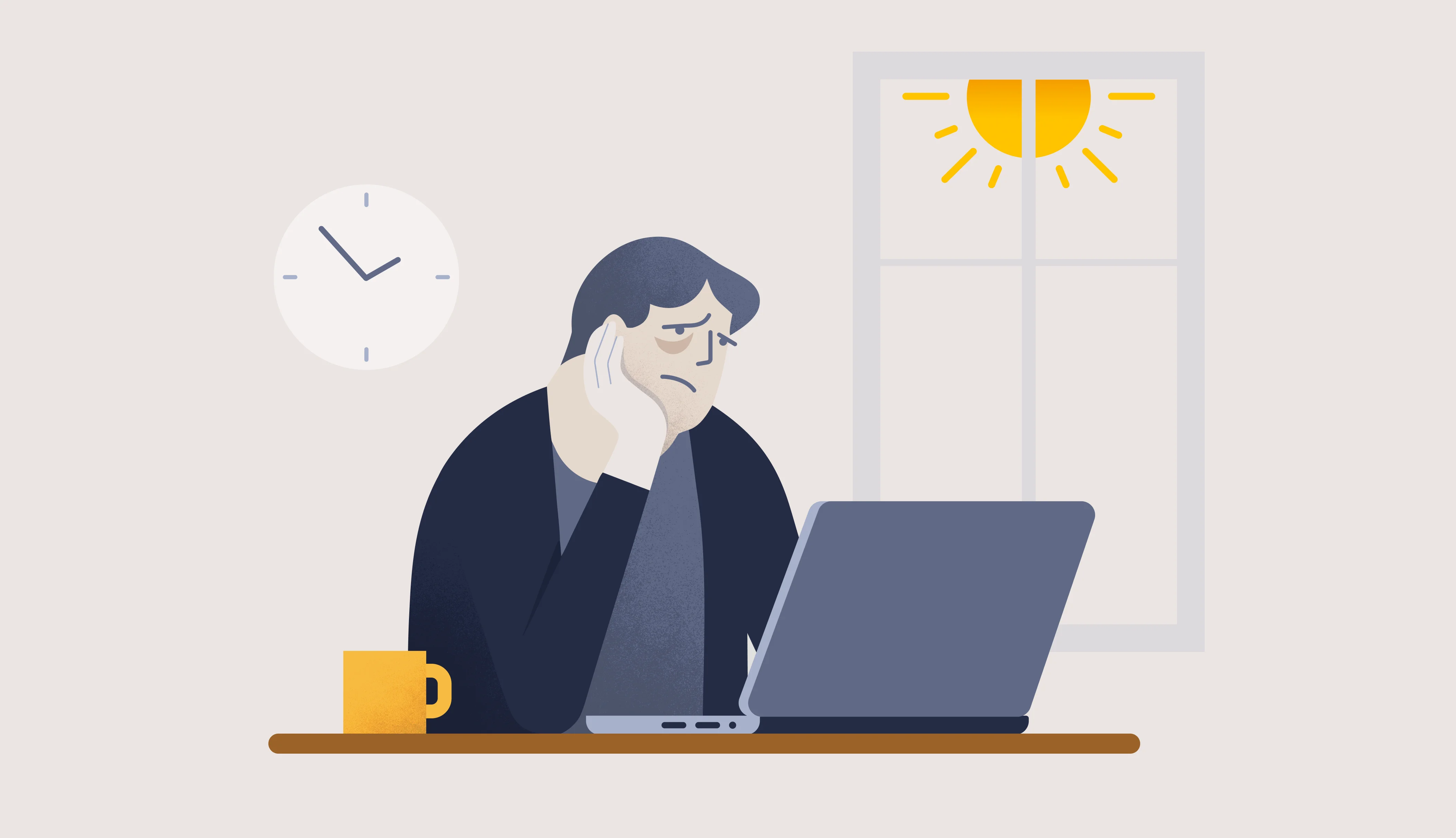
Jet lag is a temporary circadian rhythm disorder caused by crossing time zones faster than your circadian clock can adjust. Your internal clock stays on home time, so you feel sleepy, awake and hungry at the wrong times. Left alone, the clock shifts by up to an hour a day; correctly timed light exposure and light avoidance help it shift faster.

Jet lag symptoms
Jet lag is much more than feeling "off" for a couple of days:
What causes jet lag?
Jet lag is caused when your sleep/wake and light/dark cycle shift too quickly for your central circadian clock to keep up.
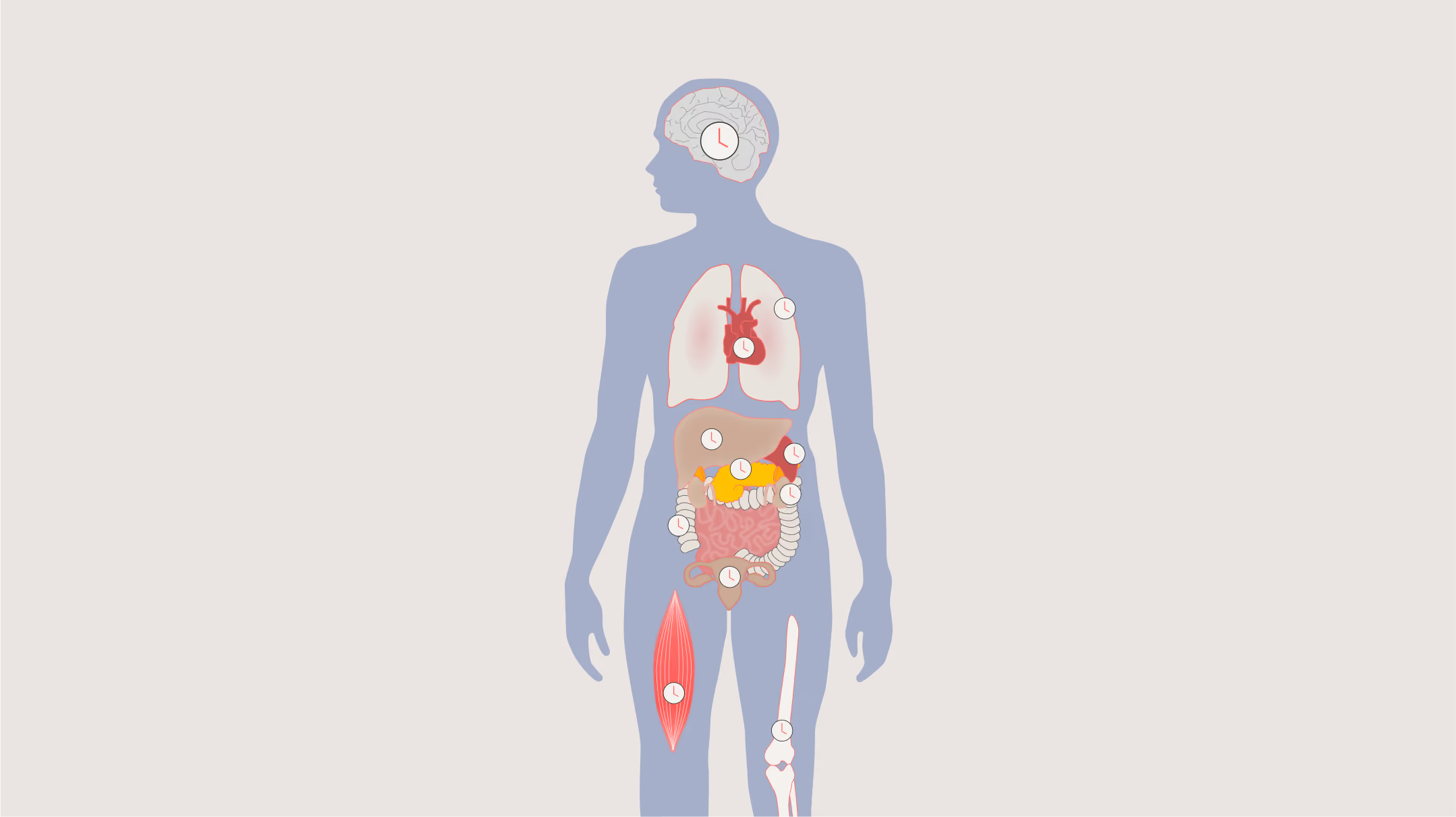
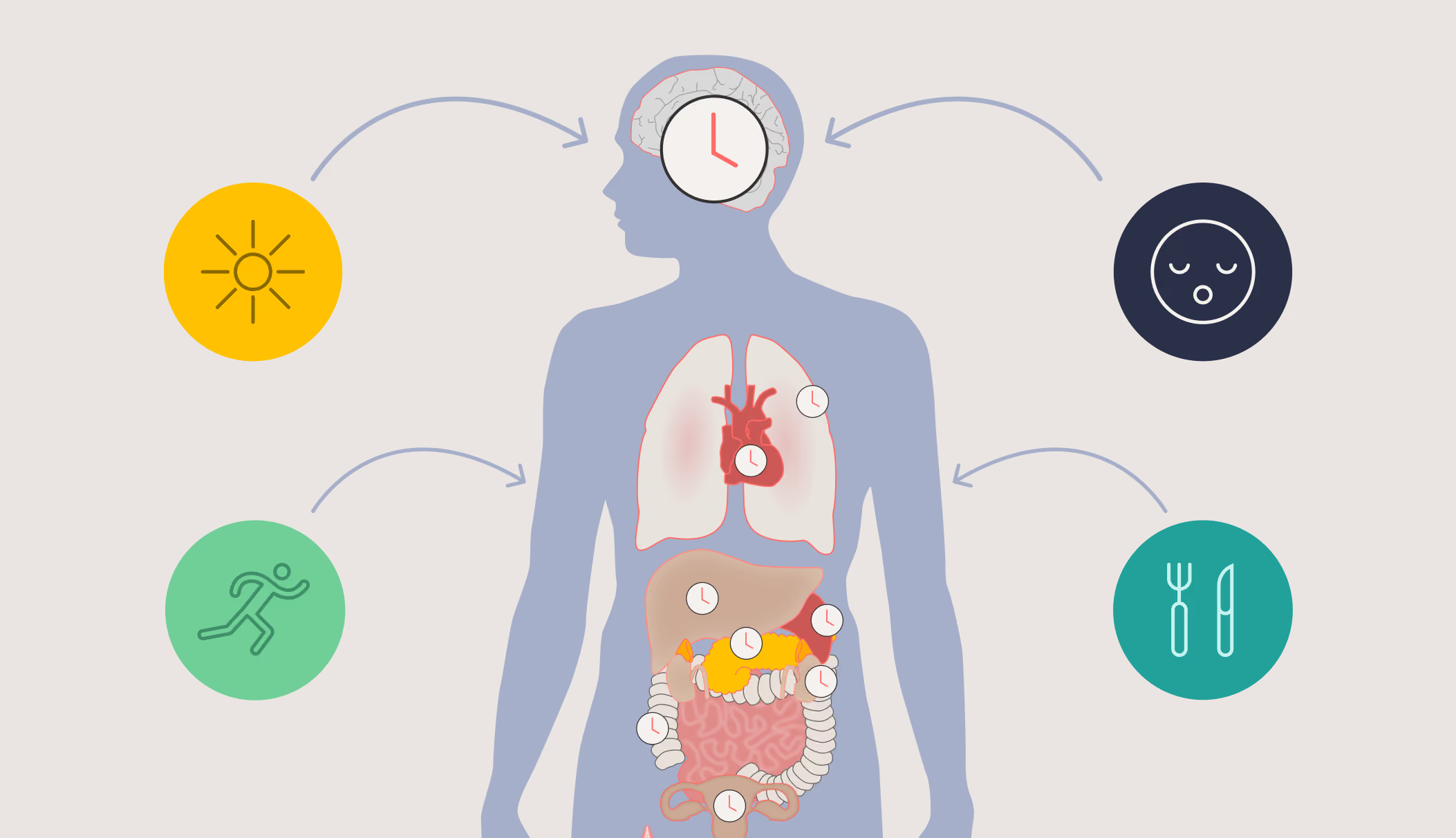
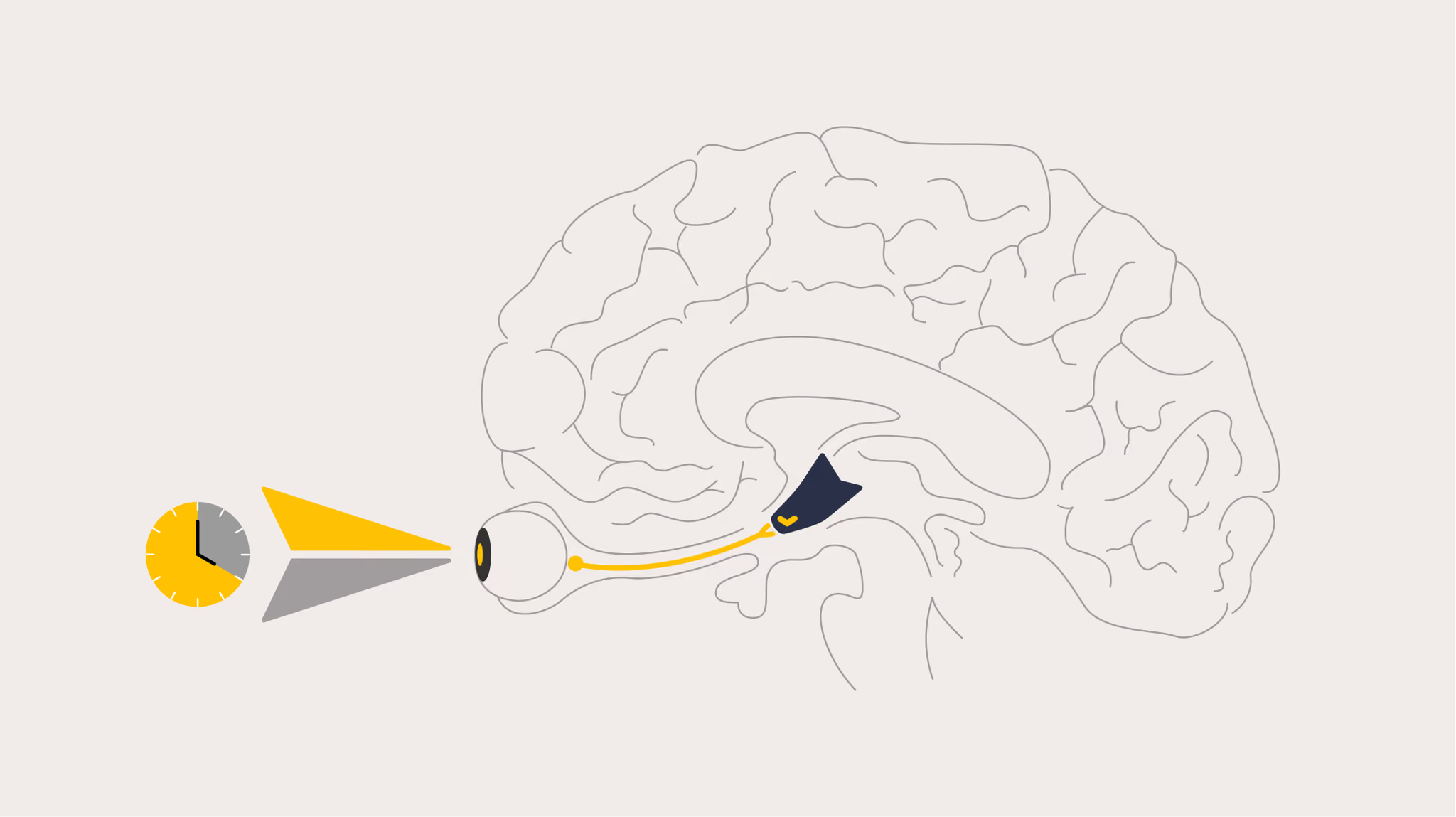
In your brain, the central circadian clock regulates the timing of many physiological systems including your sleep, alertness, hormone release, and body temperature. It also synchronizes the peripheral circadian clocks in your organs and tissues, which regulate digestion, metabolism, immune function, and dozens of other systems – all kept in step with a 24-hour day. The central clock is reset by light and darkness; the peripheral clocks take their timing from the central clock and from local signals such as meal timing.
When you fly across time zones, the light/dark cycle shifts by hours very rapidly, but the central clock can only adjust by up to an hour per day on its own. If you fly from New York to Tokyo and cross 13 time zones (or 11 time zones if you take date out of the equation), it takes nearly two weeks to fully catch up. In the meantime, your central clock remains out of sync with the new time zone – and because the peripheral clocks re-adjust at different rates, they also fall out of sync with the central clock and with each other. That is why you feel exhausted at the wrong times, can't sleep when you want to, food doesn't sit right, and your concentration is off.
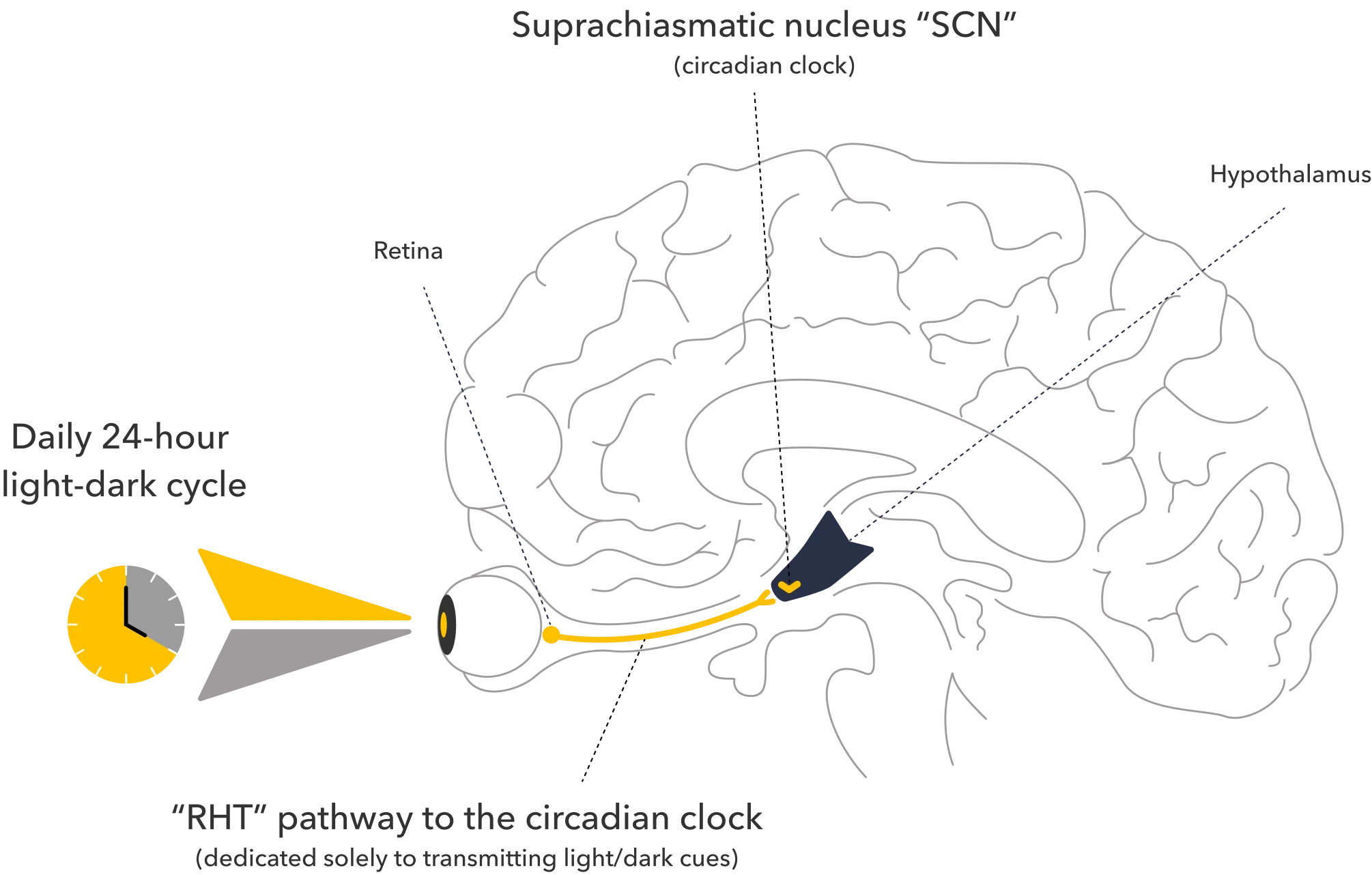
Circadian clocks throughout the body
The central clock in the brain (SCN) sets the timing of sleep, mood, performance, melatonin release, and temperature regulation. Peripheral clocks in the heart, lungs, liver, gut, muscles, bones, kidneys, and the immune and reproductive systems keep those functions on schedule. When you cross time zones, every one of these clocks falls out of sync and has to readjust – the central clock to the new light/dark cycle, the peripheral clocks to the central clock and to local cues such as meal timing.

Is jet lag worse going east or west?
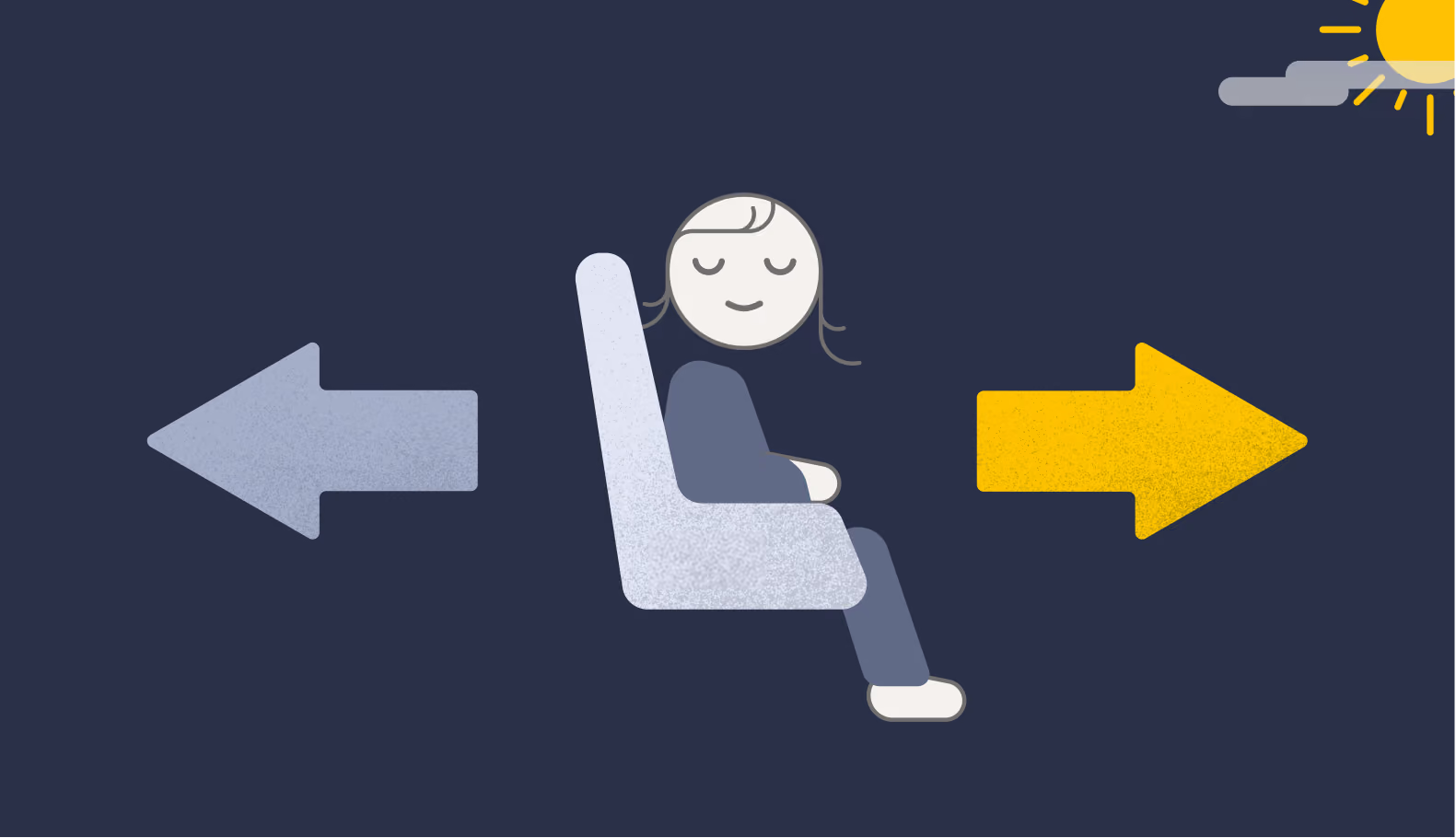
For most people, going east is harder than going west, and recovery takes longer for an eastward trip of the same distance.
The reason is in the circadian clock itself. The average human circadian clock runs with a period of about 24.2 hours – slightly longer than a full day – so delaying sleep is naturally easier than advancing it, on average. Going west requires your brain to shift later, which it's already inclined to do. Going east needs you to fall asleep earlier, which is generally harder.
About 25% of people have a shorter-than-24-hour circadian clock and find the opposite – eastward travel feels easier and westward harder. The rate of adaptation can be sped up, however, even when going against your own clock, but a jet lag plan built around your own clock and preferences is needed.
How long does jet lag last?
Without help, jet lag lasts about one day for every time zone you cross, and longer when you fly against your own clock, which depends on your chronotype: Morning types adapt more easily to eastward trips, and evening types to westward trips. The more time zones you cross, the longer it lasts. With correctly timed light exposure, light avoidance and melatonin, you can adapt 3–4 times faster. See how long jet lag lasts, trip by trip >
How to get over jet lag quickly
There's only one way to get rid of jet lag quickly: Individually timed light exposure and light avoidance to reset your circadian clock to the new time zone. The correct type, dose, and timing of melatonin can support that shift, but melatonin alone won't get you there. Seeing light at the wrong time – as often recommended by non-experts – will make your jet lag worse. Most popular advice – sleeping pills, hydration, special diets, exercise – does nothing to address the underlying circadian misalignment. Here is what works for jet lag – and what doesn’t.
The phase response curve to light
Phase response curve (PRC) showing how the central circadian clock responds to light at different times of the circadian day. Light in the hours before the crossover point (~6 am for someone sleeping 12 am–8 am) delays the clock; light after it advances the clock.

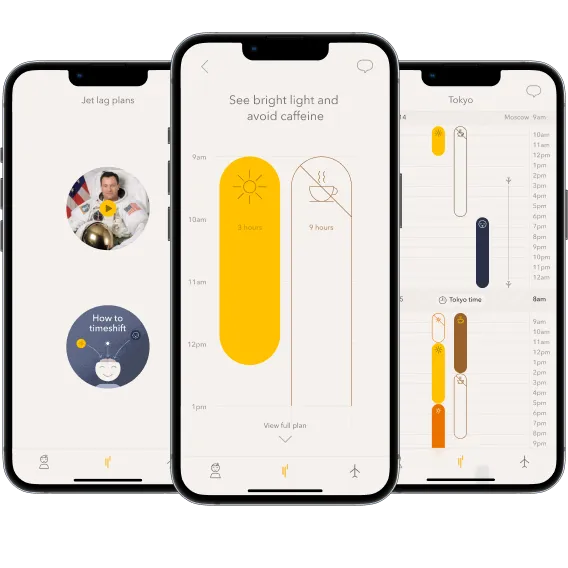
The challenge is knowing when to see and avoid light, take melatonin, sleep or nap, and use caffeine effectively. The answer is deceptively complicated, not intuitive, and depends on your sleep pattern, chronotype, itinerary, and personal preferences. The Timeshifter jet lag app creates a personalized jet lag plan with all of this built in.
The most downloaded and highest-rated jet lag app in the world.
Melatonin for jet lag: Type, dose, and timing
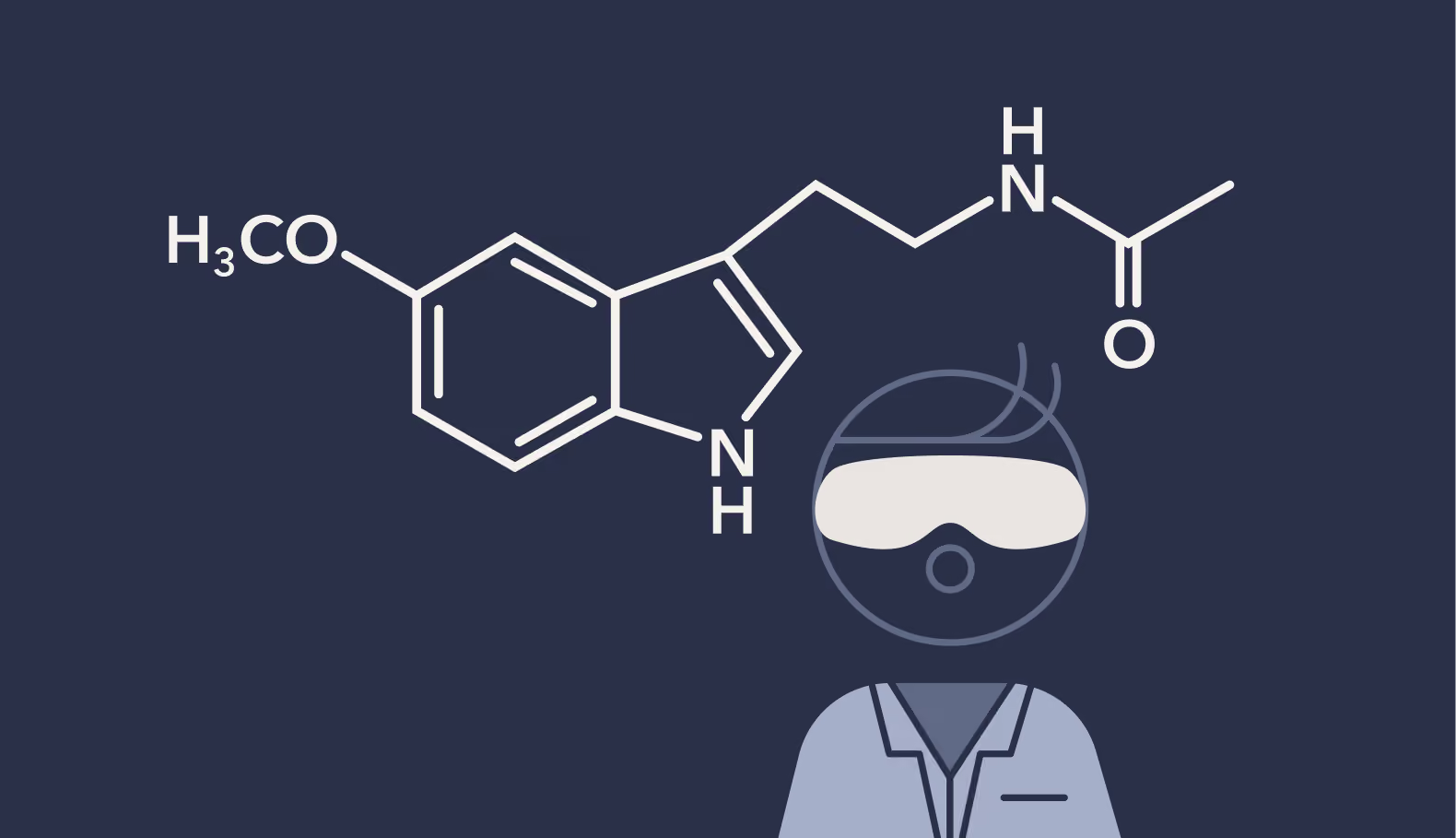
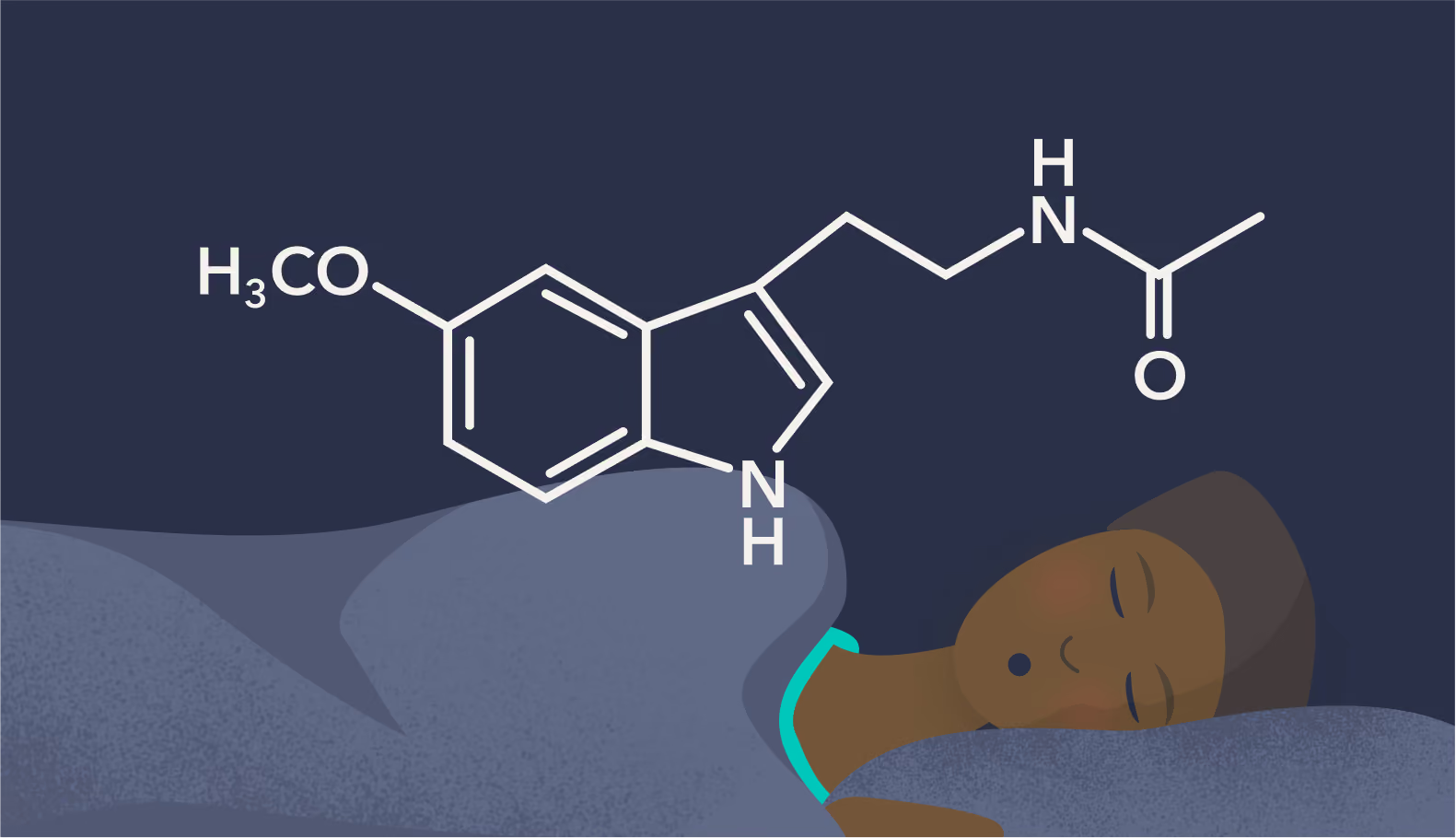
In addition to timed light exposure and light avoidance, the right type and dose of melatonin, at the right time, can help you shift faster and sleep better as you transition between time zones. If you take melatonin without timing your light exposure correctly, however, it will be less effective and you will not adapt any faster.

FAQ
What is jet lag?
Jet lag is a temporary circadian rhythm disorder caused by rapid travel across multiple time zones. It occurs when the sleep-wake and light-dark cycle shift too quickly for the circadian clock – located in the suprachiasmatic nucleus (SCN) of the hypothalamus – to keep up, causing internal rhythms to become misaligned from the local day-night cycle at the destination.
What causes jet lag?
Jet lag is caused by rapid travel across multiple time zones. The light-dark cycle shifts by hours, but the circadian clock can only adjust by up to an hour per day on its own. Crossing 12 time zones, for example, takes nearly two weeks for the clock to fully catch up without intervention.
What are the symptoms of jet lag?
Jet lag affects far more than just sleep. Symptoms include difficulty falling asleep or staying asleep, daytime sleepiness and fatigue, poor concentration and memory, reduced physical and mental performance, mood changes including irritability and low mood, gastrointestinal problems, headache, weakened immune function, and slower physical recovery.
How do you get rid of jet lag fast?
There's only one way to actually get rid of jet lag quickly: Reset your circadian clock to the new time zone with individually-timed light exposure and light avoidance. The correct type, dose, and timing of melatonin can support that shift, but melatonin alone won't get you there. Seeing light at the wrong time can shift the clock in the wrong direction and make jet lag worse. Most popular advice – sleeping pills, hydration, special diets, exercise – does nothing to address the underlying circadian misalignment.
Does melatonin help with jet lag?
Yes, when the right type and dose is taken at the correct time. Melatonin is a chronobiotic that can support shifting the circadian clock. Melatonin alone won't reset your clock, however – light exposure must also be correctly timed. Taken at the wrong time, melatonin can shift the clock in the wrong direction and make jet lag worse.
References
- Czeisler CA, Duffy JF, Shanahan TL, Brown EN, Mitchell JF, Rimmer DW, et al. Stability, precision, and near-24-hour period of the human circadian pacemaker. Science, 1999; 284(5423): 2177–2181.
- Khalsa SBS, Jewett ME, Cajochen C, Czeisler CA. A phase response curve to single bright light pulses in human subjects. The Journal of Physiology, 2003; 549(Pt 3): 945–952.
- St Hilaire MA, Gooley JJ, Khalsa SB, Kronauer RE, Czeisler CA, Lockley SW. Human phase response curve to a 1 h pulse of bright white light. The Journal of Physiology, 2012; 590(13): 3035–3045.
- Vosko AM, Colwell CS, Avidan AY. Jet lag syndrome: circadian organization, pathophysiology, and management strategies. Nature and Science of Sleep, 2010; 2: 187–198.
- Waterhouse J, Edwards B, Nevill A, et al. Identifying some determinants of “jet lag” and its symptoms: a study of athletes and other travellers. British Journal of Sports Medicine, 2002; 36(1): 54–60.
- Waterhouse J, Reilly T, Atkinson G, Edwards B. Jet lag: trends and coping strategies. Lancet, 2007; 369(9567): 1117–1129.