
Best sunglasses for timeshifting
What to look for — and why most blue-light blockers won't cut it.
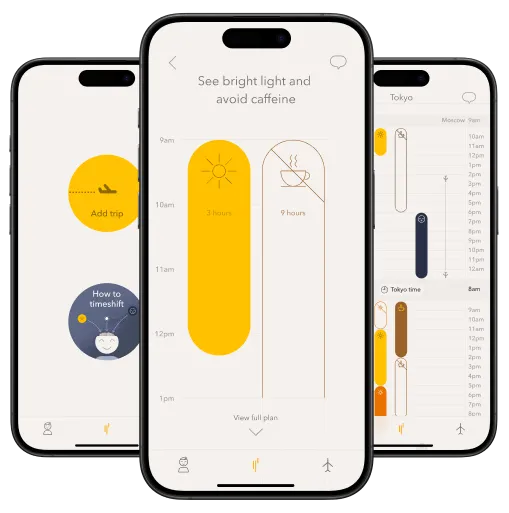
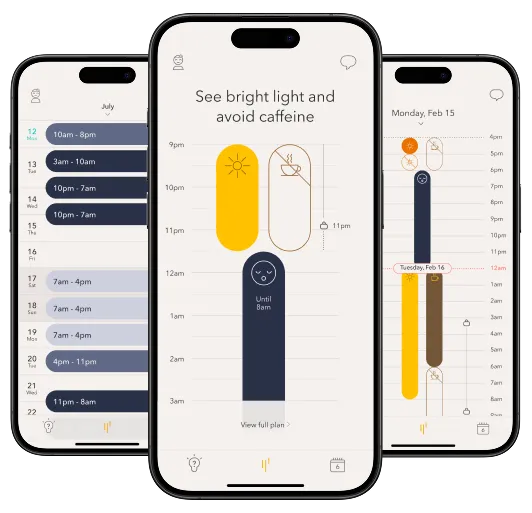
When the Timeshifter app tells you to "avoid light," it isn't just a suggestion to dim the room. It's a precisely timed instruction designed to shift your circadian clock — whether you're crossing time zones, flipping to a night shift, or preparing to perform at your best for an important event.
The most practical, portable way to enforce an "avoid light" period is a good pair of dark sunglasses. However, "good" here doesn't mean what most people think.
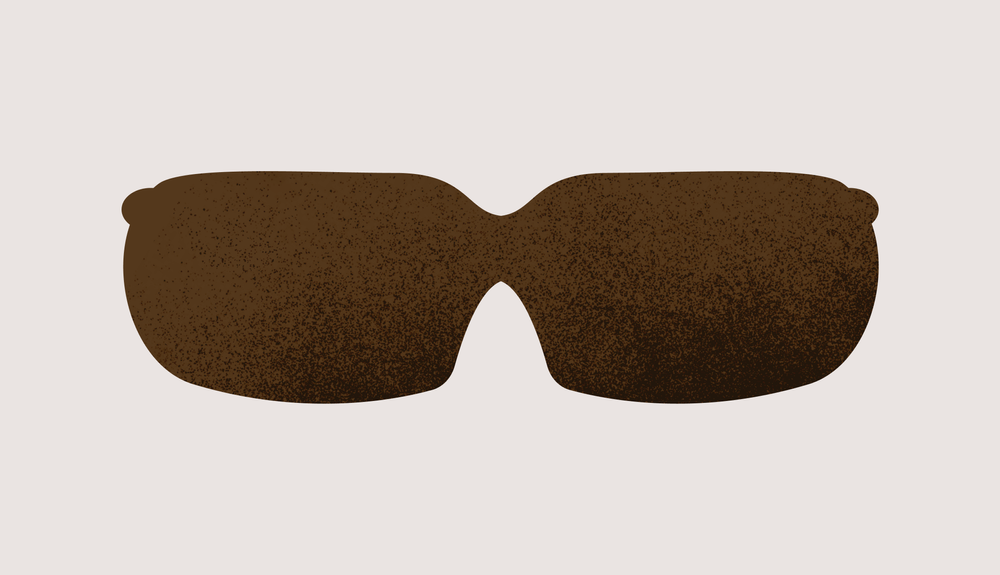
Pick the darkest wraparound sunglasses you own
If you only remember one thing from this article, make it this: Pick the darkest pair of sunglasses you own, with the most wraparound coverage you have, and put them on when Timeshifter tells you to "avoid light".
Darker lenses with curved coverage block more circadian-relevant light from more directions than a designer pair with a moderate tint and flat profile.
Why blue-light blocking glasses fall short
Blue-blocking glasses — typically amber, orange, or yellow-tinted — became popular on the assumption that blocking blue light is the same as blocking circadian-relevant light. That assumption is incomplete in several important ways.
First, ‘blue’ doesn’t always mean the same thing. The blue light that affects eye strain is not the same wavelength as the blue light that blocks the circadian and alerting effects of light. Many glasses are designed only to block the blue light that causes eye strain, for example when using computers, and these glasses are not optimized to help with sleep or circadian adaptation.
Second, blue light is not the only wavelength that affects your circadian clock. Green light, in particular, can still meaningfully suppress melatonin and shift your clock. A lens that's transparent across the green portion of the spectrum may not give you anywhere near the circadian protection its amber tint suggests.
Finally, intensity matters as much as wavelength. Even a lens that filters short wavelengths well can fail in bright environments — daylight, a lit airport gate, a glaring hotel lobby — because the absolute remaining circadian light signal transmitted though the lens is still high. The right tool for an "avoid light" instruction is as dark a lens as possible, not just a one that filters blue light.
What to look for
When choosing sunglasses for timeshifting, three things matter:
- The darkest lenses you can find. Color rendering is secondary — you're not trying to enjoy a sunset, you're trying to keep light from reaching your circadian clock.
- A wraparound or curved shape that seals out peripheral light. This is one of the most overlooked factors. The melopsin-containing cells that detect light for the circadian system are spread across the entire retinae, not concentrated in the middle where the cones that detect color are located. You don’t need to look directly at the light to stimulate the circadian effects. A flat lens with open sides lets light leak in from above, below, and around the temples. Look for frames that wrap around the side of the head, sit close to the face, and don't gap at the bridge or brow line.
- Comfort you can sustain. You may need to wear them for a few hours. If they pinch or slide, you'll take them off — and that defeats the purpose.