Caffeine and shift work
Caffeine can help shift workers stay alert but won’t reset the circadian clock. Use it “little and often” – about 40–50 mg every two hours – to stay awake when you need to see light, and stop as long as possible before sleep. Caffeine has a half-life of three to five hours, and caffeine in your system at bedtime harms your sleep.

Enjoying caffeine can help increase your energy level, but caffeine at the wrong time can negatively impact your sleep quality and reduce your ability to sleep.
Caffeine will not help reset your clock but can be useful in managing sleepiness associated with shift work and help ensure that you are awake to see light at the right time. The trick with caffeine is ‘little and often’ to help maintain alertness at the right time while minimizing the negative effects of caffeine on sleep. (And even if you think caffeine does not affect you, it does – you just don’t realize it!). A cup of caffeinated tea or coffee, or a caffeinated soda (equivalent to about 40–50mg of caffeine) every two hours is all that you need and higher doses will make it harder to sleep after work, and increase the risk of side effects, such as jitteriness.
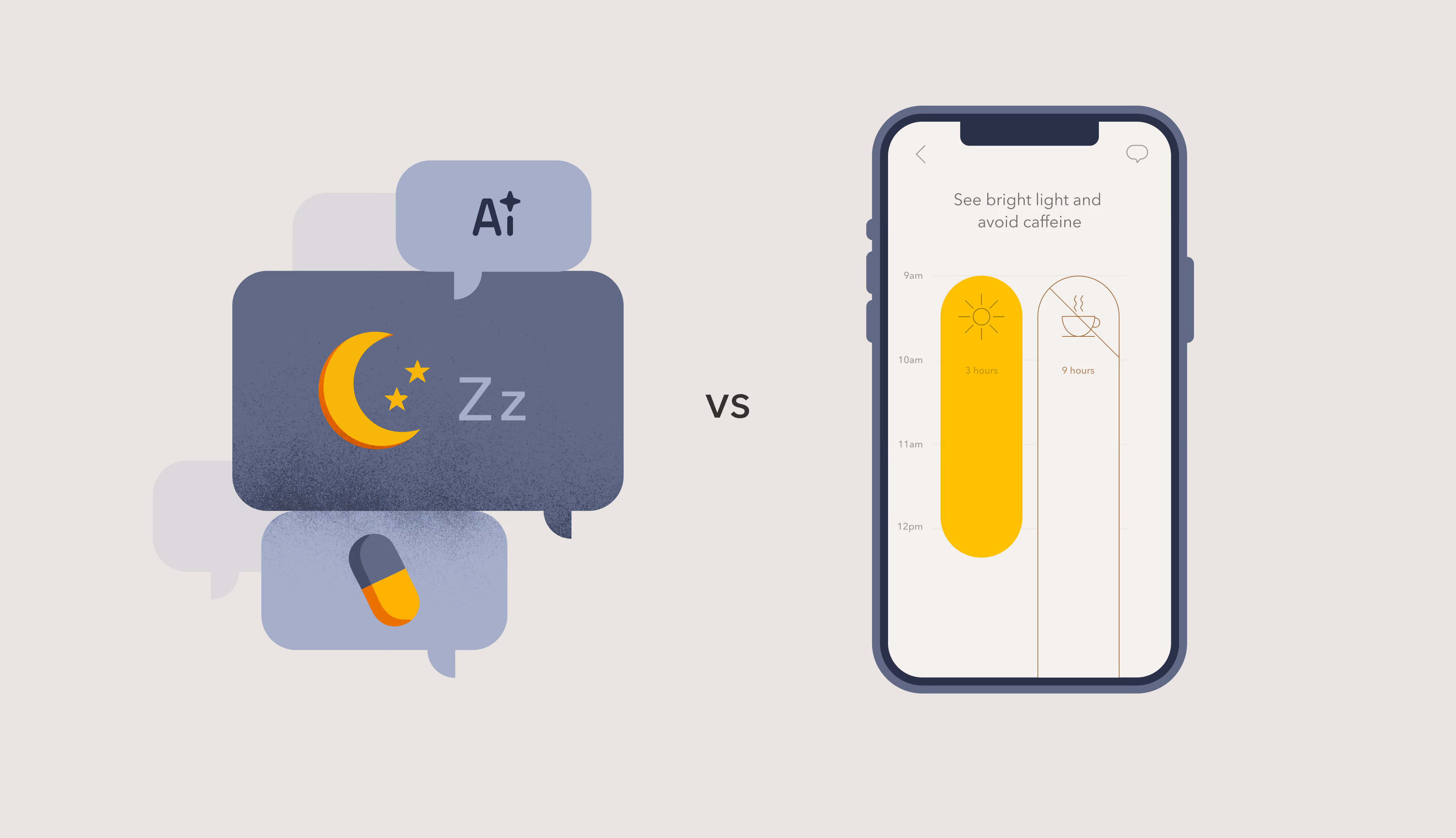
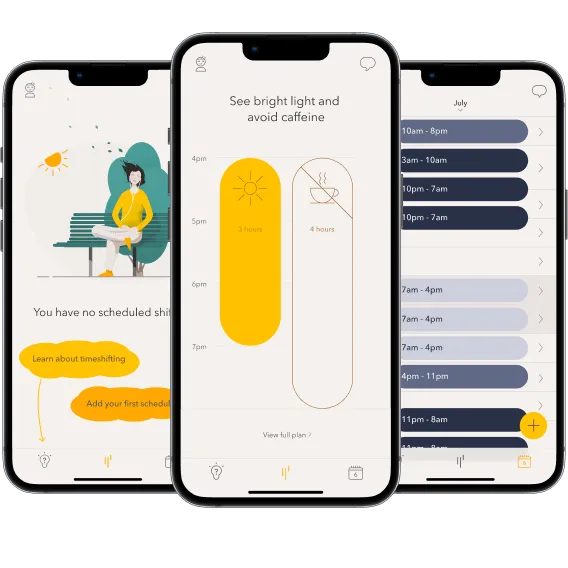
For those shift workers who want to use caffeine, Timeshifter provides advice on when and how to use it, and when to avoid it, to support the light-dark and sleep schedule that will reset your clock quickly.
What contains caffeine?
Caffeine is present in tea, coffee, caffeinated sodas, chocolate, and in some pain medications. Brewed ‘drip’ coffee and energy drinks tend to have very high amounts of caffeine so only half a cup of these is needed every two hours. Work out the caffeine content of your typical drink so you can plan how much to have to equal about 20–25mg an hour or 40–50mg every two hours. ‘Energy’ drinks tend to have too much caffeine to help follow the ‘little and often’ advice.
The science of caffeine
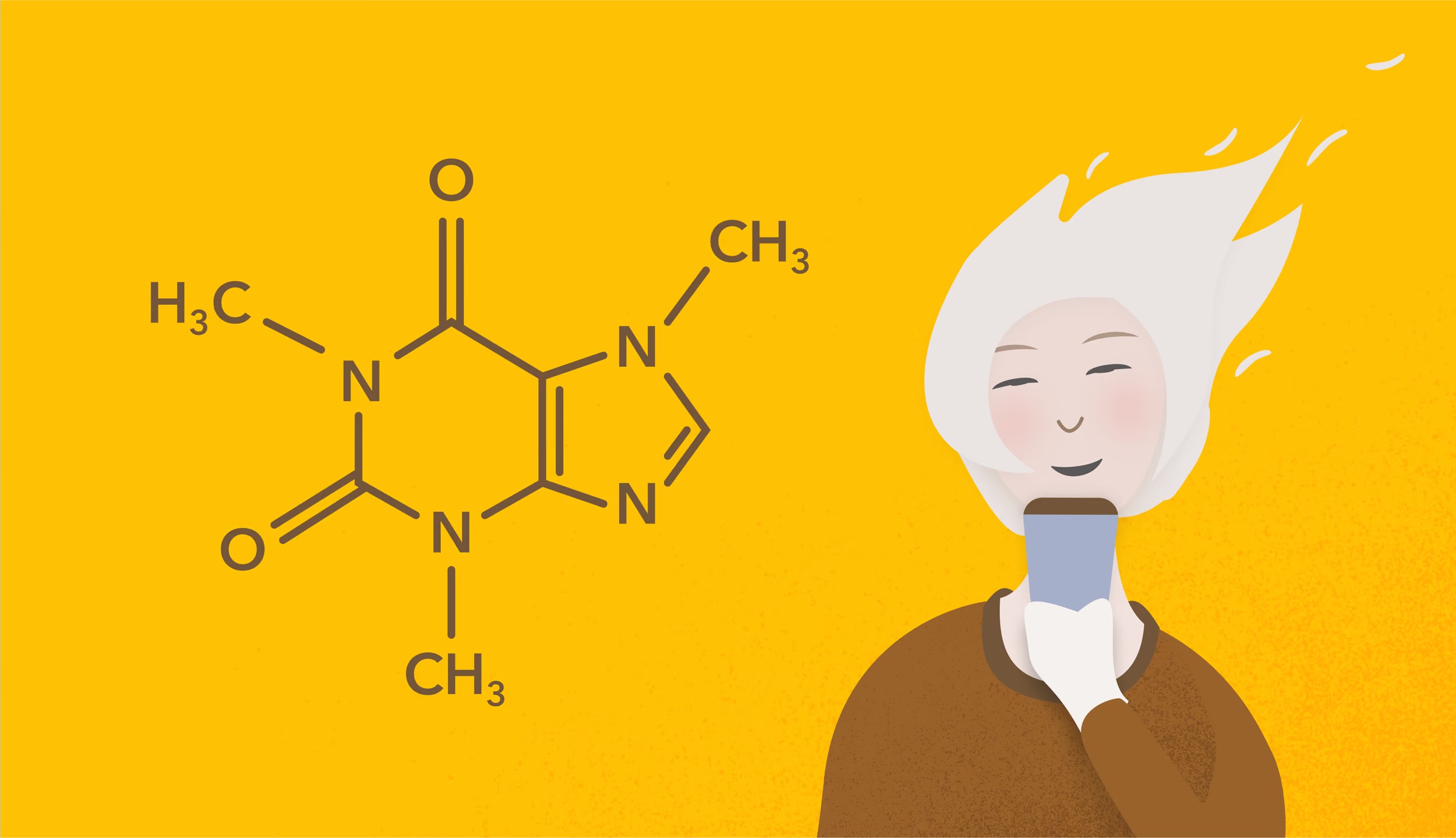
When we are awake, our cells use energy. A by-product of this energy use is an increase in the amount of adenosine in our bodies. Adenosine is part of the sleep regulation system, and is associated with increased sleepiness. Caffeine is an adenosine-receptor antagonist and therefore blocks the sleepiness-inducing effects of adenosine. As a result, caffeine is a highly effective stimulant. Caffeine stays in our system for a long time. It typically has a half-life of three to five hours so if you take 100mg of caffeine at 10am, you will still have 12.5mg of caffeine in your system at bedtime 12 hours later. Having caffeine in your body at bedtime will have a negative effect on your sleep that night.
The shift work app that improves sleep and alertness, personalized to your schedule.
The correct dose and timing
Using caffeine “little and often”, and then stopping it as long as possible before bed, will optimize the benefits of caffeine and minimize the negative effects on sleep. Caffeine is too powerful for children, and their small size increases the relative dose compared to adults and so caffeine should not be given to children.
App with caffeine advice for shift work
Enjoying caffeine at the right time can help increase your energy level while working late or overnight, but caffeine at the wrong time can negatively impact your sleep quality and may reduce your ability to sleep. Timeshifter will tell you when you could benefit from using caffeine before and during work to get the maximum benefits, and when to avoid caffeine to avoid disrupting your sleep.
References
- Fredholm BB, Bättig K, Holmén J, Nehlig A, Zvartau EE. Actions of caffeine in the brain with special reference to factors that contribute to its widespread use. Pharmacol Rev. 1999;51(1):83–133.
- Wyatt JK, Cajochen C, Ritz-De Cecco A, Czeisler CA, Dijk DJ. Low-dose repeated caffeine administration for circadian-phase-dependent performance degradation during extended wakefulness. Sleep. 2004;27(3):374–381.
- Drake C, Roehrs T, Shambroom J, Roth T. Caffeine effects on sleep taken 0, 3, or 6 hours before going to bed. J Clin Sleep Med. 2013;9(11):1195–1200.
- Landolt HP, Werth E, Borbély AA, Dijk DJ. Caffeine intake (200 mg) in the morning affects human sleep and EEG power spectra at night. Brain Res. 1995;675(1–2):67–74.
- St Hilaire MA, Lockley SW. Caffeine does not entrain the circadian clock but improves daytime alertness in blind patients with non-24-hour rhythms. Sleep Med. 2015;16(6):800–804.