What is circadian misalignment?
Circadian misalignment occurs when our internal biological clocks fall out of step with the outside world – or with each other. It is caused by things like jet lag, shift work, irregular sleep patterns, and poorly timed meals, and it has real consequences for alertness, safety, and long-term health.

The circadian system: A symphony of timing
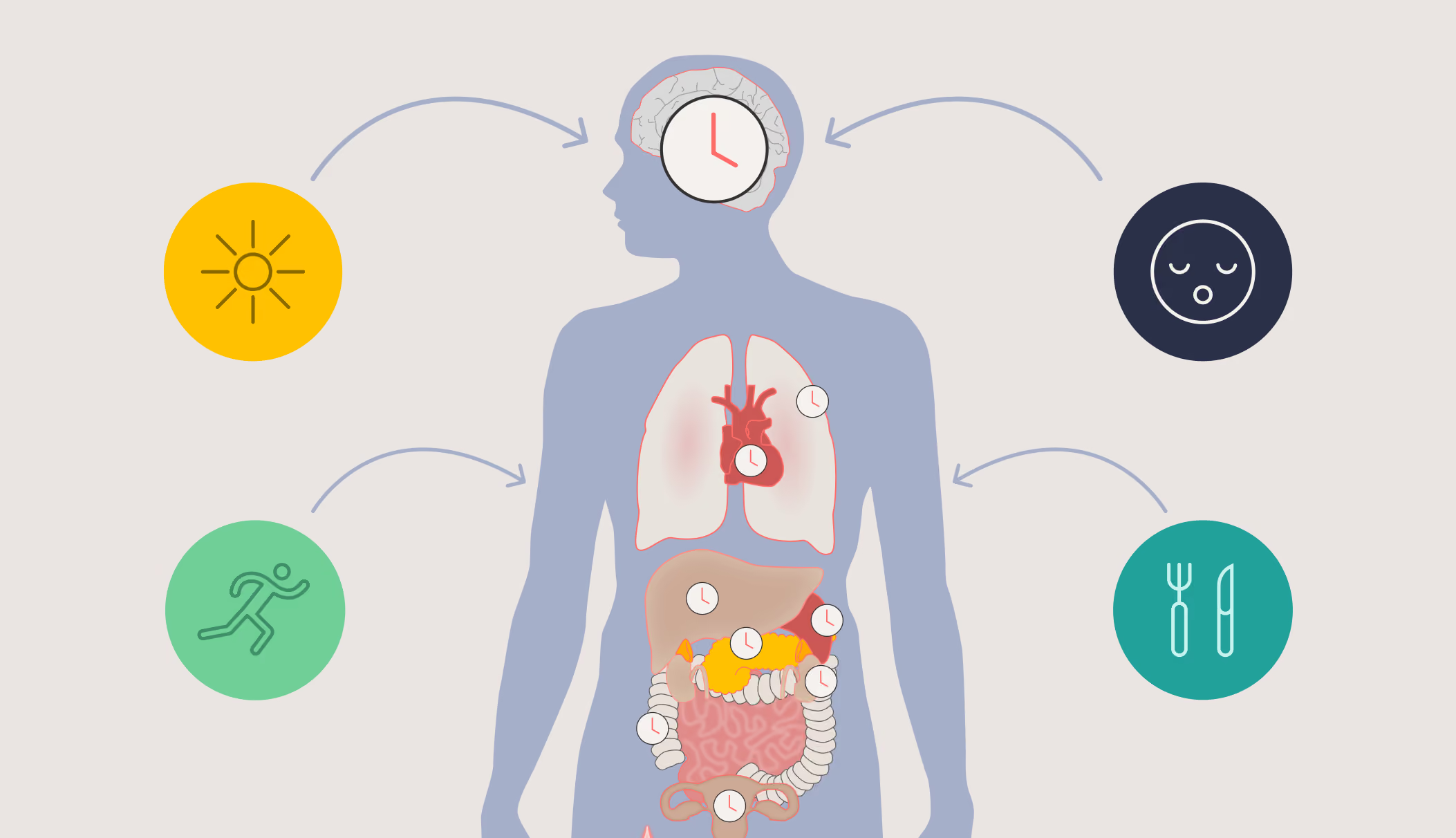
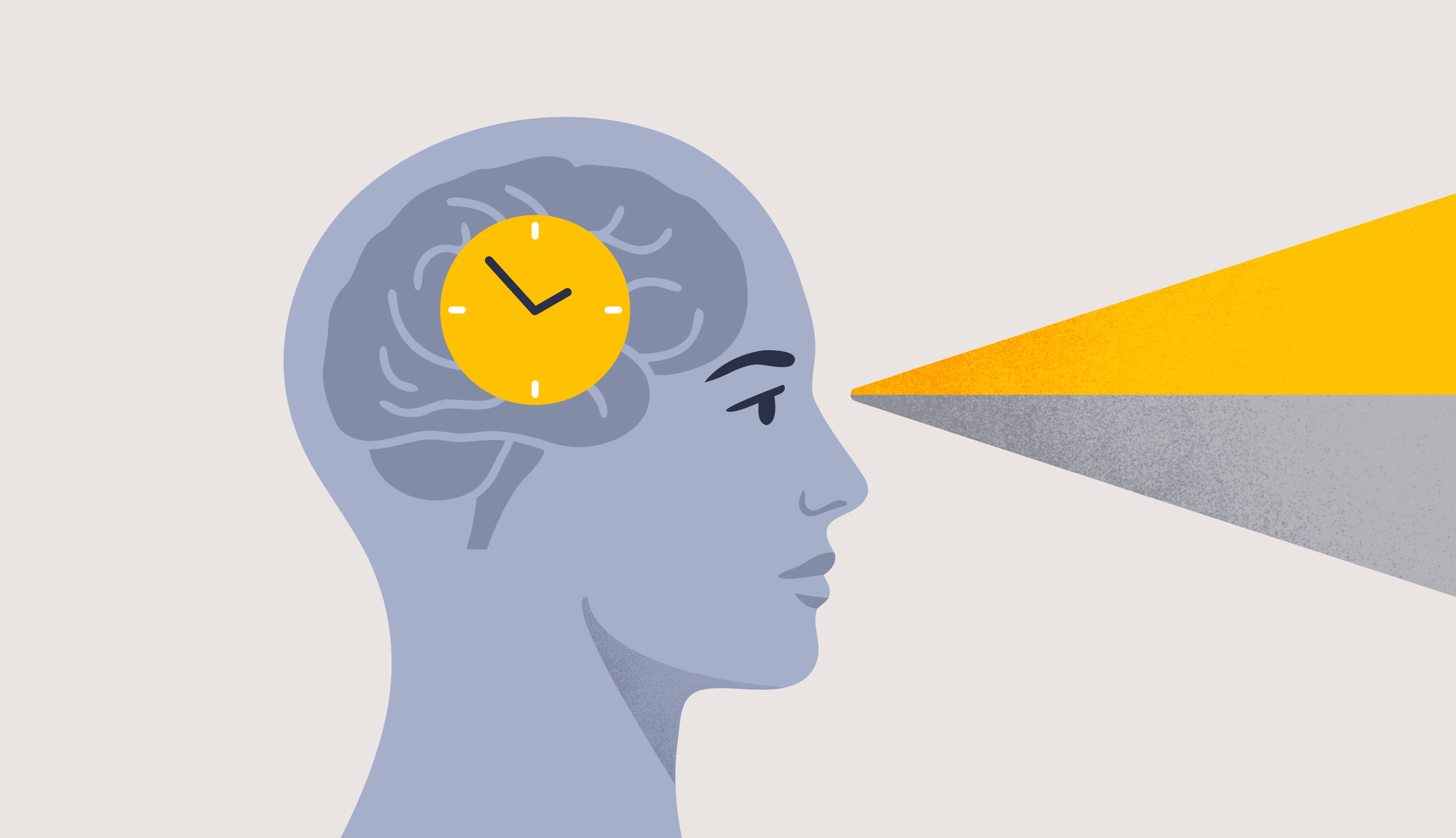
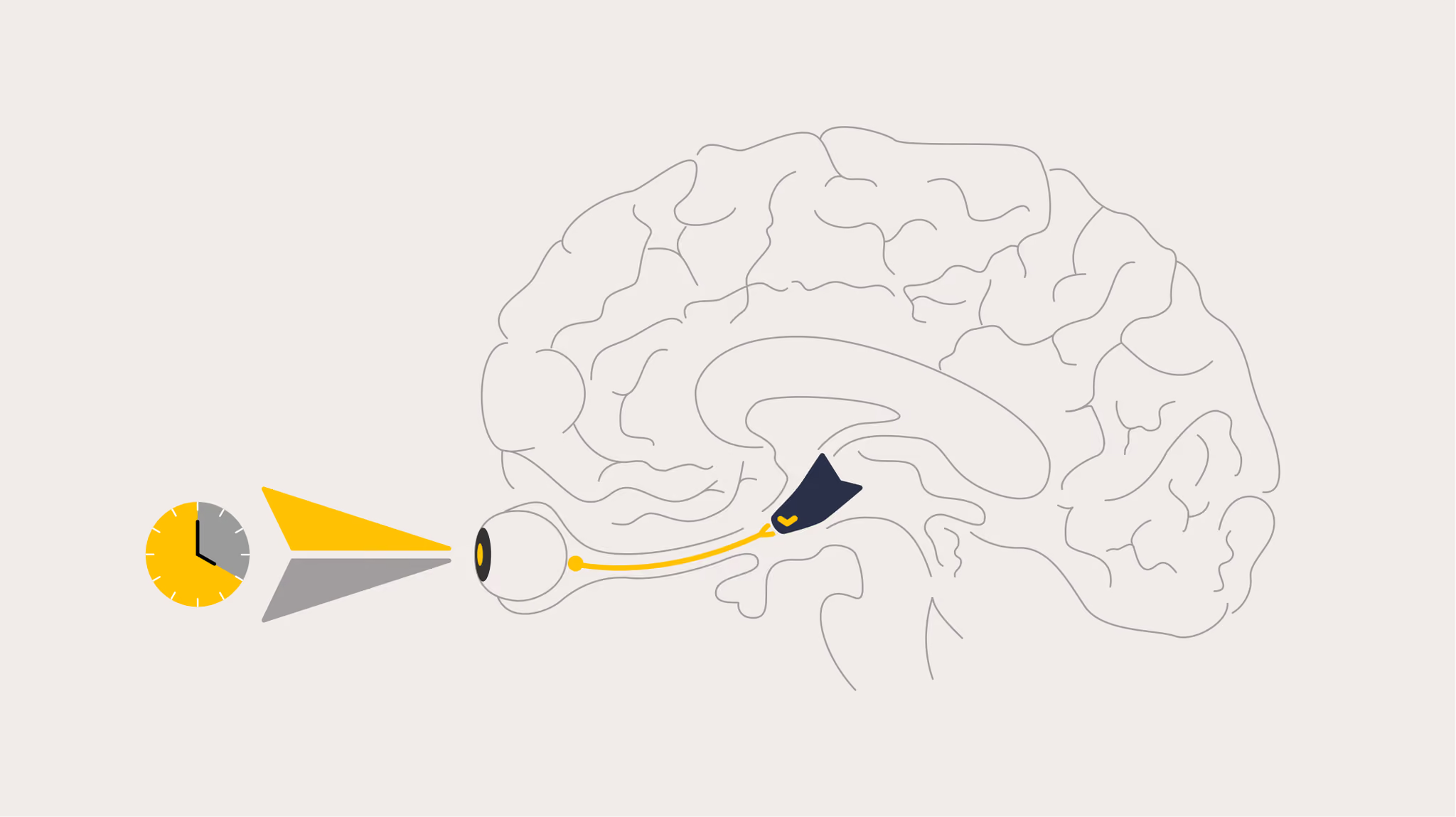
Circadian rhythms are the internal 24-hour cycles that control almost every biological process including sleep and performance, many hormones, metabolism, immune function, and many more. The human circadian pacemaker actually runs slightly longer than 24 hours on average, with a period of around ~24.2 hours, but can range from 23.5 – 25.0 hours. In order that this internal clock remains synchronized to the 24-hour day, it needs to be reset every day by time cues, sometimes called zeitgebers or 'time-givers'. Light is by far the most powerful environmental time cue.
The central clock sits in a region of the brain called the suprachiasmatic nuclei (SCN), located in the hypothalamus. It contains around 50,000 neurons and receives light signals directly from specialized light-sensitive cells in the eye that are most sensitive to short-wavelength (blue) light, as well as non-light signals from other parts of the brain.
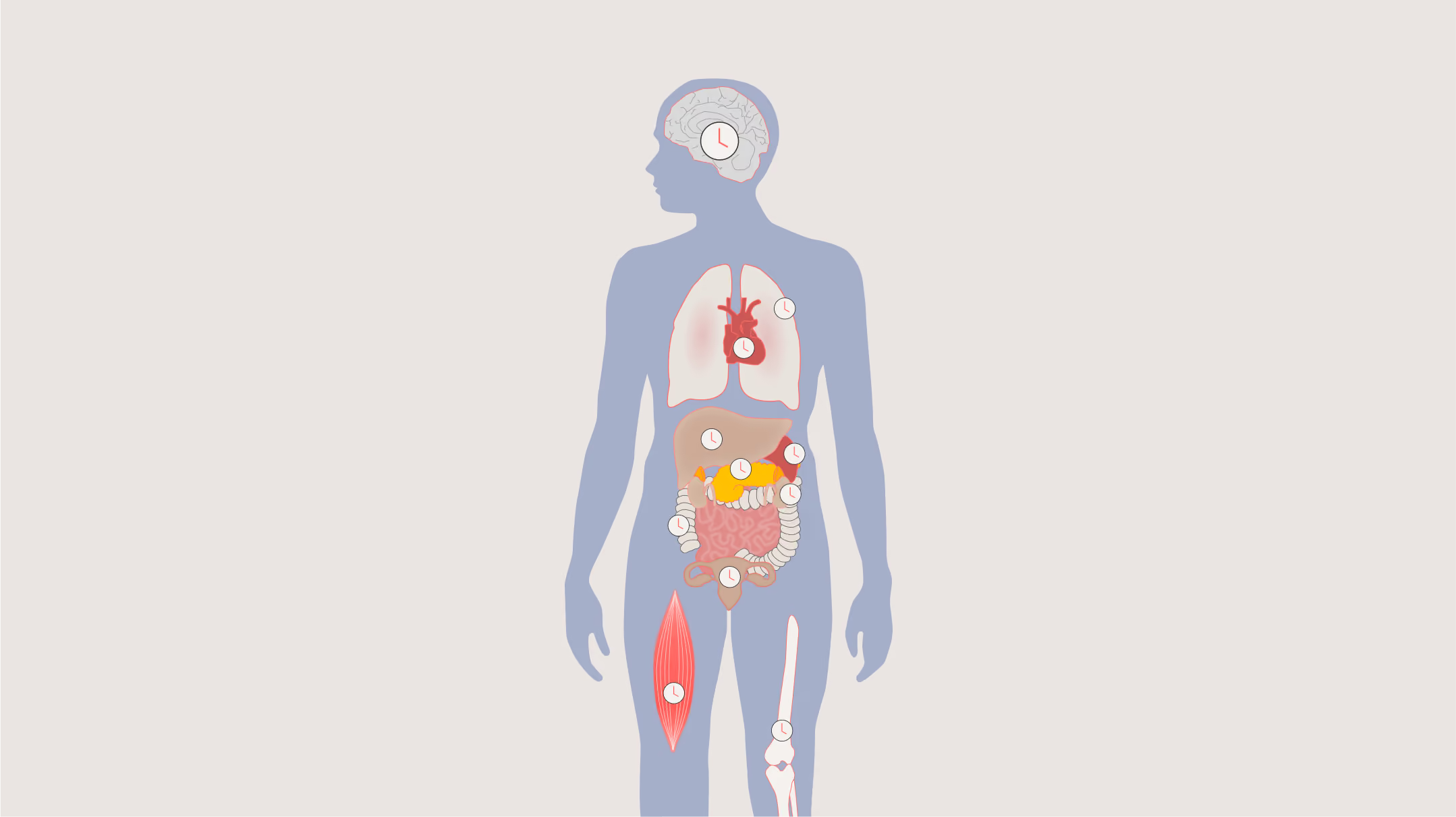
Beyond the SCN, almost every organ in the body, including the liver, heart, lungs, pancreas, kidneys, muscles, and skin, has its own local clock and these are termed peripheral clocks. While the SCN is most sensitive to light, it is thought that peripheral clocks are more sensitive to non-light time cues, such as food and activity.
A helpful way to picture the circadian system is as a symphony orchestra with the SCN as the conductor and the peripheral clocks as the individual orchestra players. Each player can keep time independently, but look to the conductor to keep everyone in sync and playing in harmony. If the players get out of time – or misaligned - with the conductor, or with each other, then disharmony results.
Circadian entrainment and circadian misalignment
Circadian entrainment refers to the process by which the internal circadian rhythms are synchronized to the external 24-hour day. When properly entrained, our circadian rhythms maintain appropriate phase relationships with external cues, ensuring that biological processes occur at optimal times. Circadian misalignment, conversely, occurs when internal rhythms become desynchronized from external cues or when different internal rhythms become desynchronized from each other.
There are limits by how much the internal circadian system can be reset each day and therefore organisms can generally only entrain to cycles close to their natural internal period – termed the ‘range of entrainment’. As a general rule, the closer the environmental cycle matches the internal period, the more stable the circadian entrainment. This relationship is crucial because stable entrainment ensures optimal timing of physiological processes, whereas unstable entrainment can lead to desynchronization of internal systems, increasing the risk of chronic disorders and health problems.
Four types of circadian misalignment
Circadian misalignment can occur in four distinct ways. The first two are external, when an internal clock falls out of sync with the outside world. The second two are internal, when different internal clocks become mistimed from each other.
Type 1: External misalignment: Central clock versus external light-dark cycle
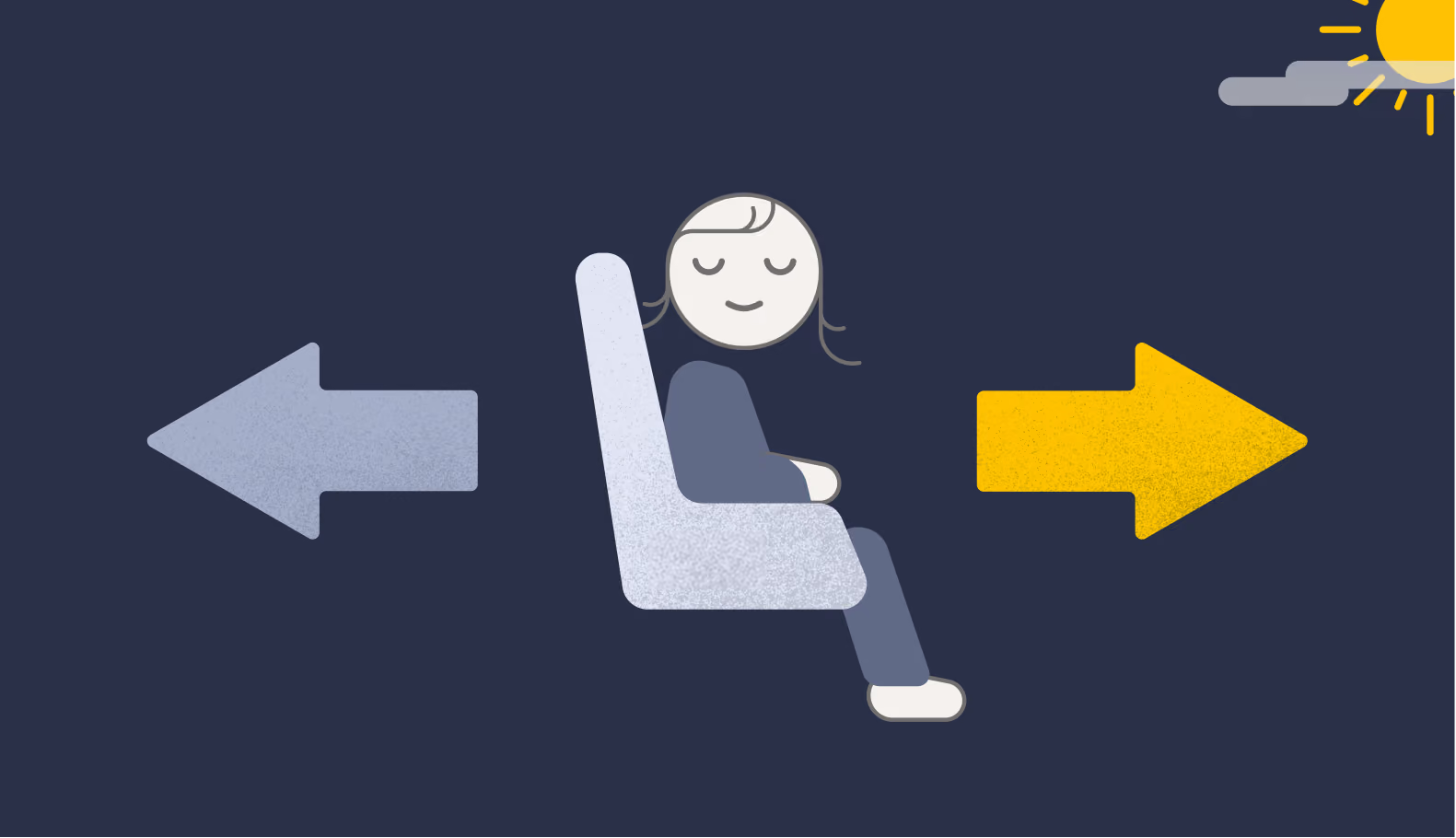
The first type of circadian misalignment is between the central clock and the light-dark cycle. It is caused when the light-dark cycle changes too quickly for the central clock to keep up with, for example, when flying to a new time zone (jet lag), or switching from day to night shifts (shift work disruption). Symptoms include disruption of behaviors controlled primarily by the central clock such as sleep problems, sleepiness and impairment of mood and cognition. Without specific interventions, it takes at least a day to shift the central clock by one hour, and so these symptoms can persist for many days after the shift. This type of misalignment can also occur if people change their sleep timing (and therefore light-dark exposure) abruptly, for example by going to bed or waking up much later than normal at weekends, which results in difficulties waking and poorer daytime functioning on Mondays.
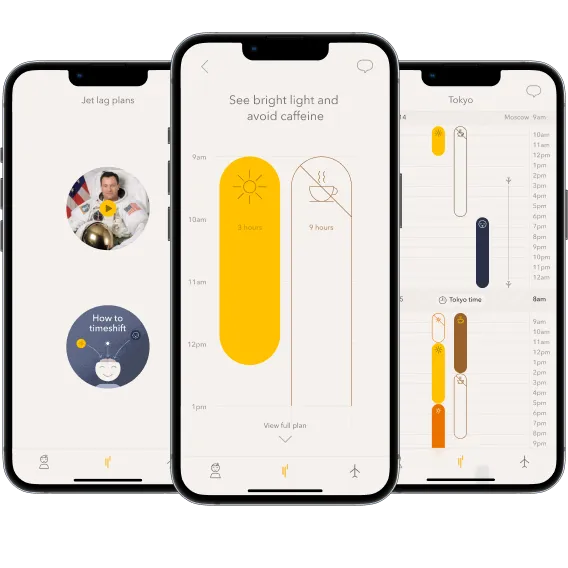
The most downloaded and highest-rated jet lag app in the world.
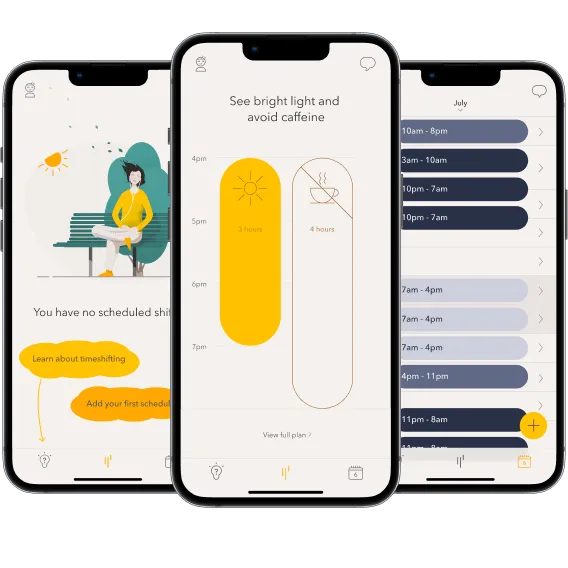
The shift work app that improves sleep and alertness, personalized to your schedule.
Type 2: External misalignment: Peripheral clocks versus external non-light time cues
The second type of external misalignment is similar but occurs between peripheral clocks and non-light times such as meal timing or exercise. For example, the peripheral clock in the liver does not respond to light but is shifted by meal timing. When food is eaten at the wrong circadian time, these liver rhythms become misaligned with the external day, impairing metabolism. This type of misalignment is common in shift work where workers eat at night, causing the liver’s metabolic machinery to process food when its circadian rhythm is anticipating fasting, disrupting insulin sensitivity, blood fat regulation, and glucose control – independent of how many calories you consume. A similar problem occurs when eating at the new time zone following jet travel. Inappropriate timing of exercise can produce similar effects in muscle and cardiovascular clocks.
Type 3: Internal misalignment: Central Clock versus peripheral clocks
There may be situations where the central clock and peripheral clocks become misaligned, creating internal desynchrony. As the SCN responds primarily to light and peripheral clocks respond to non-light times cues, such as meals, it is possible for the central and peripheral clocks to shift in opposite directions if the timing of light and non-light time cues are not in synch. This type of misalignment is common in jet lag – many travelers report persistent digestive system disruption even after their sleep-wake cycles have normalized, showing that the peripheral clocks are resetting at a different rate than the SCN.
Type 4: Internal misalignment: Between peripheral clocks
Different peripheral clocks may reset at different speeds depending on their relative sensitivity to different time cues. Difficulties in measuring peripheral clocks in humans make it difficult to provide real examples but animal studies demonstrate different readaptation rates in different organs when challenged with a simulated jet lag or shift work protocol. It is feasible, for example, that misaligned meal timing and exercise schedules could shift the liver and heart clocks at different rates, respectively, causing internal misalignment. Similarly, while ideally the peripheral clocks throughout the digestive system, for example clocks in the esophagus, stomach, pancreas, liver, kidneys and bladder, would be in synch, they may have different sensitivities to meal timing and nutrient content that would lead them to shift at different rates. Consistent with this theory, shift workers often have problems with appetite, stomach emptying (and therefore bloating), heart burn, and constipation and diarrhea, suggesting that their internal digestive rhythms are not working in synch. In this case, using the orchestra analogy, the different instruments are playing out of time with each other, or even playing different tunes!
Circadian ‘wobble’, peak performance and long-term health
You do not need to be a shift worker or a frequent flyer for circadian misalignment to damage your health. Greater day-to-day variation in the stability of internal circadian rhythms, or continuous shifting back and forth in relation to external time cues such as light or meal timing, impairs the physiology and behavior that these clocks control, impairing their function and increasing the risks of long-term health problems. The greater the instability in circadian timing – or circadian ‘wobble’ – the greater the health risk.
One pertinent example comes from a recent study of how sleep variability increases mortality risk. While sleep is important in its own right, it also signals the timing of dark and light to the central circadian clock, as you close your eyes when you sleep and see light when you are awake. The study measured the relationship between the degree of variability in sleep-wake (and therefore dark-light) timing and subsequent mortality rates in the following 8 years in over 60,000 UK Biobank participants. People with the most regular sleep timing had a 20–48% lower risk of dying from any cause, a 16–39% lower risk of cancer death, and a 22–57% lower risk of dying from cardiometabolic disease, compared to the least regular sleepers. Strikingly, sleep regularity was a stronger predictor of survival than sleep duration – meaning that when you sleep matters more than how long you sleep, at least within normal ranges.
The broader evidence is equally sobering. Each extra hour of day-to-day variability in sleep timing is associated with around a 40% higher risk of Type 2 diabetes, and a meta-analysis of 25 studies found that shift workers have a 25% higher risk of diabetes compared to day workers. Female night shift workers show a 30–50% higher risk of breast cancer and male shift workers showing comparable increases in prostate cancer. The immune system suffers too: night shift workers were 2–3 times more likely to contract COVID-19 than day workers during the pandemic and people with irregular sleep patterns consistently show weaker vaccine responses, reduced immune cell activity, higher rates of latent viral reactivation, and elevated levels of inflammatory markers in the blood.
Athletic performance
Enormous effort is dedicated to optimizing elite athletes’ performance, including complex training schedules, detailed nutritional plans, and an emphasis on psychological health and mental well-being. An important factor often neglected, however, is the impact of the internal circadian clock on performance, and whether this natural circadian peak in performance aligns with game time.
Physical performance peaks in the late afternoon, at around 4-5pm under normal circumstances (although this varies with chronotype), when core body temperature is at its highest. Muscle strength, reaction time, lung function, and cardiovascular efficiency all follow this circadian rhythm when central and peripheral clocks are properly aligned. Studies in professional sports show that performing earlier or later than this peak impairs performance, resulting in low win percentages, slower race times, and poorer skills across a wide range of sports including swimming, soccer, golf, basketball, baseball, cycling and American Football.
While sports teams often focus only on the problems associated with time zone differences, a potential larger problem is the misalignment between the natural circadian rhythm in peak performance and scheduled match or race times. This difference can be a much greater challenge than time zone differences, and can cause significant misalignment even without travel, although jet lag may further exacerbate the symptoms. Each hour of difference between the circadian rhythm in performance and match time is the equivalent to traveling to a time zone one hour away. For example, if a baseball team plays at 7pm on one day, and then 1pm three days later, the circadian rhythm in peak performance needs to shift 6 hours earlier, the equivalent of flying from New York to Paris, even without any physical travel. Playing before the peak, too early in the day, or after the peak at too late a time, degrades performance.
The solution is to reset the players’ circadian rhythms to match game time as closely as possible, just as would happen when traveling. The same approach to timing of light and light avoidance appropriately can reset the clock and can be done for teams or individuals. The advice can be further adjusted for individual differences in chronotype. While there are sometimes limitations, such as the availability iof training facilities or strict travel rules, the day-to-day adjustments can shift the rhythm closer to the optimal time, improving performance.
Circadian medicine – a new dimension in health and wellbeing
Most brain and body systems are regulated to some extent by the circadian system in order to maintain optimal function and health, i.e. normal circadian alignment. When these systems go wrong, the timing of treatments should be optimized to be as effective and as safe as possible, and also help restore this internal circadian balance.
The timing of medical treatments matters because liver function and drug metabolism, immune responses, and cell division are all regulated by the circadian system. It is estimated that as many as 75% of approved drugs have a time-of-day difference in their efficacy and/or toxicity. This number include many medications that are prescribed to treat common disorders such as high blood pressure, high cholesterol and arthritis, as well as vaccines and cancer treatments. For example, chemotherapy for some types of cancer can be more effective and less toxic when given at the right biological time.
The potential benefits of circadian medicine are not yet realized as the optimal circadian time to take these medications has not yet been worked out. All studies to date have compared the effects of drugs taken at different clock times rather than different circadian times, which cannot be estimated from clock time. New studies are required to work out the best circadian time window to take medications and then examine the impact using large scale population studies. Individual timing of medication will be possible once the circadian timing is known by delivering advice on individual circadian timing as is currently done for jet lag and shift work advice. The potential benefits from this approach are enormous and would herald a new era in truly personalized medicine – personalized to your own internal clocks – and we are at the start of this timing revolution.
Daylight saving time
When clocks change for daylight saving time, your social schedule shifts by an hour overnight, but your circadian clock does not. The spring change is usually harder, because it asks your clock to move earlier – the same direction as traveling east. Like a small dose of jet lag, it can take several days to adapt.
Conclusion
The take home message is that the circadian system craves consistency. A lack of consistency can result in circadian misalignment in any one, or any combination, of the four different types - the SCN can be out of step with the light-dark cycle, peripheral clocks can be out of step with meal and exercise timing, the SCN can be out of step with peripheral clocks, and peripheral clocks out of step with each other. Like an orchestra playing from different scores, each discordant player adds further to the disharmony – and the health consequences accumulate accordingly.
The good news is that the solution is straightforward in principle: keep the timing consistent. Regular sleep and wake times, regular light-dark exposure, regular meal timing and exercise during the day, all provide stability to different parts of the circadian system, and when maintained over time, will bring everything together in one harmonious performance. The evidence is unambiguous – not just what we do, but when and how consistently we do it, is critical to a long and healthy life.
References
- Czeisler CA, Duffy JF, Shanahan TL, Brown EN, Mitchell JF, Rimmer DW, et al. Stability, precision, and near-24-hour period of the human circadian pacemaker. Science. 1999;284(5423):2177–2181.
- Meyer N, Harvey AG, Lockley SW, Dijk DJ. Circadian rhythms and disorders of the timing of sleep. Lancet. 2022;400(10357):1061–1078.
- Windred DP, Burns AC, Lane JM, Saxena R, Rutter MK, Cain SW, et al. Sleep regularity is a stronger predictor of mortality risk than sleep duration: a prospective cohort study. Sleep. 2024;47(1):zsad253.
- Sack RL, Auckley D, Auger RR, Carskadon MA, Wright KP Jr, Vitiello MV, et al. Circadian rhythm sleep disorders: part I, basic principles, shift work and jet lag disorders. An American Academy of Sleep Medicine review. Sleep. 2007;30(11):1460–1483.
- Facer-Childs E, Brandstaetter R. The impact of circadian phenotype and time since awakening on diurnal performance in athletes. Curr Biol. 2015;25(4):518–522.