Jet lag calculator

A jet lag calculator that only uses your departure and arrival time zones can't give you an accurate plan. To get the timing right, it has to know where your circadian clock is today – which depends on your sleep pattern and chronotype – plus your flight times, direction of travel and stopovers. Only then can it tell you when to see light, when to avoid it and when to sleep.
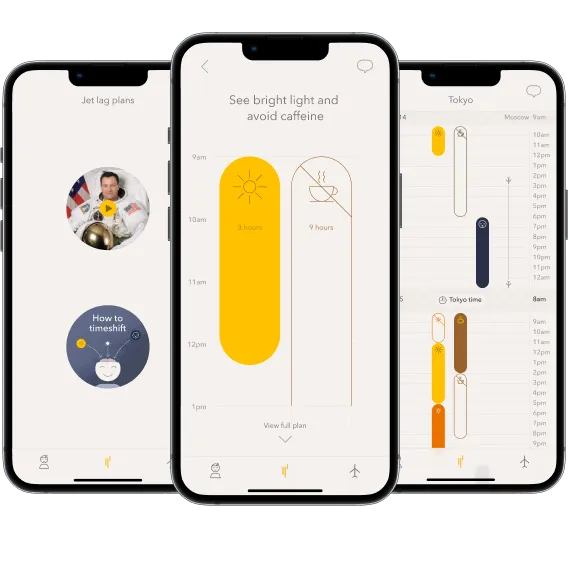
That is why the Timeshifter jet lag calculator is an app, not a web form. Get your personalized jet lag plan – the first plan is free.
What a jet lag calculator has to work out
- Where your body clock is today. Your normal sleep times and chronotype decide when your clock is most sensitive to light.
- The direction and size of the shift. Flying east, your clock needs to shift earlier. Flying west, it needs to shift later. The number of time zones decides how far.
- Your flight times and stopovers. When you depart, land and connect changes when you can see or avoid light.
- When to see light, and when to avoid it. Light is the strongest signal to your clock. At the right time it speeds up adjustment; at the wrong time it shifts your clock the wrong way.
- Melatonin, caffeine and naps, if you use them. Low-dose melatonin at the right time helps shift the clock. Caffeine and short naps help you stay alert.
- Changes along the way. Delays, cancellations and new connections change the plan.
The most downloaded and highest-rated jet lag app in the world.
Why time-zone calculators get jet lag wrong
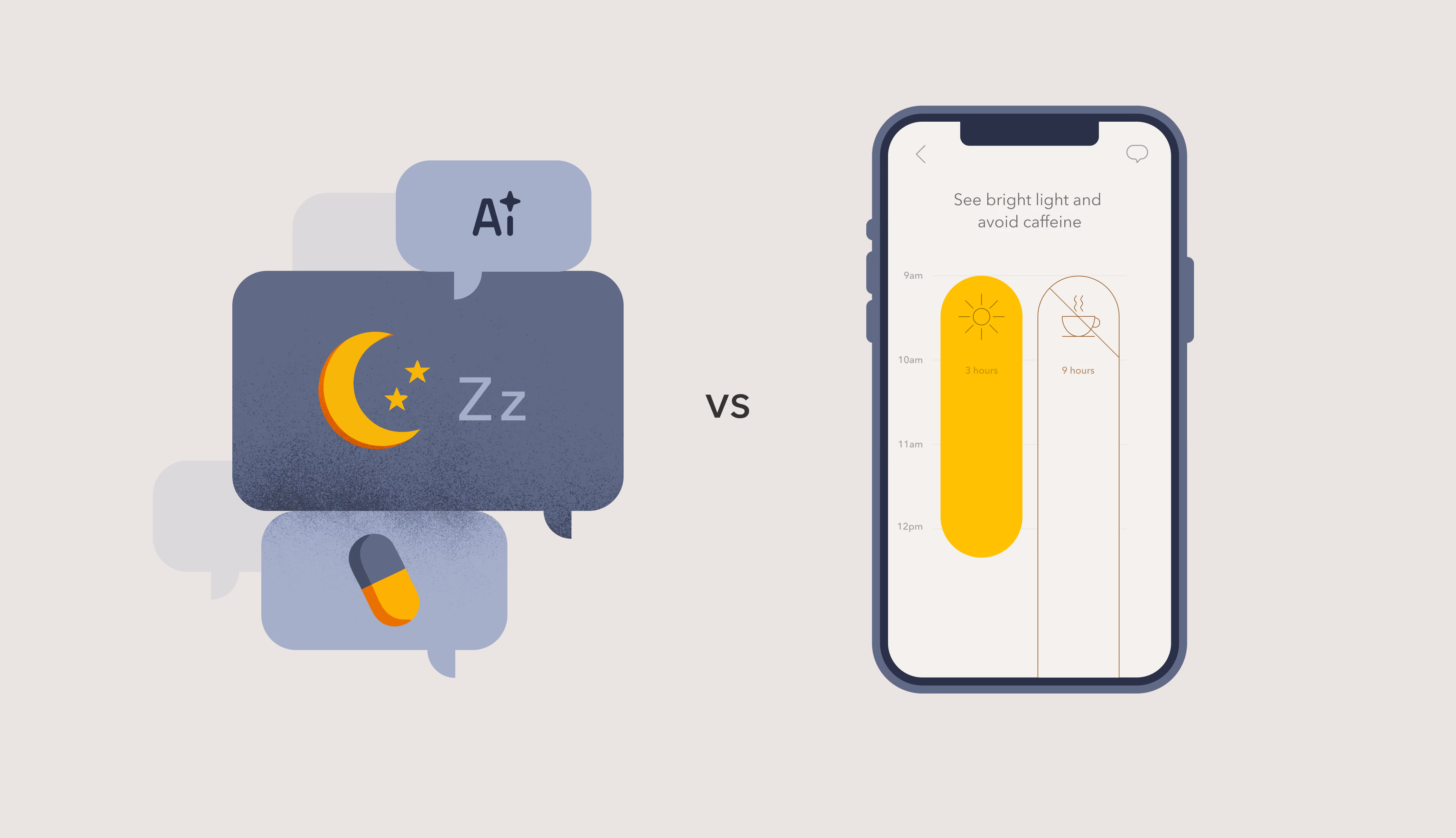
Most web jet lag calculators create a static schedule from time zones alone. They don't know when you normally sleep, so they can't know when your clock is sensitive to light. A typical result is “get morning sunlight at your destination.” After a long eastward flight, that morning light can fall at a time that shifts your clock in the wrong direction – and makes your jet lag last longer.
Calculators that move your bedtime by an hour a day have the same problem. Moving your bedtime without timing your light exposure doesn't reset your clock. Light does – and the phase response curve shows that the same light can shift your clock earlier or later, depending on when you see it.
How long will my jet lag last?
Without help, your body clock shifts by about an hour a day, so jet lag can last roughly one day for every time zone you cross. Flying east is usually harder than flying west – see Is jet lag worse going east or west? Timed light, light avoidance and melatonin shift your clock faster.
A jet lag calculator built on your body clock
The Timeshifter app does this timing for you. It uses your sleep pattern, chronotype and itinerary, plus your preferences for melatonin and caffeine, and tells you when to seek and avoid light, when to sleep and nap, when to take melatonin and when to use caffeine. It was developed with Dr. Steven W. Lockley, a circadian neuroscientist with more than 30 years of research experience.
Based on about 130,000 post-flight surveys, 96.4% of travelers who followed their Timeshifter plan avoided severe or very severe jet lag.
FAQ
Do jet lag calculators work?
Calculators based only on time zones can't time light to your body clock, so their advice can make jet lag worse. A plan that knows your sleep pattern, chronotype and flight is what works.
What does a jet lag calculator need to know?
Your usual sleep times, your chronotype, your flight times and stopovers, your direction of travel, and whether you want to use melatonin or caffeine.
How do I calculate how long my jet lag will last?
As a rule of thumb, allow about one day per time zone crossed if you do nothing, and longer when flying east. Timed light and melatonin shorten it.
Is there a free jet lag calculator?
Yes. Your first Timeshifter jet lag plan is free.