Chronotype quiz
Find out if you’re a morning or evening type with the original Morningness-Eveningness Questionnaire (Horne & Östberg, 1976), the scientific reference for measuring chronotype.
What is a chronotype?
Your chronotype is your natural tendency to be active and alert earlier or later in the day. It reflects the timing of your circadian clock, the internal 24-hour clock that regulates sleep and wakefulness.
About this quiz
This quiz uses the original Morningness-Eveningness Questionnaire (MEQ), published by James Horne and Olov Östberg in 1976. Its 19 questions ask when you prefer to sleep, wake up and perform at your best. In the original study, morning types reached the daily peak of their body temperature rhythm earlier in the day than evening types.
What your score means
- 70–86: Definitely morning type
- 59–69: Moderately morning type
- 42–58: Neither type
- 31–41: Moderately evening type
- 16–30: Definitely evening type
Good to know
- The questionnaire describes your preferred timing. It is not a diagnosis.
- It was first validated in adults aged 18–32, and chronotype tends to shift with age.
- Score cut-offs can differ between populations.
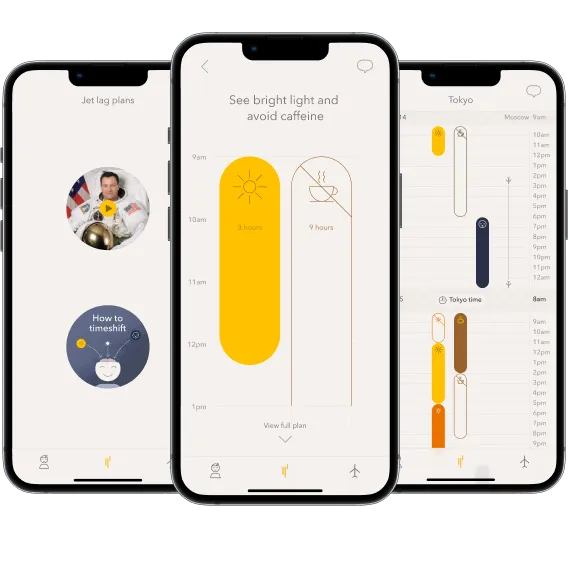
The most downloaded and highest-rated jet lag app in the world.

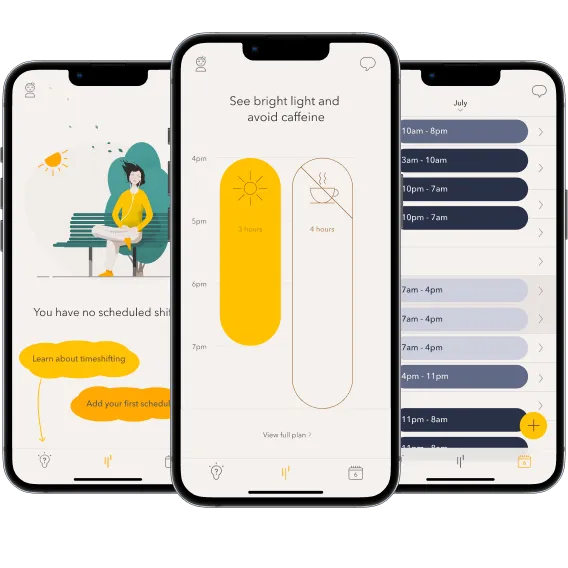
The shift work app that improves sleep and alertness, personalized to your schedule.
FAQ
What is the Morningness-Eveningness Questionnaire?
The Morningness-Eveningness Questionnaire (MEQ) is a 19-question self-assessment published by James Horne and Olov Östberg in 1976. It measures whether you are a morning type, an evening type or neither, based on when you prefer to sleep, wake up and perform at your best.
How is the chronotype quiz scored?
Each answer has a point value from the original questionnaire. The points are added up to a score between 16 and 86. Higher scores mean a stronger morning preference: 70–86 is definitely morning type, 59–69 moderately morning type, 42–58 neither type, 31–41 moderately evening type and 16–30 definitely evening type.
What is a good MEQ score?
There is no good or bad score. Your score shows whether your preferred timing for sleep and activity is earlier or later in the day.
How is this different from animal chronotype quizzes?
Animal-based quizzes use popular-science categories. This quiz uses the original scientific questionnaire and its published scoring, which researchers have used for decades to study chronotype.
Are my answers saved?
If you agree before you start, your anonymous answers and score are stored and may be used for research, as described in our Privacy Policy.
References
- Horne JA, Östberg O. A self-assessment questionnaire to determine morningness-eveningness in human circadian rhythms. Int J Chronobiol. 1976;4(2):97–110.