
The hidden cost of jet lag
Jet lag as both a duty-of-care responsibility and a performance opportunity for global teams.
60 minutes
Keynote

Overview
Jet lag is often viewed as an unavoidable inconvenience of global travel. For organizations with traveling employees, however, it can undermine performance, decision-making, and safety — creating hidden costs across global operations.
Jet lag occurs when the body’s central circadian clock, the suprachiasmatic nucleus in the brain, falls out of sync with local time. This circadian misalignment can impair cognitive performance, mood, and immune function, increasing the risk of errors, accidents, and extended downtime.
Yet jet lag is still widely treated as a sleep problem, when it is fundamentally a circadian timing issue. That’s why generic travel advice and sleep interventions such as melatonin, hydration, or exercise do little to shift the internal clock. The most powerful circadian lever is correctly timed light exposure and light avoidance, which can accelerate adjustment and shorten recovery time.
By shifting the conversation from generic travel tips to circadian science, this session equips organizations with practical strategies to protect employee well-being while maximizing travel ROI.
What you will learn
- How circadian misalignment compromises cognitive performance, immune function, decision-making, and safety
- The role of light in jet lag management
- How to apply science-based strategies before, during, and after travel to shorten adaptation time
- How NASA astronauts and Formula 1 teams use circadian technology to perform at their best across time zones
- Hear first-hand how circadian science is applied in high-performance environments where safety and decision-making matter most
Book this talk
Bring this talk to your next conference, offsite or team event. Tell us about your audience and date, and we will get back to you.
Empower your audience
Add app subscriptions for your audience, so everyone can put what they learned into practice right after the talk.
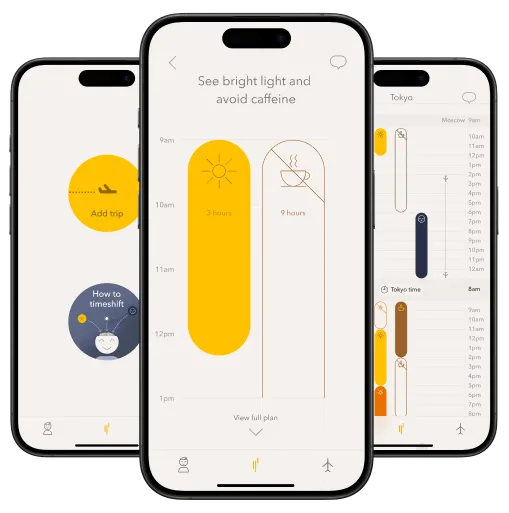
Jet lag app
Available speakers

Mickey Beyer-Clausen
Founder with multiple venture-backed exits. Before Timeshifter, Mickey was the co-founder of Mental Workout, Trunk Archive (acquired), and Ascio Technologies (acquired).