
A better way to shift work
Applying circadian science to improve safety, wellbeing, and performance in 24/7 operations.
60 minutes
Keynote
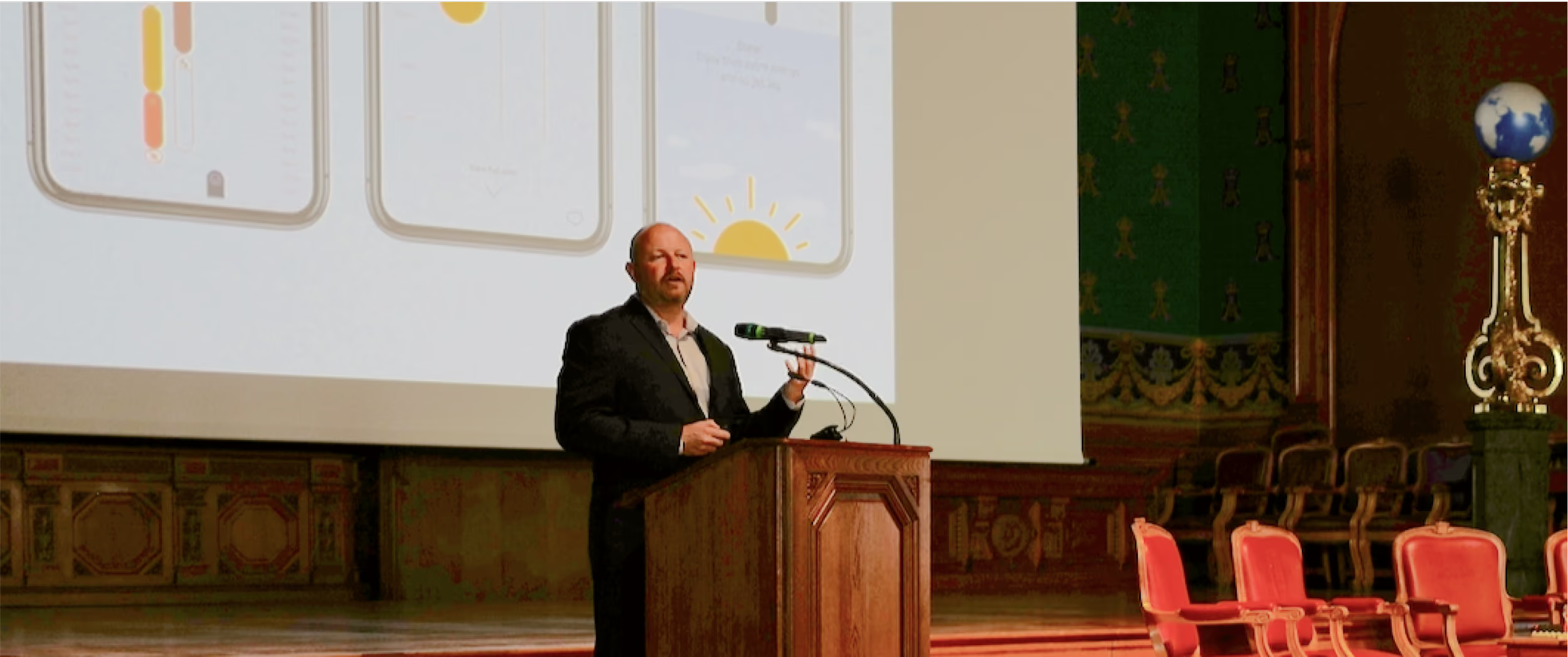
Overview
Modern society depends on a 24/7 workforce, yet human biology still runs on a circadian clock optimized for daytime activity and nighttime sleep. Today, roughly 40% of workers operate outside their optimal biological timing, creating a persistent misalignment between work schedules and the body’s internal clock.
This chronic circadian disruption, distinct from simple sleep loss, can impair alertness, decision-making, and reaction time, increasing the risk of errors, accidents, and long-term health consequences across safety-critical industries including healthcare, transportation, manufacturing, emergency services, energy, and defense.
This session translates decades of circadian research into practical strategies organizations can use to improve alertness, safety, and wellbeing among shift workers — without requiring major changes to existing schedules.
What you will learn
- Why shift-work risk is driven by circadian misalignment, not just sleep loss
- Practical interventions organizations can implement now, including circadian-informed scheduling, workplace lighting, and recovery timing
- How individualized circadian guidance around the timing of light exposure/avoidance, caffeine, naps, and melatonin improves alertness and sleep outcomes
- Why screening for undiagnosed sleep disorders is critical for workforce safety
- How circadian strategies are applied in real-world safety-critical environments like healthcare
- Hear first-hand how circadian science is applied in high-performance environments where safety and decision-making matter most.
Book this talk
Bring this talk to your next conference, offsite or team event. Tell us about your audience and date, and we will get back to you.
Empower your audience
Add app subscriptions for your audience, so everyone can put what they learned into practice right after the talk.
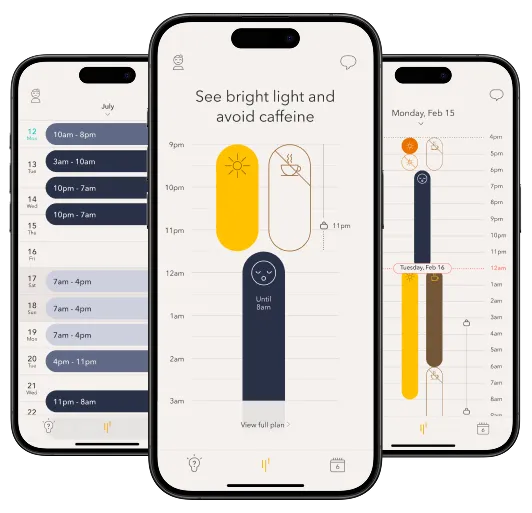
Shift work app
Available speakers
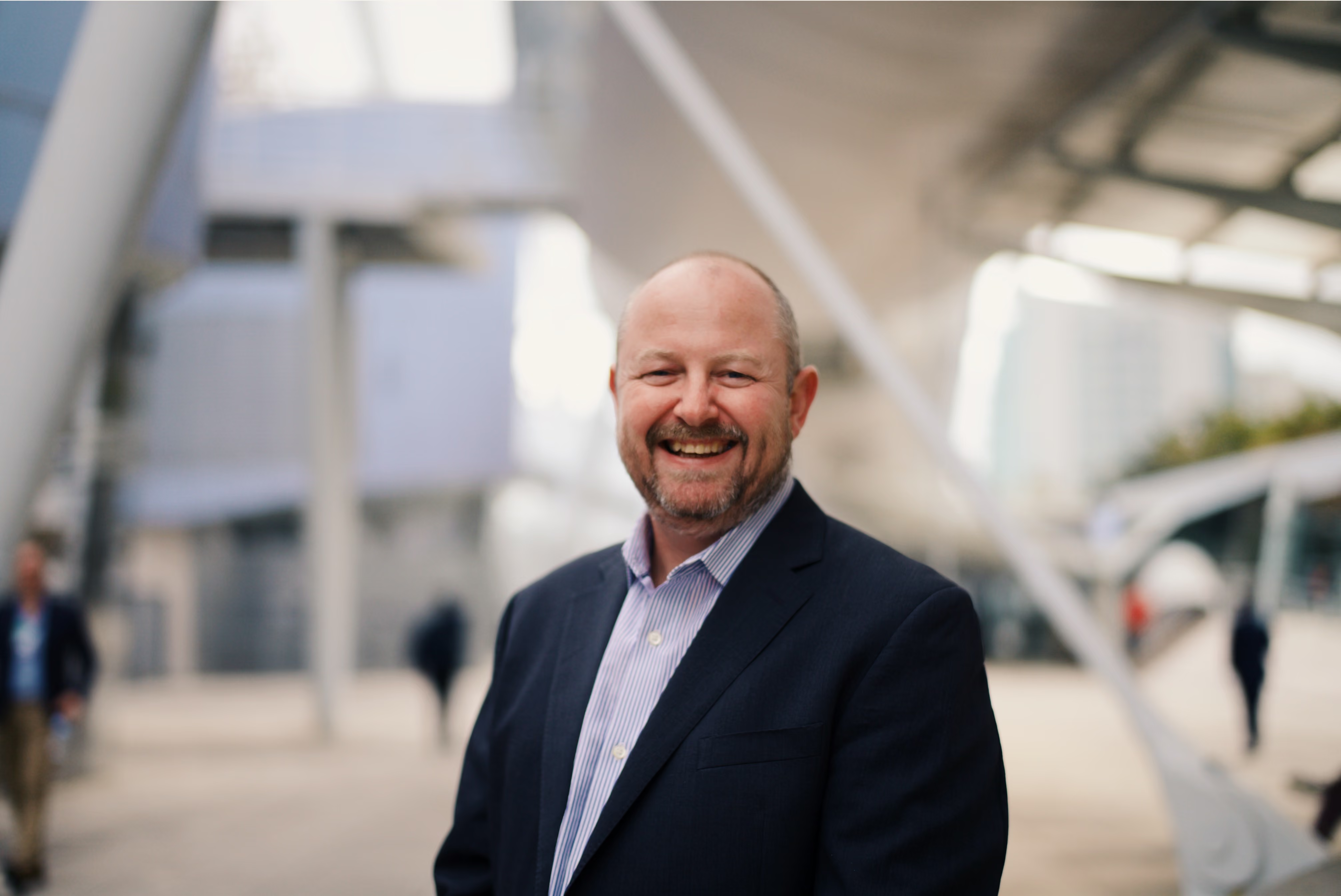
Steven W. Lockley, Ph.D.
Dr. Lockley is Co-founder and Chief Scientist at Timeshifter. A Harvard Medical School faculty member for over 20 years and former Neuroscientist at Brigham and Women's Hospital, he is an international authority on circadian rhythms and sleep with nearly 30 years of research experience. Dr. Lockley helps NASA astronauts and mission controllers, Formula 1 drivers, and elite athletes perform at their best.