The 2017 Nobel Prize in Physiology or Medicine
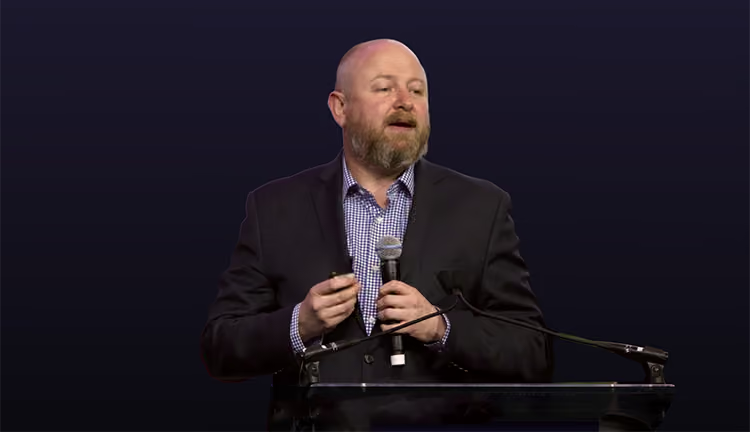
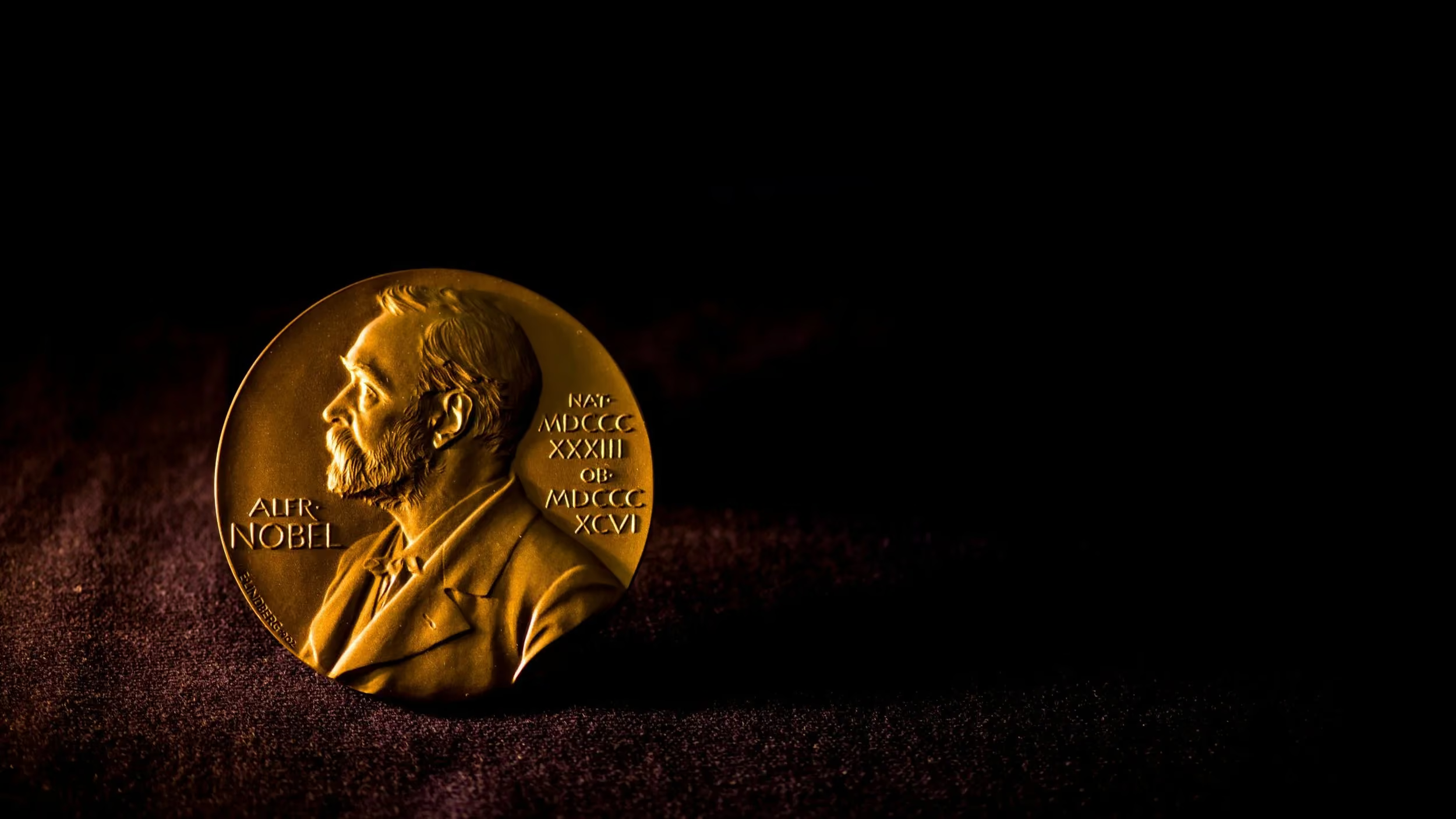
The 2017 Nobel Prize in Physiology or Medicine went to three American scientists — Jeffrey Hall, Michael Rosbash, and Michael Young — for figuring out how the body's internal clock actually works at the molecular level. This video captures all three of their Nobel lectures, delivered at Karolinska Institutet in Stockholm.
How fruit flies revealed the period gene
The story starts with fruit flies. In the early 1970s, a grad student named Ron Konopka found mutant flies whose daily rhythms were either too short, too long, or completely absent — and all three mutations mapped to a single gene called period. That discovery sat mostly ignored for years (the original paper got ten citations in its first decade, as Rosbash pointedly notes). But in the 1980s, the three laureates independently cloned that gene and began piecing together what it does.
The feedback loop that keeps time
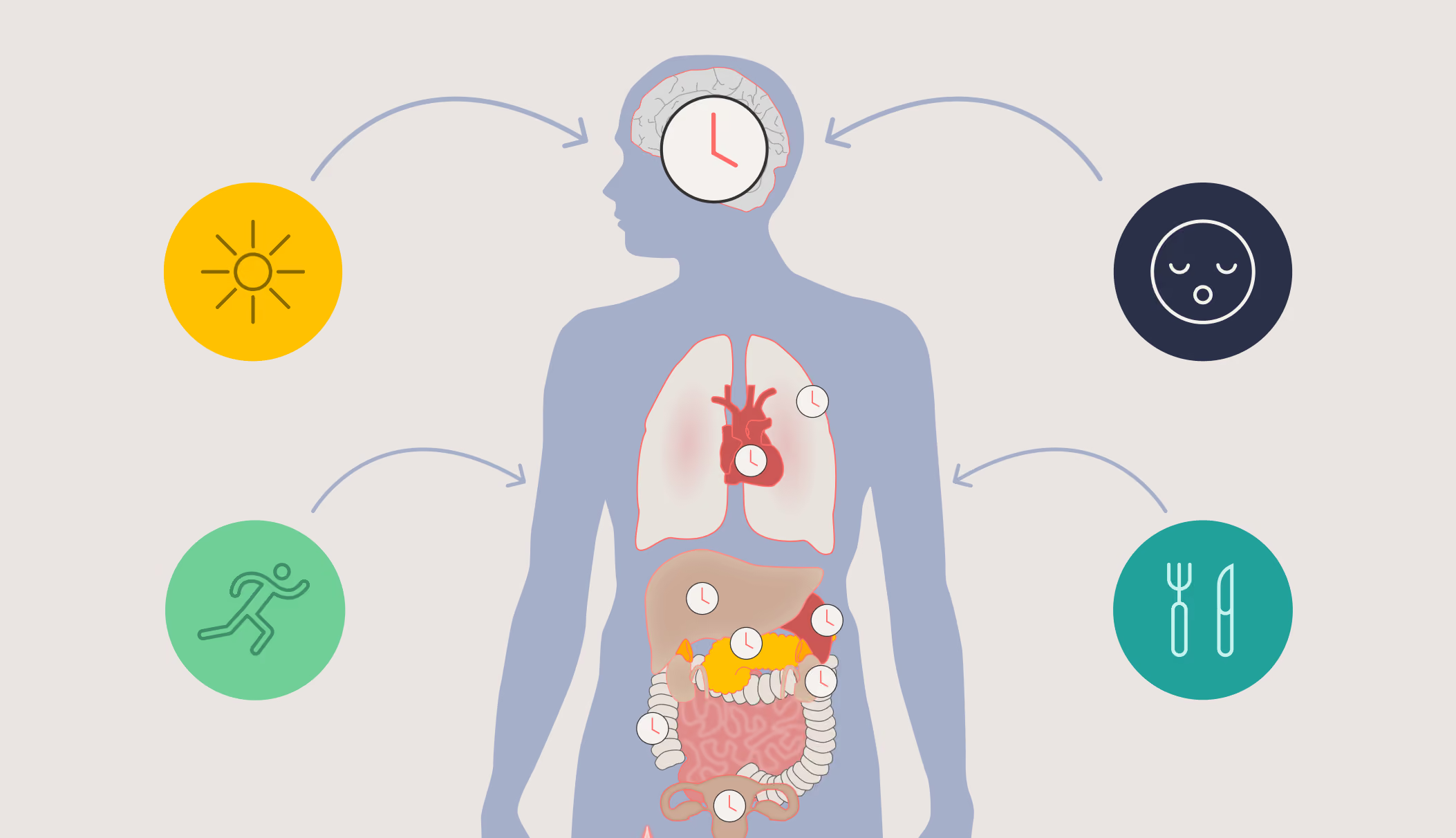
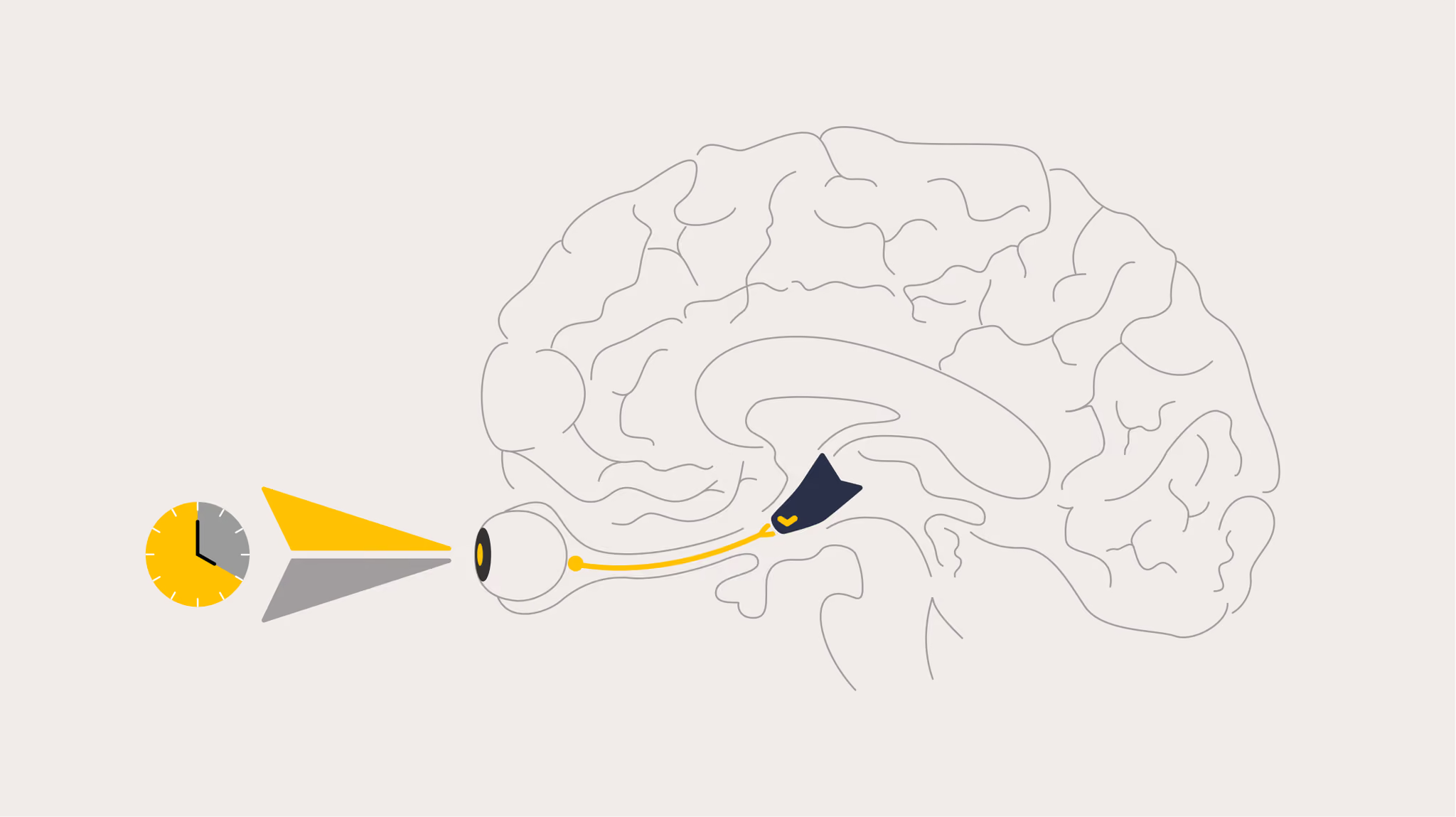
What they found is elegant: the period gene makes a protein that accumulates overnight, then feeds back to shut off its own production, then degrades during the day — and the whole cycle starts over. That 24-hour feedback loop turns out to be the core mechanism of biological timekeeping, and versions of it run in nearly every cell in your body, not just your brain.
The three Nobel lectures
Hall's lecture is the loosest of the three — part history lesson, part love letter to fruit fly genetics, full of digressions about mentors and obscure chromosomal variants. He's genuinely funny in a curmudgeonly way and spends almost no time on molecular details. Rosbash is more structured, walking through the key experiments and giving generous credit to the postdocs who actually ran the gels. Young's talk is probably the most relevant to a general audience — he covers additional clock genes his lab discovered (timeless, double time) and then pivots to recent human research showing that a surprisingly common mutation in the gene cryptochrome is linked to delayed sleep phase disorder. About one in 75 people of European descent carry it, which could help explain why some people are hardwired night owls no matter what they try.
Why the circadian clock matters
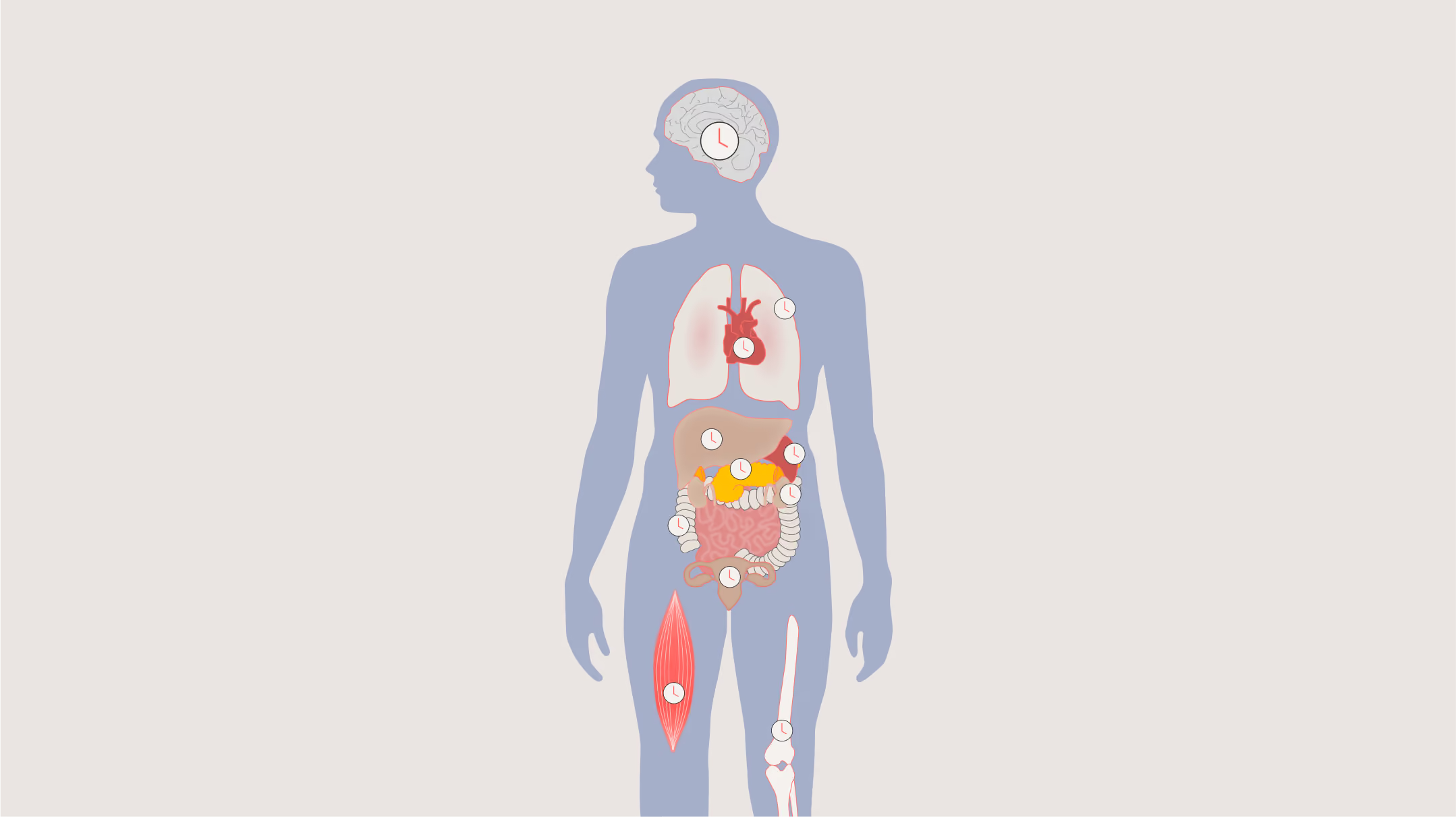
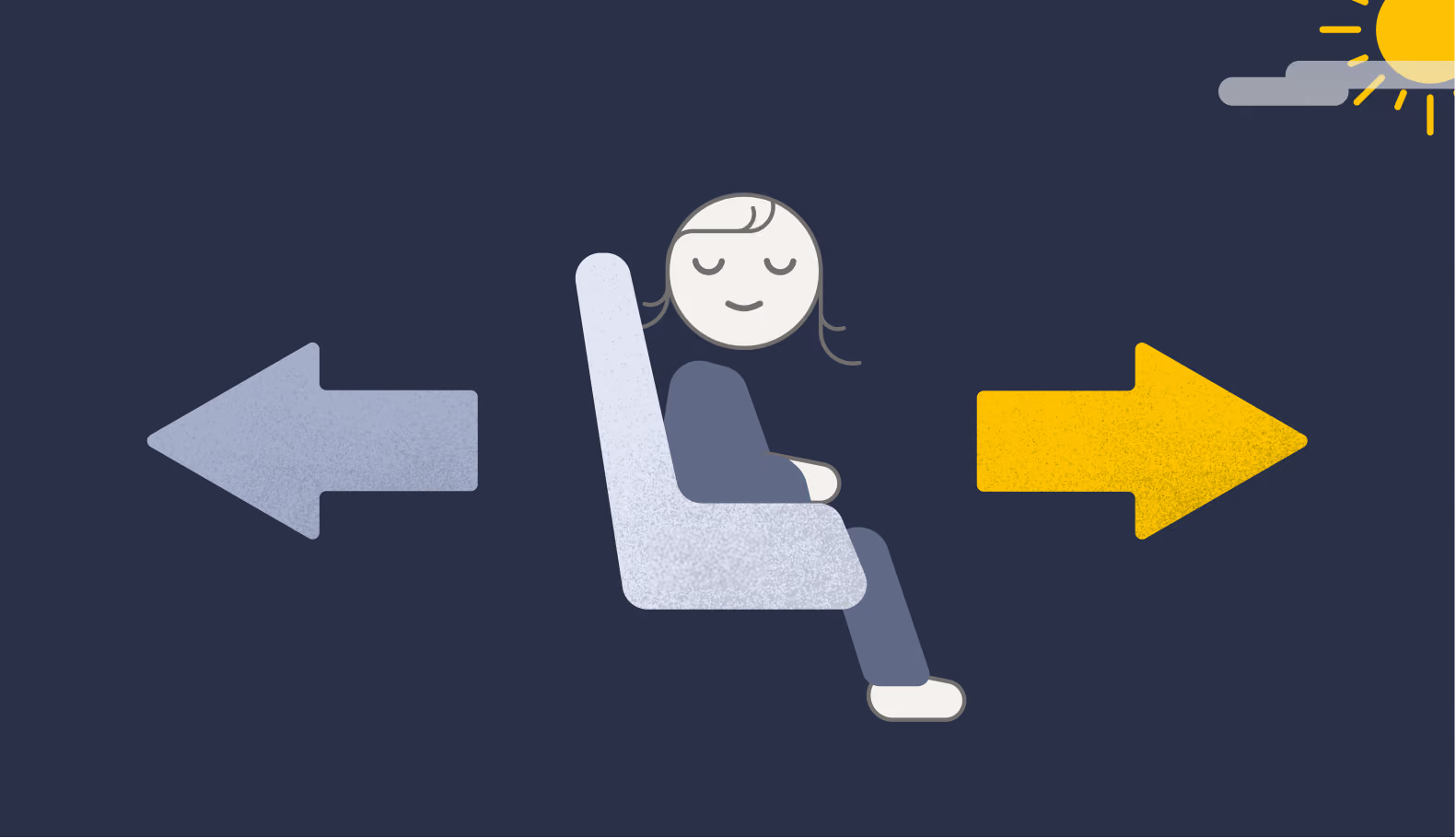
The big takeaway across all three lectures is how consequential this clock system is. More than half of all human genes are under circadian control, governing everything from sleep and metabolism to hormone cycles and body temperature. That's why jet lag isn't just annoying — it's a temporary state of internal chaos where your organs are literally in different time zones. And it's why chronic disruption from shift work or irregular schedules is increasingly tied to metabolic disease, psychiatric conditions, and other serious health outcomes.
Watch the 2017 Nobel lectures
Worth watching if you're interested in sleep science, circadian health, or just how a tiny fly taught us something fundamental about human biology.
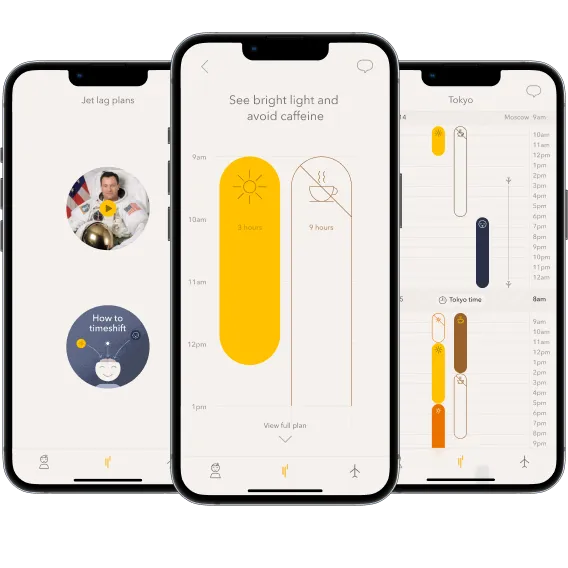
The most downloaded and highest-rated jet lag app in the world.