
Jet lag is not a sleep problem
The circadian science most travel advice gets wrong
30 minutes
Keynote
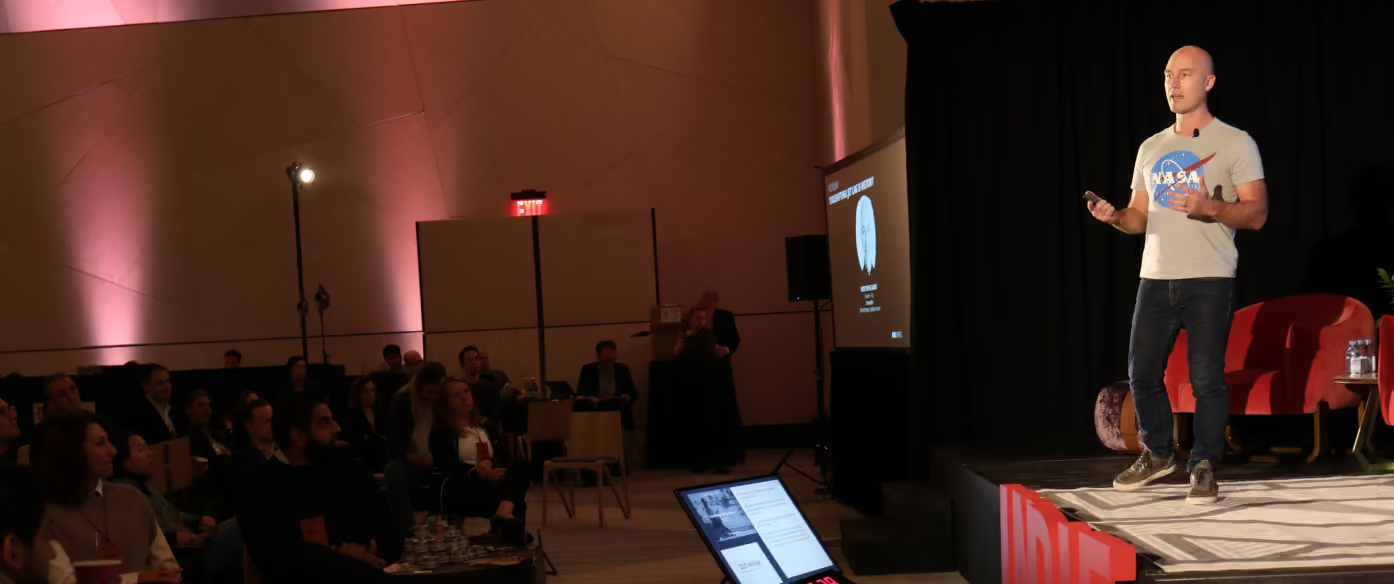
Overview
Jet lag isn’t a sleep problem, it’s a disruption of the body’s circadian clocks. When you cross time zones, the sleep-wake and light-dark cycles shift too quickly for your internal circadian clocks to keep up, leading to circadian misalignment — the reason you feel exhausted during the day, wide awake at night, and out of sync for days.
Yet, most jet lag advice still focuses on generic sleep and health tips, not the underlying circadian clocks. As a result, misconceptions like sleeping more, staying hydrated, or exercising don’t work and can even make jet lag worse.
This session breaks down the science of jet lag, focusing on how timed light exposure and light avoidance reset the circadian clocks. Attendees will leave with a clear understanding of what drives jet lag and simple, science-based strategies to adapt more quickly to new time zones.
What you will learn
- How circadian misalignment impacts cognitive performance, health and safety during travel
- How the flight itinerary and individual biology (chronotype) and sleep pattern impact jet lag and recovery
- How to time light exposure and light avoidance to shift the circadian clocks quickly to new time zones
- How to avoid common mistakes that delay adaptation
- How astronauts, Olympic athletes, Formula 1 teams, NBA players, and national soccer teams use circadian science to perform at their best when they travel
Book this talk
Bring this talk to your next conference, offsite or team event. Tell us about your audience and date, and we will get back to you.
Empower your audience
Add app subscriptions for your audience, so everyone can put what they learned into practice right after the talk.
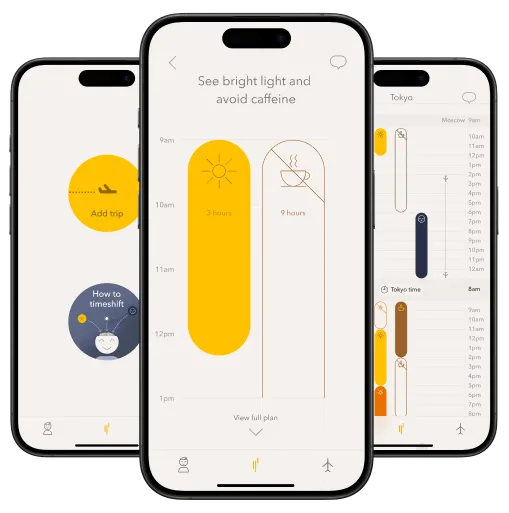
Jet lag app
Available speakers

Mickey Beyer-Clausen
Founder with multiple venture-backed exits. Before Timeshifter, Mickey was the co-founder of Mental Workout, Trunk Archive (acquired), and Ascio Technologies (acquired).

Steven W. Lockley, Ph.D.
Dr. Lockley is Co-founder and Chief Scientist at Timeshifter. A Harvard Medical School faculty member for over 20 years and former Neuroscientist at Brigham and Women's Hospital, he is an international authority on circadian rhythms and sleep with nearly 30 years of research experience. Dr. Lockley helps NASA astronauts and mission controllers, Formula 1 drivers, and elite athletes perform at their best.