There's a fix for shift work fatigue. Most employers just don't know it exists.
Night shifts carry ~30% higher accident risk. The average shift worker costs companies an additional ~$10,000/year. The fixes exist. This guide walks workforce leaders through four evidence-based approaches — without asking you to overhaul your operation. Written by Dr. Steven W. Lockley, an international authority on circadian rhythms and sleep, and a Harvard Medical School faculty member for over 20 years.
Your safety data already knows it.
Accident and error rates are approximately 30% higher on night shifts than day shifts, and shift work is associated with significantly elevated rates of cardiovascular disease, metabolic disruption, and long-term immune suppression.

Most organizations treat shift work fatigue as an inevitable cost of 24/7 operations. The research says otherwise. Fatigue follows predictable biological patterns that can be measured, managed, and meaningfully reduced. The organizations seeing real results haven't done it by asking workers to try harder. They have done it by addressing the biology directly.
doesn't fix a biology problem

programs aren’t enough
Traditional fatigue management — fatigue awareness, rest breaks, sleep hygiene — isn't useless. But it operates at the surface. Shift work disrupts the body's internal circadian system, and generic advice can't fix it.

the biological level
The employers seeing real results are working at the biological level. This isn't experimental. The research base is decades deep. Most organizations just haven't had a practical framework for deploying it — until now.
In this short video, Dr. Steven W. Lockley — Harvard Medical School faculty for over 20 years, advisor to NASA and Formula 1 — explains why shift work fatigue is a biological problem, and what the research actually supports as effective intervention.
actually supports
The guide takes you through each approach, what the evidence says,
and how organizations in your industry have deployed it.
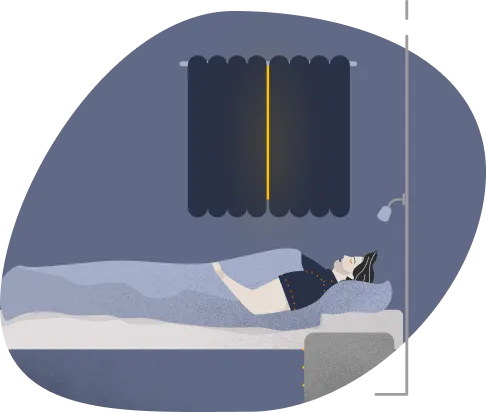
Undiagnosed sleep disorders are far more common in shift-working populations than in the general workforce, and they multiply the impact of circadian disruption. Sleep apnea, insomnia disorder, and shift work sleep disorder each impair alertness, recovery, and long-term health in ways that no fatigue management policy can compensate for.

Light is the primary input the body uses to calibrate its internal clock. In shift work environments, most lighting decisions are made for visibility and cost, not for circadian effect. The result is lighting that actively undermines alertness on night shifts and makes daytime sleep harder for workers coming off them.
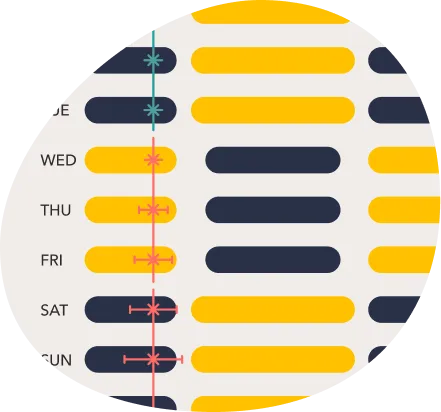
Shift rotation direction, speed, and recovery periods all affect how workers' circadian systems adapt — or fail to. Most schedules are built around operational needs alone. Circadian-informed scheduling applies decades of research on rotation patterns, shift duration, and minimum recovery time to reduce the fatigue load schedules create, without sacrificing coverage.
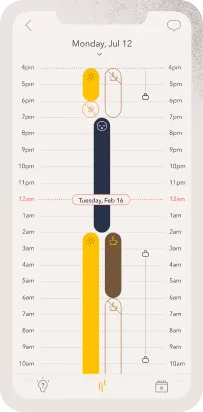
Every shift worker has a unique circadian profile and schedule. Apps can now translate those into precise daily recommendations — when to sleep, when to seek light, when to avoid it, and when to use caffeine or melatonin. This guidance is individualized to each worker's shift pattern and biology, and has been used in space missions and elite sports for decades.
Why fatigue is a biology problem, not a behavior problem
Night shifts mean 30% more accidentsand up to $15K per worker per year
Four evidence-based approachesthat actually work
How healthcare, manufacturing, andlogistics are reducing fatigue risk
ROI data from organizationsalready doing this
What shift workers actually need— and cannot figure out alone
The guide is built for workforce leaders in industries where circadian disruption has direct consequences for safety, performance, and organizational liability.

Night nurses, rotating physicians, and on-call staff face the highest rates of circadian disruption of any professional group. Fatigue-related medical errors carry patient safety, regulatory, and liability consequences that make this a board-level issue, not just an HR issue. The guide covers how the four approaches apply to clinical and administrative shift populations, and where the highest-impact interventions tend to sit.

Long-haul drivers and distribution teams running 24/7 operations carry fatigue-related accident risk that affects safety records, insurance exposure, and regulatory standing. The guide covers how circadian disruption shows up in shift-intensive logistics environments, and how each of the four approaches maps to the operational realities of the industry.

Rotating shifts in industrial environments combine physical demand with precision and alertness requirements that circadian misalignment makes significantly more dangerous. The guide covers what each of the four approaches looks like in a manufacturing context, and which interventions are most relevant where schedules are fixed and operational change is difficult.

Firefighters, paramedics, and law enforcement face irregular schedules, high-stakes decisions, and fatigue conditions that most standard wellness programs are not built for. The guide covers how the four approaches translate to operational environments where schedule flexibility is limited and standard workplace interventions often do not fit.
Most organizations manage shift work fatigue reactively— after an incident, an audit flag, or a regulator's question.This guide is for the ones that want to prevent it, not explain it.
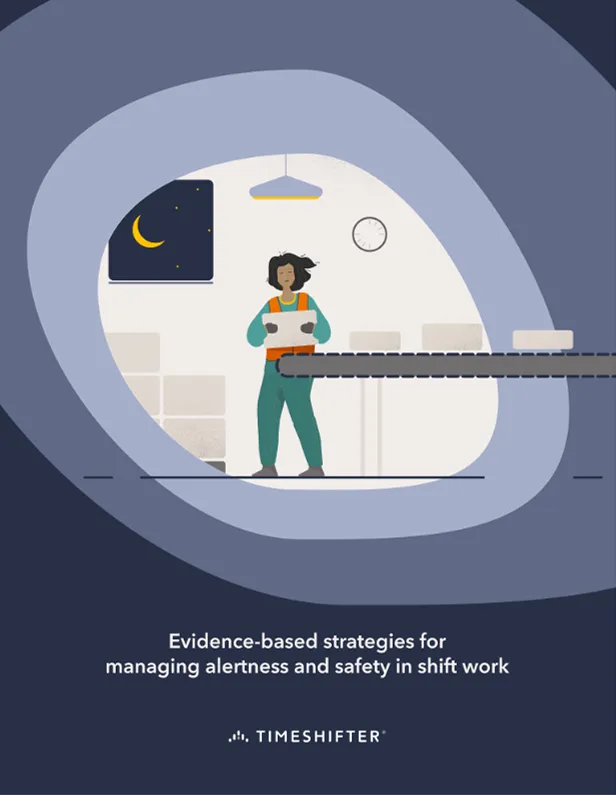
The guide is 20 pages. It covers 4 evidence-based approaches, what the research says about each, and what deployment looks like for organizations in your industry. Just the science and the practical steps.
Join our next webinar — 45 minutes,
four approaches covered in depth, live Q&A.
Thursday, May 7 at 11am ET · 47 seats remaining
Can't make it? Register anyway and we will send you the recording.
Register for the next session →